
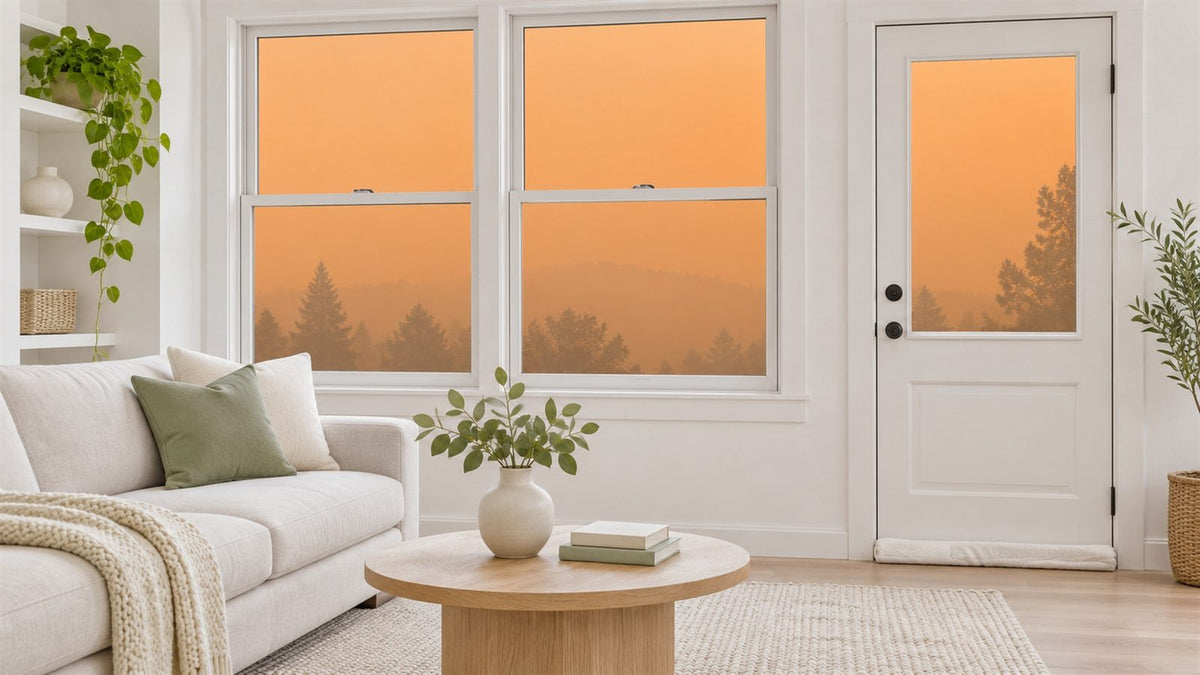
Quick answer: Yes. A true HEPA air purifier, sized for the room and left running with the windows closed, lowers indoor smoke particles (PM2.5). A carbon filter helps with the smell. Ionizers, ozone generators, and probiotic air purifiers, including ours, do not filter smoke and will not lower PM2.5. During a smoke event, buy or run a HEPA purifier.
What wildfire smoke is made of
Wildfire smoke has two parts. Fine particles (PM2.5) are what the air quality index (AQI) measures and what makes your throat scratchy. Gases carry the campfire smell and some irritants.
A HEPA filter catches the particles. Activated carbon absorbs some of the gases and odor. Neither one makes outdoor air safe. Our guide to HEPA vs carbon explains what each filter removes.
When you compare purifiers, look for the smoke CADR. CADR (clean air delivery rate) is the volume of clean air a purifier delivers, tested separately for smoke, dust, and pollen. The square footage printed on the box often assumes the air is cleaned only once or twice an hour, which is too slow during a smoke event. Use the formula in what size air purifier you need and choose a unit with more smoke CADR than the formula asks for.
How to set up a clean room
The EPA and public-health agencies recommend creating one clean room where your household can spend most of its time, especially overnight.
- Pick one room. A bedroom with few windows and exterior doors works best.
- Close windows and exterior doors. Bathroom and kitchen exhaust fans pull outdoor air in through gaps, so run them only briefly.
- Set your HVAC to recirculate if it has that setting, so it does not bring outdoor air in. A good HVAC filter helps only while the blower runs; see HVAC filter vs a portable purifier. Check what filter rating your system can handle before upgrading. A filter that is too dense can strain the blower or freeze the coil mid-event.
- Run a HEPA purifier in the room. Use high speed until indoor readings drop, then a speed quiet enough to sleep through. Keep it on day and night for the length of the event; see run it 24/7.
- Seal obvious gaps with towels or tape if smoke is heavy. Remove them once the air clears.
- Wear a well-fitted N95 or P100 mask outdoors and in the car. The purifier only protects the room it is in.
To check that the setup works, put an indoor PM2.5 monitor in the clean room and compare it with the outdoor reading. With the door closed and a well-sized HEPA purifier on high, the indoor number should fall well below the outdoor one within an hour or two. If it stays close to the outdoor reading, look for an open window, a running exhaust fan, or a purifier too small for the room.
Room size and closed doors matter more than price. A $99 true HEPA purifier in a closed bedroom will lower PM2.5 faster than an $800 unit in an open living room with a door left open.
What to buy and what to avoid
| Do | Why |
|---|---|
| Buy a true HEPA purifier with a published smoke CADR | It removes the fine particles |
| Choose a unit with a substantial carbon filter | Carbon absorbs smell and some gases |
| Use an air quality monitor you trust | It tells you when the room is clean |
| Don't | Why |
|---|---|
| Buy an ozone "smoke eater" | Ozone adds a lung irritant on top of the smoke; see ionizers and ozone |
| Buy a probiotic purifier for smoke | It has no filter and does not lower PM2.5; see probiotic vs HEPA |
| Light the fireplace or burn candles | Both add smoke particles indoors |
If stores are sold out of HEPA purifiers, the EPA has tested a DIY version: a box fan with a MERV 13 filter attached. The EPA recommends a fan made in 2012 or later, a cardboard shroud, and frequent filter changes. Its DIY air cleaner research page has the details.
Check the air before you open up
Use the AirNow Fire and Smoke Map to see outdoor PM2.5 near you, and an indoor monitor to see how your clean room is doing. Open windows once the outdoor AQI drops below the indoor reading.
Whole-house fans, attic fans, and "fresh air" HVAC modes pull outdoor air in on purpose. Turn them off during a smoke event, and find your thermostat's recirculate setting before fire season starts.
Older, drafty houses let in more smoke. A clean room still helps there, but you may need more CADR than the formula suggests. A smoky hallway does not mean the purifier failed, as long as the clean room's readings are low.
Apartments and shared walls
In an apartment, you control your own door, windows, and one room. Close the door to your clean room, seal gaps around it if needed, and keep the purifier inside with you. If neighbors share one purifier, put it in a room with the door closed rather than in a hallway.
If you live in a wildfire area, buy a HEPA purifier and a spare set of filters before the season starts. Stores sell out quickly once the sky turns orange.
Kids, pets, and power outages
Children and pets should nap and sleep in the clean room. Pets can't wear masks, so keeping them indoors in that room is their protection.
If the power goes out, the purifier stops. Keep N95 masks on hand so you have protection that doesn't depend on electricity.
After the smoke clears
Smoke loads filters quickly. If the event lasted several days, check both the HEPA and carbon filters and replace them if needed. Write the date on each new filter. If the purifier smells like smoke on low speed, the carbon filter is saturated and needs changing.
Smoke smell can stay in curtains, sofas, and clothes after the air reading drops. Particles settle quickly, but odor compounds linger in fabric. Wash what you can, air out the rest, and keep the carbon filter running. Do not use an ozone generator to remove the smell. If anyone's eyes or throat still burn after indoor PM2.5 readings are low, gases may still be present; keep the room closed, and call a doctor if anyone is in distress.
The bottom line
Air purifiers help with wildfire smoke when they have a true HEPA filter, run in a closed room, and stay on. Carbon helps with the smell. Set your HVAC to recirculate and wear an N95 or P100 mask outdoors. Ozone generators and probiotic purifiers are not smoke tools.
Frequently asked questions
Do air purifiers help with wildfire smoke? Yes, if they have a true HEPA filter and you run them in a closed room. They lower indoor particle levels (PM2.5). They do not make outdoor air safe, so wear an N95 or P100 mask outside.
What type of air purifier is best for smoke? A true HEPA purifier with a published smoke CADR, plus a substantial carbon filter if the smell bothers you. Avoid ozone generators, which add a lung irritant.
Should I run my HVAC during a wildfire? Yes, on recirculate if your system has that setting, with the best filter your system can handle. A portable HEPA purifier in the bedroom is still the core of your clean room.
Do probiotic air purifiers help with wildfire smoke? No. Probiotic purifiers treat surfaces and have no filter, so they do not lower PM2.5. Use a HEPA purifier during a smoke event.
How long should I run the purifier after the sky clears? Keep it running until indoor readings return to normal and you have washed or aired out fabrics. Lingering smoke smell in curtains is not a reason to use an ozone generator.
Is a more expensive purifier better in a wildfire? Only if it delivers more clean air (a higher smoke CADR) and you will keep it running. A mid-priced HEPA purifier in a closed bedroom does better than a premium unit in an open floor plan.
Should I buy a new purifier the day the sky turns red? If you don't own a HEPA purifier, yes. Even a mid-priced true HEPA unit in one closed room helps. If stores are sold out, the EPA's box-fan-and-filter method plus N95 masks is a tested backup.
Can plants help with wildfire smoke? No. Plants remove too little to change indoor PM2.5 in a real room.


Leave a comment
This site is protected by hCaptcha and the hCaptcha Privacy Policy and Terms of Service apply.