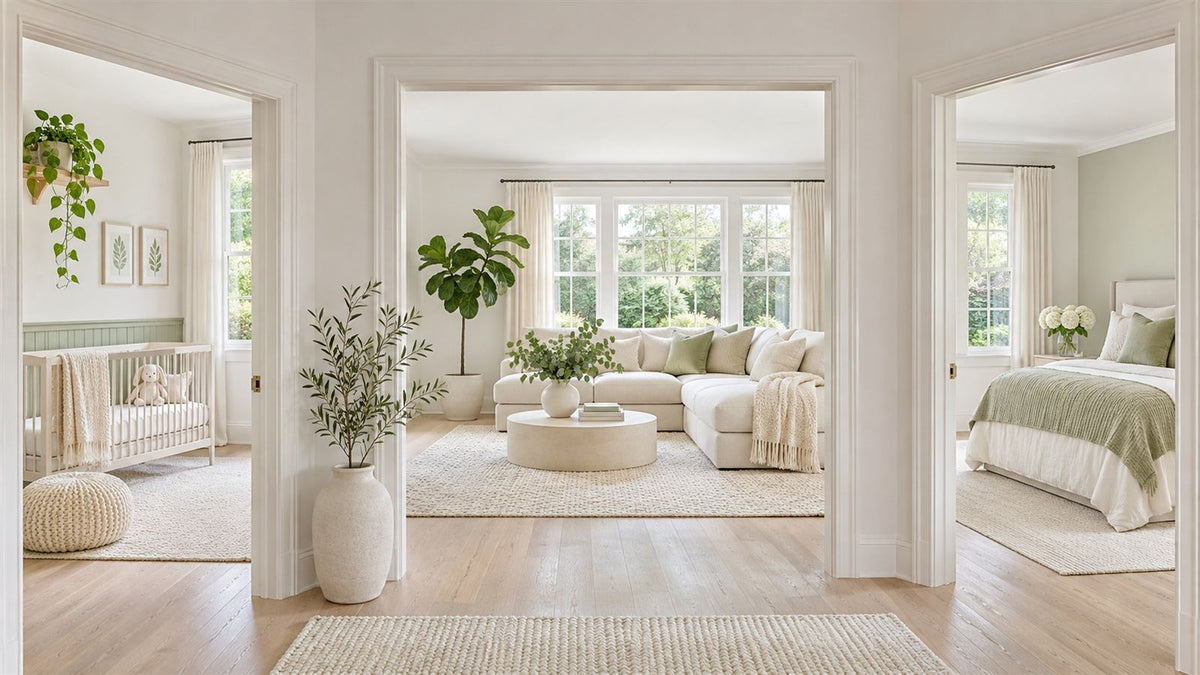
Quick answer: A probiotic air purifier treats surfaces, not airborne particles, so it will not lower PM2.5 and does not replace a HEPA filter. The best one is the one sized for your room. For a bedroom or nursery, choose the BioLogic Mini Gen 2 ($98, up to 300 sq ft). For a main living space, choose the Biotica 800 ($299, up to 800 sq ft). For a whole home, the E-Biotic Pro works through your HVAC system (up to 25,000 sq ft, priced by quote). If smoke or pollen is the problem, run a true HEPA purifier too.
How to judge a probiotic air purifier
Search for "best probiotic air purifier" and you will see two kinds of products mixed together. They share a name but work in completely different ways.
A HEPA purifier is a fan that pulls air through a dense filter. You compare HEPA units on CADR (clean air delivery rate, the volume of filtered air a unit delivers), noise at a usable speed, filter cost, and how well the filter seals in its housing. Those are good ways to rank a filter.
A probiotic air purifier has no filter to rank. It releases a fine mist of beneficial Bacillus bacteria into the room. The bacteria settle on floors, fabrics, and furniture, where they consume the organic residue that odor-causing bacteria and mold feed on and compete with those microbes for space. Nothing is pulled through a filter, so there is no CADR. Our guide to probiotic air purification explains the mechanism in more detail.
If you rank a probiotic device by filter standards, it will look like it failed a test it was never designed to take. A more useful approach is to start with the job you need done:
| The job | Best tool | EnviroBiotics option |
|---|---|---|
| Airborne dust, pollen, smoke, or a high reading on a PM2.5 monitor | A true HEPA purifier sized for the room | None. Keep or buy a HEPA purifier. |
| Settled dust and dander, musty or pet odor that comes back after cleaning, buildup on fabrics and surfaces | Continuous probiotic surface treatment | BioLogic Mini Gen 2, Biotica 800, or E-Biotic Pro, depending on the space |
| Both | Both devices, placed apart | The HEPA purifier you have, plus the probiotic system that fits the room |
Our comparison of probiotic vs HEPA explains how the two fit together. The rest of this guide helps you choose which probiotic system to buy.
The three EnviroBiotics systems compared
| System | Best for | Coverage | Price | Refills |
|---|---|---|---|---|
| BioLogic Mini Gen 2 | Bedroom, nursery, home office, apartment room | Up to 300 sq ft | $98 | $19 refill, lasts up to 90 days (twin pack $38) |
| Biotica 800 | Living room, open kitchen and family room, finished basement | Up to 800 sq ft | $299, first cartridge included | $45 cartridge, lasts up to 90 days (twin pack $90) |
| E-Biotic Pro | Whole home or light commercial, through the HVAC system | Up to 25,000 sq ft | Priced by quote through installers | Serviced through your installer |
Over five years, the BioLogic Mini Gen 2 costs about $478 ($98 plus about $76 a year in refills). The Biotica 800 costs about $1,199 ($299 plus about $180 a year in cartridges). Those figures assume continuous use, which is how both devices are meant to run.
Best for most homes: Biotica 800
Most homes have one room where everyone spends the evening: a living room, an open kitchen and family room, or a finished basement. That is where pet dander, cooking residue, and the stale smell that comes back after cleaning tend to build up. The Biotica 800 is sized for that room, at up to 800 sq ft for $299 with the first cartridge included. Our full Biotica 800 review covers setup, placement, and running costs.
Keep its limits in mind. It does not replace a HEPA purifier in the same room, it is larger than a nursery needs, and one unit in the living room won't treat bedrooms down the hall.
Best for bedrooms and small budgets: BioLogic Mini Gen 2
Many people searching for a probiotic air purifier have one room in mind: a nursery, a bedroom for a light sleeper, or a single room in a rental. For them, the BioLogic Mini Gen 2 is the right fit. It costs $98, covers up to 300 sq ft, and its refill costs $19 and lasts up to 90 days. Our BioLogic Mini Gen 2 review covers bedroom and nursery use in detail.
It works well as an add-on beside a quiet HEPA purifier you already own. It won't lower smoke readings, and one Mini won't cover an open-plan first floor.
Best for whole-home coverage: E-Biotic Pro
If you would rather not place a device in every room, the E-Biotic Pro treats the house through your existing supply ducts, covering up to 25,000 sq ft. A certified installer fits it, and pricing comes by quote. Our E-Biotic Pro whole-home guide explains how installation works.
Choosing between one HVAC system and several room units depends on your layout, your ductwork, and how many rooms you need to cover. Our guide to room unit vs whole-home walks through that decision.
What the lab results show
Two laboratory studies of the technology are often cited for this category. Both are lab results for the probiotic technology, not measurements of a specific device in a home.
- Indoor Biotechnologies recorded a significant drop in common household allergens on surfaces after 8 days of continuous probiotic treatment in a laboratory study. The study measured allergens on surfaces and did not measure airborne particles.
- A University of Genoa laboratory study measured surface viruses reduced by 67% within 15 minutes and 97.7% after 3 hours under lab conditions. The study measured surfaces rather than air, and its numbers don't predict what happens in a particular living room.
Both reports are on our research page. If you see either figure presented as a CADR rating or a home test result, treat that comparison with caution.
What to skip when you shop
Houseplants and salt lamps. They can make a room more pleasant, but neither one is a probiotic air purifier, and neither cleans the air in a measurable way.
Probiotic room sprays you use a couple of times a week. A spray can be a useful cleaning product. It doesn't give the steady, continuous supply of beneficial bacteria that a device provides.
Devices that claim HEPA, UV, ionizer, and "kills 99.9%" all at once. True HEPA is a proven particle filter. UV light treats only the air that passes the lamp. Ionizers need checking for ozone. Probiotic treatment works on surfaces. Be skeptical of a single device that claims to do all four well.
Certifications: what each one covers
Many shoppers search for an "EPA registered air purifier," because the term is common in other product categories. For probiotic systems, check what the registration covers.
- EPA registration: the probiotic formula is EPA registered as a bacteriostat and fungistat (EPA Reg. No. 94339-1). The device is not EPA registered.
- MADE SAFE: the formula is MADE SAFE certified, meaning it was screened against lists of known toxic chemicals.
- No ozone, no VOCs, no chemical residue. The formula is safe for continuous use around infants, children, pregnant adults, older adults, and pets.
A probiotic device does not sterilize a room, and it doesn't replace cleaning, ventilation, or mold remediation. Our guide to pet and child safety data has the full certification details.
When a probiotic system is the wrong first purchase
- You need a PM2.5 reading to drop today. Buy a HEPA purifier first. If dust and odor keep returning to your sofa and bedding after that, add a probiotic device.
- You have active mold, a leak, or a damp crawlspace. Fix the moisture first. If mold covers more than about 10 sq ft, the EPA recommends following its remediation guidance, and a professional with mold experience is often the right call. A probiotic device helps with upkeep after the cause is fixed.
- You want a device that replaces vacuuming. No device does that. Regular vacuuming with a HEPA vacuum and washing bedding still matter.
- You only need to treat a small room. If the room is a 120 sq ft nursery, the BioLogic Mini Gen 2 is the better fit than the larger Biotica 800.
How to get the most from whichever system you choose
- Run it continuously. Probiotic devices are designed to run all the time, not for 20 minutes like a scent diffuser. Our guide to running an air purifier 24/7 explains why.
- Place it away from your HEPA purifier. Put the probiotic device several feet from the HEPA intake, ideally on the other side of the room, so the filter doesn't capture the formula before it settles.
- Keep your existing purifier. If you already own a Coway, Levoit, Winix, or Dyson purifier, keep using it for airborne particles. The probiotic device covers surfaces.
- Set realistic expectations. Most homes notice odor changes first. The 8-day allergen result came from a laboratory study, so treat it as a rough guide for planning, not a promise for your home.
- Replace refills on schedule. Both the Mini refill and the Biotica 800 cartridge last up to 90 days.
The bottom line
The best probiotic air purifier in 2026 is the one matched to the space. Choose the BioLogic Mini Gen 2 for bedrooms and nurseries, the Biotica 800 for the main living room, and the E-Biotic Pro if you want one system treating the whole house through its ducts. Pair any of them with a true HEPA purifier when airborne particles such as smoke, pollen, or dust are part of the problem. HEPA handles the air, and the probiotic system handles the surfaces.
Frequently asked questions
What is the best probiotic air purifier in 2026? It depends on the room. For a bedroom or nursery, the BioLogic Mini Gen 2 ($98, up to 300 sq ft). For a main living room, the Biotica 800 ($299, up to 800 sq ft). For whole-home coverage through HVAC, the E-Biotic Pro (up to 25,000 sq ft, priced by quote). None of them replace a true HEPA filter for smoke, pollen, or PM2.5.
Is a probiotic air purifier better than HEPA? They do different jobs. A HEPA purifier removes airborne particles, and a probiotic system treats surfaces. If wildfire smoke or pollen is your main concern and you can buy only one device, buy HEPA. If dust and odor keep returning to surfaces while you already run HEPA, add a probiotic system.
Do probiotic air purifiers work? They work on surfaces rather than air. Beneficial Bacillus bacteria settle on surfaces and compete with odor-causing microbes for space and food. Laboratory studies of the technology recorded an allergen drop after 8 days (Indoor Biotechnologies) and surface virus reductions (a University of Genoa laboratory study). They will not lower a particle monitor reading the way a HEPA purifier does.
How much does a probiotic air purifier cost? The BioLogic Mini Gen 2 costs $98, plus a $19 refill that lasts up to 90 days. The Biotica 800 costs $299 with its first cartridge, plus a $45 cartridge that lasts up to 90 days. The E-Biotic Pro is priced by quote through installers.
Can I use a probiotic system with the air purifier I already own? Yes, and most homes use them that way. Place the probiotic device several feet from the HEPA purifier's intake and run both continuously. The HEPA purifier handles airborne particles, and the probiotic device treats surfaces.
Are probiotic air purifiers safe for pets and kids? The formula is MADE SAFE certified and EPA registered as a bacteriostat and fungistat (EPA Reg. No. 94339-1); the registration covers the formula, not the device. It produces no ozone, VOCs, or chemical residue and is designed for continuous use around infants, children, pregnant adults, older adults, and pets. It does not replace ventilation or regular cleaning.

Leave a comment
This site is protected by hCaptcha and the hCaptcha Privacy Policy and Terms of Service apply.