Quick answer: Levoit makes good HEPA air purifiers at fair prices. If you own a Core 300, Core 400S, Vital 200S, or one of the larger models, it is filtering airborne particles the way it should. A HEPA filter can only treat the air that passes through it, though. Much of what people notice indoors (dust mite allergen, pet dander, musty odors, mold on damp spots) sits on surfaces such as bedding, sofas, and carpets. An environmental probiotic device treats those surfaces. Keep your Levoit and add a probiotic device next to it. The BioLogic Mini Gen 2 costs $98, about the same as a Core 300, and is designed to work alongside a HEPA purifier.
Why this comparison comes up
Levoit is in a lot of homes. The Core 300 has been one of the best-selling air purifiers in the US for years, and owners tend to recommend it to friends. The brand earned that spot with solid HEPA performance, competitive prices, good build quality, and clear spec sheets.
Most people who search "EnviroBiotics vs Levoit" already own a Levoit and are a little disappointed. The purifier runs all day, the bedroom air feels cleaner than before, and still some things haven't changed. The basement still smells musty. Pet hair and dander still cover the couch. Dust still builds up on the nightstand within a few days.
People often assume they bought the wrong purifier. Usually they bought the right purifier for one part of the problem. The rest of the problem is on the surfaces in the room, and that calls for a different tool.
What Levoit (and any HEPA purifier) does
A HEPA filter pulls air through a dense, pleated mesh. A true HEPA filter traps at least 99.97% of particles 0.3 microns in size, and it catches larger and many smaller particles even more efficiently. That covers most of what you want out of the air: pollen, dust, smoke particles, airborne pet dander, and mold spores floating in the room.
Levoit lists the Core 300 at a CADR (clean air delivery rate) of 143 CFM, with an ideal room size of about 222 sq ft. The Core 400S and the Vital line move more air and suit larger rooms; Levoit publishes the figures for each model on its product pages. For the price, these are strong numbers.
If pollen season hits you hard, if you live where wildfire smoke drifts in, or if you have a pet that sheds heavily, a Levoit running at the right fan speed makes the air in the room cleaner. Keep it.
The useful question is what HEPA can't do, and what that means for the problems you bought it to solve.
What HEPA can't reach
A HEPA filter only cleans air that passes through it. That is a physical limit, and every brand of HEPA purifier shares it. Air goes in, particles stay in the filter, and cleaner air comes out.
Particles that are not in the air at that moment stay where they landed. Pollen settles on the couch. Dust mite allergen collects in the mattress and pillows. Pet dander works into carpet and upholstery. Mold starts on a damp wall behind the bathroom mirror. Until someone sits down, shakes a blanket, or vacuums, the purifier never sees any of it. When those particles do get stirred up, many of them settle again before they reach the filter.
Research suggests that up to 80% of indoor allergens and contamination sits on surfaces rather than in the air. Those surfaces act as a reservoir. Every footstep and every pillow fluff sends a little back into the air, and the HEPA filter catches part of it, but the supply on the surfaces keeps coming back.
This is the gap we describe in why air purifiers don't fully solve allergies, and it is what many Levoit owners run into. The air in the room improves while the sofa, bed, and carpet stay the same.
What EnviroBiotics does that Levoit doesn't
EnviroBiotics doesn't make HEPA filters. Our devices release beneficial Bacillus bacteria into the room as a fine mist. The bacteria settle onto surfaces: bedding, upholstery, carpet, counters, and the corners a vacuum misses.
Once there, the beneficial bacteria consume the organic residue that odor-causing bacteria and mold feed on, and they compete with those microbes for space. Scientists call this competitive exclusion. Our article on purification vs disinfection covers the idea in more depth. In short, wiping a surface bare with disinfectant only lasts until the next microbes arrive, while a stable population of harmless bacteria keeps occupying the space.
That covers the part a HEPA purifier can't reach:
- Mattresses, pillows, and bedding. The bacteria consume the organic debris that builds up in fabric, including the material dust mites feed on. In a laboratory study of the technology, Indoor Biotechnologies recorded a significant drop in dust mite allergen after 8 days of continuous use. The full report is on our research page.
- Carpets and upholstery. Pet dander and skin flakes collect here. Treating the surface adds to what vacuuming and washing already remove.
- Damp surfaces. Beneficial bacteria take up the same spots and food that mold would otherwise use. You still need to fix the moisture problem itself.
- Musty and pet odors. Much of the smell in a room comes from microbial volatile organic compounds (MVOCs), gases released by microbes living on fabrics and other surfaces. Fewer odor-causing microbes on those surfaces means less odor.
A HEPA purifier isn't designed for any of this. The two technologies work on different parts of the same home.
How the two compare
Put a Levoit Core 300 next to a BioLogic Mini Gen 2 and they look like competitors. Both cost about $100, both cover a single room, and both sit on a side table. They do different jobs, so most homes get the best results from running both.
| Spec | Levoit Core 300 | BioLogic Mini Gen 2 |
|---|---|---|
| Category | HEPA air purifier | Probiotic surface treatment |
| What it does | Filters airborne particles | Releases beneficial bacteria that settle on surfaces |
| Coverage | About 222 sq ft (Levoit's figure) | Up to 300 sq ft |
| Airborne pollen and smoke | Yes, very good | No |
| Mattress and bedding surfaces | No | Yes |
| Pet dander on the couch | Only what gets stirred into the air | Yes |
| Damp surfaces prone to mold | Catches some airborne spores | Yes |
| Musty surface odors | Limited; carbon pre-filter helps some | Yes |
| Price | Check Levoit's current price (about $90 to $100) | $98 |
| Refills | Replacement filter on Levoit's schedule | Cartridge, $19, up to 90 days |
| Ozone | None | None |
| Safety credentials | Not applicable to filtration | Formula is MADE SAFE certified and EPA registered as a bacteriostat and fungistat (the device is not EPA registered) |
The two columns don't overlap much. Each covers what the other misses.
How to add a probiotic device to your Levoit setup
If you already own a Levoit, the combined setup is straightforward.
Keep your Levoit running. Leave it where it is, on the same schedule. It handles the airborne particles well.
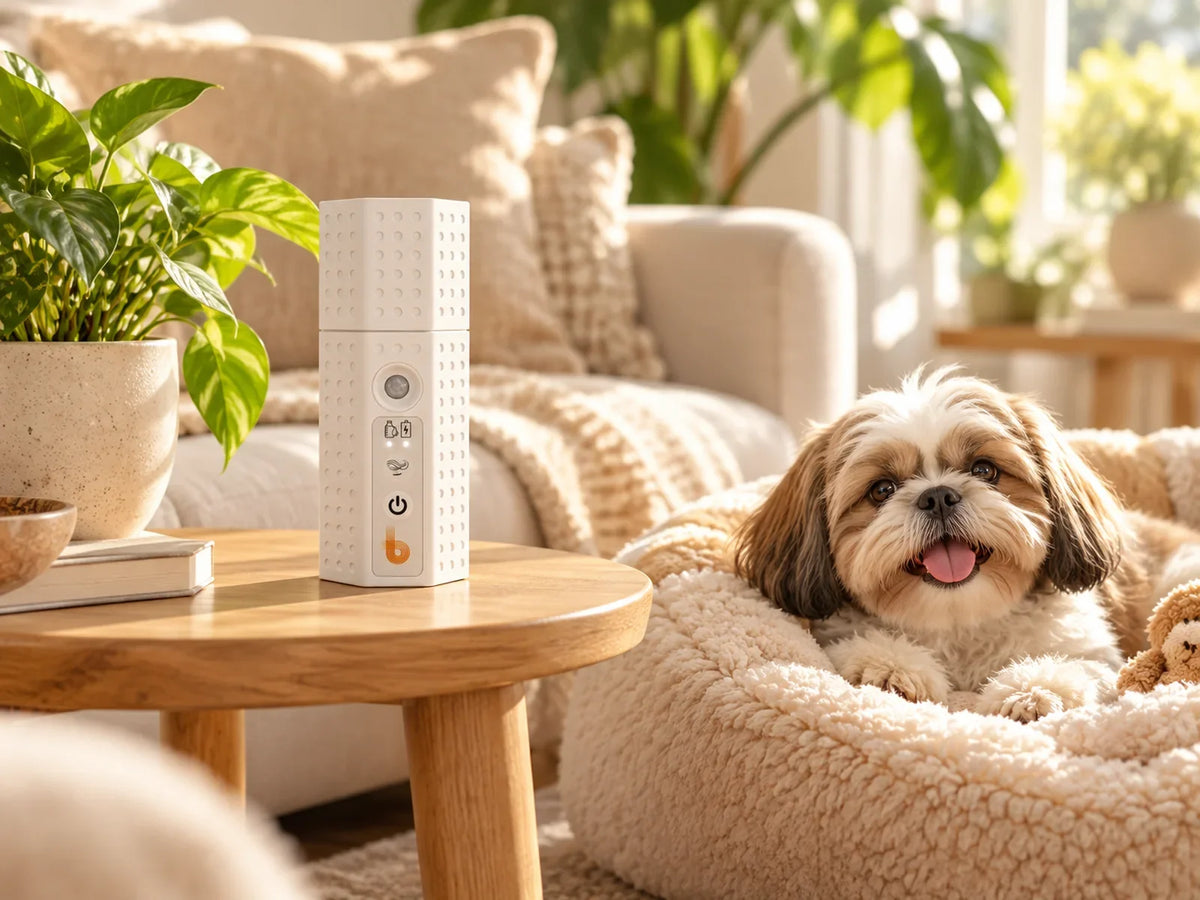
Add a probiotic device in the room you use most. For most people that is the bedroom, because you spend about a third of your day there with your face on a pillow. The BioLogic Mini Gen 2 covers up to 300 sq ft, which fits most bedrooms and home offices. For an open living room or a main living space, the Biotica 800 costs $299 and covers up to 800 sq ft.
Give the devices some space. Don't put both in the same corner. The Levoit pulls air in, and if the probiotic device sits right next to the intake, the filter catches some of the mist before it can settle. Six to ten feet apart in the same room works well.
Keep up the basics. Wash bedding weekly in hot water, vacuum with a HEPA-filter vacuum, and keep indoor humidity between 40% and 60%. The EPA recommends 30% to 50% and keeping it below 60%; if dust mites are a concern, aim for below 50%. The probiotic device adds to these habits and doesn't replace them.
Give it a month. Surface treatment works gradually. In laboratory testing, allergen levels dropped after 8 days and kept falling over about a month. Set a reminder for four weeks out and take stock then.
What to look for: less pet smell on upholstery, fewer musty notes in problem rooms, and bedding that stays fresher between washes. Expect a gradual change as the surfaces settle into a better baseline.
When you don't need to add anything
The add-on doesn't make sense for every home:
- Pollen is your only concern. If grass pollen in May is the one thing that bothers you and the rest of the year is fine, your Levoit is handling it. Run it on a higher setting during the season and keep the windows closed on high-pollen days.
- Smoke is your only concern. Wildfire and wood-stove smoke are airborne particles. HEPA is the right tool, and a probiotic device won't lower smoke levels. Our guide to probiotic vs HEPA explains the split in more detail.
- Nothing is bothering you. If there are no odor, dust, dander, or damp problems in your home, you don't need to add anything.
The add-on fits the situation that brought most readers here: a Levoit doing its job, and a problem on the surfaces that hasn't gone away.
The cost over a year
The two devices cost about the same to buy, and the running costs are close.
- BioLogic Mini Gen 2: $98 for the device. Each refill cartridge costs $19 and lasts up to 90 days, so a full year of refills is about $76. First-year total: about $174.
- Levoit Core 300: the purchase price plus replacement filters on the schedule Levoit recommends. Check Levoit's site for the current filter price, since it changes with sales and filter type (standard, pet allergy, or smoke).
Running both in a bedroom costs a few hundred dollars in the first year, and less after that.
The bottom line
Levoit is a good purchase and HEPA is the right technology for airborne particles. A single device can't cover both the air and the surfaces in a room, so it helps to think of indoor air quality as two jobs. HEPA handles the air. Environmental probiotics handle the surfaces. The strongest setup uses both.
If your Levoit is doing its job and the problem hasn't gone away, look at the surfaces. Add a probiotic device in the same room, a few feet from the purifier, and give it a month.
Frequently asked questions
Should I replace my Levoit with an EnviroBiotics device? No. The two products do different jobs. Your Levoit filters airborne particles, and an EnviroBiotics device treats surfaces with beneficial bacteria. Run both: the Levoit for the air, and a BioLogic Mini Gen 2 or Biotica 800 for the surfaces.
Is EnviroBiotics better than Levoit? They are different kinds of products, so neither replaces the other. For airborne pollen, dust, and smoke, a Levoit HEPA purifier is the right tool. For allergen and odor reservoirs on bedding, furniture, and damp surfaces, a probiotic device is the right tool, and most homes benefit from both.
Why does my home still feel dusty or smell musty with a Levoit running? A HEPA filter only cleans the air that passes through it. Dust mite allergen, pet dander, and odor-causing microbes collect in mattresses, carpets, and upholstery, where the purifier can't reach them. Regular washing and vacuuming plus a probiotic device that treats those surfaces address that reservoir.
Can I run an EnviroBiotics device and a Levoit in the same room? Yes. Keep them six to ten feet apart, because a HEPA purifier placed right next to the probiotic device will catch some of the mist before it settles on surfaces. Otherwise, run both on their normal schedules.
Is the BioLogic Mini Gen 2 a HEPA filter? No. It releases beneficial Bacillus bacteria that settle on surfaces, and it does not filter the air. If you want airborne particles removed, run a HEPA purifier alongside it.
What does each cost to run? The BioLogic Mini Gen 2 costs $98, and its $19 refill cartridge lasts up to 90 days, so a year of refills is about $76. The Levoit Core 300 costs about $90 to $100, plus replacement filters on Levoit's recommended schedule. Check Levoit's site for current filter prices.
How long until I notice a difference after adding the probiotic device? Surface treatment works gradually, because the bacteria need time to settle across the room. In a laboratory study of the technology, Indoor Biotechnologies recorded a significant drop in dust mite allergen after 8 days of continuous use, and levels kept falling over about a month. Give it four weeks before you judge the results.
Are EnviroBiotics products safe to use around kids and pets? Yes. The probiotic formula is MADE SAFE certified and EPA registered as a bacteriostat and fungistat; the registration covers the formula, not the device. The devices produce no ozone, VOCs, fragrance, or chemical residue and are safe for continuous use around infants, children, pregnant adults, older adults, and pets.

Leave a comment
This site is protected by hCaptcha and the hCaptcha Privacy Policy and Terms of Service apply.