
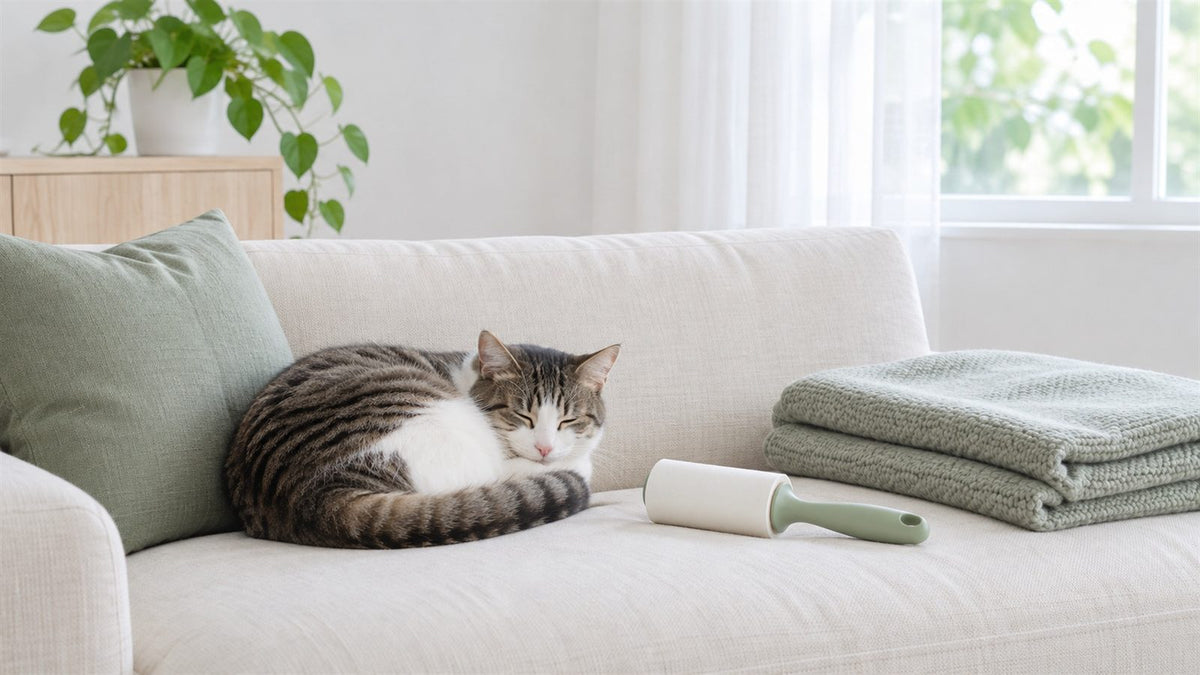
Quick answer: Pet dander is the tiny flakes of skin, plus the proteins from saliva and skin oils, that cats and dogs shed all the time. Some of it floats, and much of it settles into bedding, carpet, and upholstery, where it gets stirred back into the air. To reduce it without harsh chemicals, groom and bathe your pet regularly, wash bedding in hot water weekly, vacuum soft surfaces with a HEPA vacuum, and run a HEPA air purifier where you and your pet spend the most time. An environmental probiotic device adds ongoing surface treatment, and it is safe to breathe around your animals: the formula is MADE SAFE certified and EPA registered, with no ozone and no chemical residue.
First, the reassurance
You love your pet, and nothing in this guide asks you to give them up. Plenty of people who react to cats or dogs live comfortably with them by managing the home environment, and that is what this guide covers.
Pet owners usually ask about safety first, so here is the answer up front. Everything recommended here is safe to breathe around your animals. The probiotic device we describe later releases beneficial Bacillus bacteria, a group common in soil and on plants. The formula is MADE SAFE certified, meaning it was screened against lists of toxic chemicals, and it is EPA registered as a bacteriostat and fungistat. The registration covers the formula, not the device. The devices produce no ozone, no VOCs, and no chemical residue, and they are safe for continuous use around infants, children, pregnant adults, older adults, and pets. Our article are environmental probiotics safe covers the details.
What pet dander is, and why it lingers
Pet dander isn't fur. It is the small flakes of dead skin your pet sheds every day, plus the allergen proteins in their saliva, urine, and skin oils. When a cat grooms, it coats its fur in saliva that carries the main cat allergen, Fel d 1. As that saliva dries, the protein flakes off with skin and hair. Dogs produce a similar main allergen, Can f 1.
Two things make dander hard to get rid of:
- It is small and sticky. Dander clings to fabric, walls, and furniture and doesn't rinse off easily. Cat allergen rides on very small particles that can stay in the air for a long time, according to a 2022 study in Clinical and Translational Allergy. It also travels on clothing, so it turns up in rooms the cat never enters.
- Your pet makes more every day. You are managing a steady supply, not cleaning up a one-time spill. A single deep clean helps for a few days, and then the dander builds back up.
Where dander builds up
Many people buy an air purifier, put it in the middle of the room, and expect the problem to go away. Like most indoor allergens, though, much of the dander in a home has settled. Research suggests that up to 80% of indoor allergens sit on surfaces rather than in the air.
The places that matter most:
- Upholstered furniture. The sofa your pet naps on holds a lot of dander.
- Carpets and rugs. Dander works deep into the pile and the pad.
- Bedding. Your pet's bed and yours, especially if your pet sleeps with you.
- Favorite resting spots. The windowsill, the landing on the stairs, the spot by the front door.
- Fabrics around the house. Curtains, cushions, throws, and the clothes you wear while cuddling your pet.
An air purifier in the corner only cleans the air that passes through it. Every time someone sits on the couch or the dog jumps off the bed, a little more dander goes back into the air. That is why so many pet owners say their purifier "helped a little." It cleaned the air, and the sofa kept supplying more dander.
Why grooming and HEPA help, and where they stop
Grooming and HEPA filtration both help, and you should do both. Each one handles part of the problem.
Grooming and bathing reduce dander at the source. Regular brushing and bathing remove loose hair and dander before it spreads around the house. You can't bathe a cat every day, though, and even well-groomed pets keep shedding. Grooming slows the supply; it doesn't remove the dander already in your furniture.
HEPA filtration captures airborne dander well. Because cat allergen stays in the air longer, a good HEPA purifier in the bedroom makes a noticeable difference overnight for many people who react to cats. A HEPA purifier can only filter air that passes through it, though. The dander in your carpet pad and sofa cushions stays where it is until something stirs it up. Our guide to the best air purifier for allergies explains where HEPA helps most.
Cleaning is what empties the reservoir. Hot washing and HEPA vacuuming physically remove dander from fabric. The probiotic layer described next adds treatment between cleanings.
The chemical-free surface layer: probiotic treatment
A probiotic air purifier releases beneficial Bacillus bacteria into the room as a fine mist. The bacteria settle into the same carpet, upholstery, and bedding where dander collects. There, they consume the organic residue (skin flakes, oils, and food crumbs) that odor-causing bacteria feed on, and they compete with those microbes for space. Scientists call this competitive exclusion.
What this does in a pet household:
- Treats the soft surfaces you can't wash every day. The bacteria settle into sofa cushions, carpet, and pet beds between cleanings.
- Works on pet odor where it starts. Much of the "dog smell" in a home comes from bacteria breaking down skin oils and other organic residue on fabric. With less food and more competition, odor-causing bacteria have a harder time, and the smell has less to come from. You aren't masking it with fragrance.
- Runs in the background. You set it up once and replace the cartridge every few months. It doesn't add a weekly chore.
- Is safe to breathe around your animals. No ozone, VOCs, or fragrance. That is why the probiotic route suits pet homes better than chemical deodorizers and disinfectant sprays.
The technology has been tested in the lab. In a laboratory study of the technology, Indoor Biotechnologies recorded a significant drop in allergen levels after 8 days of continuous use. That was a laboratory result, not a measurement from individual homes; the report is on our research page.
Treat the surfaces where dander settles. Choose the Biotica 800 for a main living space.
The step-by-step routine
This routine combines all three layers: less shedding, cleaner air, and treated surfaces. Think of it as a weekly rhythm rather than a one-time cleanup.
- Brush your pet two or three times a week, away from carpet. Brushing removes loose hair and dander before it spreads. Do it outside, in the garage, or in a room with hard floors. If someone in the house reacts to your pet, have another family member do the brushing.
- Bathe on a sensible schedule. For many dogs, once a month works; ask your vet what suits your dog's coat and skin. Cats usually don't need baths, but wiping the coat with a damp cloth or pet wipe helps. Use a gentle, vet-approved shampoo, and don't over-bathe, since dry skin flakes more.
- Wash all bedding weekly in hot water. Wash yours and your pet's at 130°F or higher to remove allergen, then dry on high heat. If your pet sleeps on your bed, your bedding counts as pet bedding too.
- Vacuum soft surfaces weekly with a HEPA vacuum. Cover carpets, rugs, sofas, and pet beds. Go slowly, and use a vacuum with a sealed HEPA filter so dander doesn't blow back out the exhaust. A lint roller or rubber glove pulls hair off upholstery before you vacuum.
- Run a HEPA air purifier where your pet and you spend the most time. The bedroom is the highest-impact spot, especially in cat homes. Size it for the room: look for a CADR (clean air delivery rate) of at least two-thirds of the room's square footage.
- Add a probiotic device for the surfaces. Place it in your main living area, your bedroom, or both, and leave it running. Keep it six to ten feet from the HEPA purifier so the purifier doesn't pull in the mist before it settles.
- Keep humidity in range. Aim for 40% to 60% indoor humidity; the EPA recommends 30% to 50% and keeping it below 60%. Damp air helps dust mites and mold and makes odors cling to fabric.
Give the full routine about 30 days. Grooming, washing, and HEPA filtration make a difference within days. Surface treatment builds more gradually as the bacteria settle across the room.
Cats vs dogs: differences that matter
- Cat allergen (Fel d 1) stays airborne longer and spreads to rooms the cat never visits. Cat homes should lean on HEPA filtration in the bedroom and treat more than one room. Keeping the cat out of the bedroom, if you can, helps a lot.
- Dog dander tends to be heavier and settles faster, so cleaning and surface treatment do more of the work in dog homes. Focus on the rooms and furniture your dog uses most.
- Multi-pet homes have a bigger daily supply. Whole-home treatment through the HVAC system with the E-Biotic Pro, which covers up to 25,000 sq ft and is priced by quote through installers, saves you from chasing dander room by room. A good HVAC filter, MERV 11 to 13 if your system can handle it, also helps.
Choosing the right device
- Bedroom or home office, up to 300 sq ft: the BioLogic Mini Gen 2 costs $98. Refill cartridges cost $19 and last up to 90 days.
- Living room or open-plan space, up to 800 sq ft: the Biotica 800 costs $299, including the first cartridge. Replacement cartridges cost $45 and last up to 90 days.
- Whole home, through your HVAC: the E-Biotic Pro covers up to 25,000 sq ft and is priced by quote.
Most pet homes start with one device in the room where the pet spends the most time, usually the living room, and add a second for the bedroom.
What this routine won't do
- It doesn't replace medical care. If anyone in your home has allergy symptoms, an allergist can test for specific triggers and recommend treatment. Environmental steps work alongside that care.
- It won't stop your pet from shedding. The routine manages the home, not the animal, so grooming stays part of it.
- It won't fix a moisture or ventilation problem. Damp homes hold odor and allergen longer. Fix leaks, run bathroom and kitchen fans, and keep humidity in range.
The bottom line
You don't have to choose between your pet and a comfortable home, and you don't need harsh chemicals to manage dander. Much of the dander in a home lives in the sofa, carpet, and bedding, so the plan has to include surfaces. Groom and bathe to cut the supply, wash and vacuum to remove what has built up, filter the air with HEPA, and add a pet-safe probiotic device to treat surfaces between cleanings. All of it is safe to breathe around the animal you are doing it for.
Frequently asked questions
How do I reduce pet dander naturally, without chemicals? Brush and bathe your pet regularly, wash all bedding in hot water weekly, and vacuum carpets and upholstery with a HEPA vacuum every week. Run a HEPA air purifier in the bedroom to catch airborne dander. A probiotic device adds chemical-free treatment for soft surfaces between cleanings.
Is a probiotic air purifier safe to use around cats and dogs? Yes. The probiotic formula is MADE SAFE certified and EPA registered as a bacteriostat and fungistat; the registration covers the formula, not the device. The devices produce no ozone, VOCs, or chemical residue and are safe for continuous use around infants, children, pregnant adults, older adults, and pets.
Does an air purifier help with pet allergies? A HEPA air purifier helps by capturing airborne dander, especially cat allergen, which stays in the air longer. Much of the dander settles into carpet, upholstery, and bedding, where a purifier can't reach it. Pair the purifier with hot washing, HEPA vacuuming, and surface treatment, and talk to an allergist about symptoms.
How long until I notice less pet dander and odor? Grooming, washing, and HEPA filtering make a difference within days. Surface treatment builds more gradually; in a laboratory study of the technology, Indoor Biotechnologies recorded a significant allergen drop after eight days of continuous use. Give the full routine about a month before judging results.
What's the best air purifier for pet dander? For airborne dander, choose a sealed true HEPA purifier sized for the room. For surfaces, choose a probiotic device: the BioLogic Mini Gen 2 ($98, up to 300 sq ft) for a bedroom, the Biotica 800 ($299, up to 800 sq ft) for a main living space, or the E-Biotic Pro (up to 25,000 sq ft through HVAC, priced by quote) for whole-home coverage. Many pet homes run a HEPA purifier and a probiotic device together.
Do I need to treat the whole house or one room? It depends on your pet. Dog dander settles faster, so treating the rooms your dog uses goes a long way. Cat allergen spreads through the whole home, including rooms the cat never enters, so cat and multi-pet homes benefit from treating several rooms or the whole house.
Related reading
- How to reduce indoor allergens naturally: 7 science-backed methods
- Best air purifier for allergies in 2026: probiotic vs HEPA vs ionizers
- Are environmental probiotics safe? Safety data and certifications
- How to get rid of musty smell in your house: the probiotic approach
Quiet enough for the bedroom your pet sleeps in: the BioLogic Mini Gen 2.

Leave a comment
This site is protected by hCaptcha and the hCaptcha Privacy Policy and Terms of Service apply.