
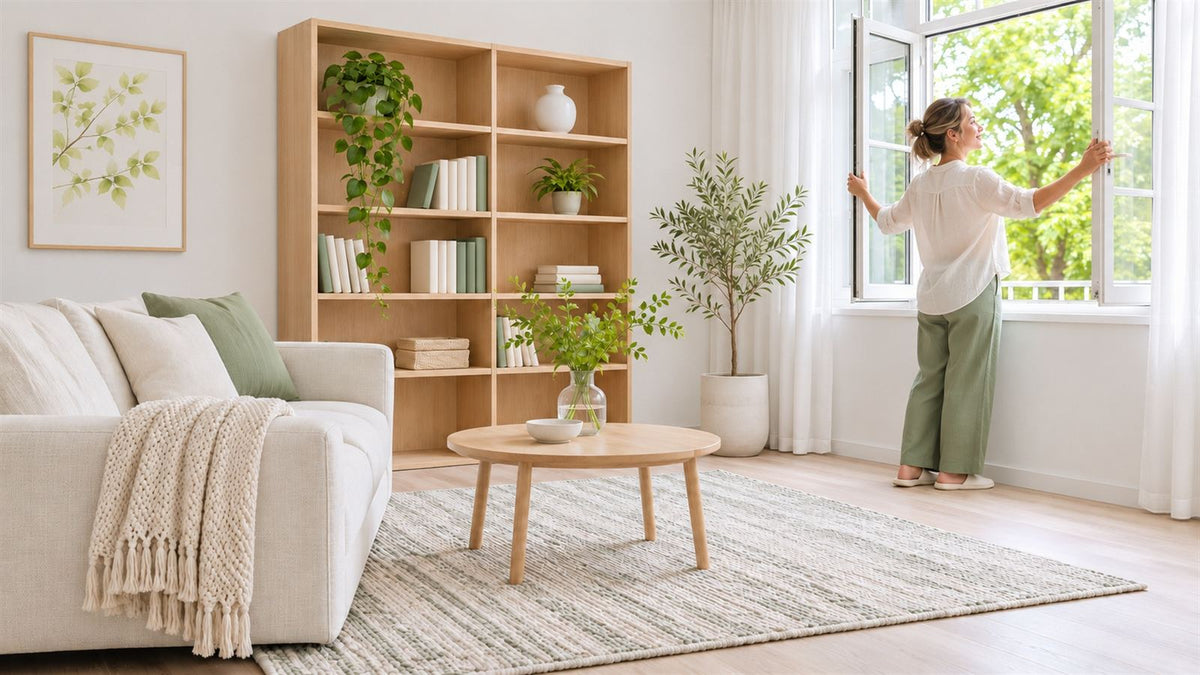
Quick answer: To reduce VOCs and off-gassing naturally, start with the source: choose low-VOC paint, furniture, and flooring, and let new items air out before they come inside. Then ventilate well, because fresh air is the fastest way to clear indoor gases. Activated carbon filtration can adsorb some of what remains, though plain carbon does little for formaldehyde. Standard HEPA filters don't remove gases, and no air cleaner replaces source control and ventilation.
What VOCs are and where they come from
VOCs (volatile organic compounds) are carbon-based chemicals that evaporate into the air at room temperature. When new or synthetic materials release them, it's called off-gassing. That process is behind the familiar "new furniture," "new car," and "fresh paint" smells, although some VOCs, including formaldehyde at low levels, have little or no smell.
Common household sources include:
- New furniture, mattresses, and cabinets, especially pressed wood and the glues that hold it together
- Paint, stains, varnishes, and sealants
- New carpet, vinyl flooring, and carpet padding
- Cleaning products, air fresheners, and scented candles
- Hobby supplies such as glues, markers, and craft paints
- Some plastics, electronics, and building materials
According to the EPA's page on VOCs and indoor air quality, levels of several organic compounds average 2 to 5 times higher indoors than outdoors, and during activities like paint stripping they can climb much higher for hours afterward.
Not all VOCs are equally concerning, but lowering your overall exposure is a sensible goal, and the most effective methods are simple. You reduce VOCs mainly by stopping them at the source and airing them out, rather than filtering them after the fact. For how this fits into a broader plan, see our guide to improving indoor air quality naturally.
Step 1: Control the source
You can't ventilate fast enough to keep up with something that emits constantly, so begin by cutting what releases VOCs:
- Buy low-VOC or zero-VOC products. Low-VOC paints, adhesives, and finishes are widely available. For furniture, mattresses, and building materials, look for third-party certifications such as GREENGUARD Gold, which limits chemical emissions.
- Choose solid wood or low-emission materials over pressed wood made with formaldehyde-based glues where you can. If you buy composite wood, look for products labeled as compliant with the federal TSCA Title VI formaldehyde standard or CARB Phase 2.
- Cut everyday chemical sources. Skip plug-in air fresheners, aerosols, and scented candles. Fragrance adds VOCs to the air rather than cleaning it. Use fragrance-free, mild cleaners instead of harsh chemical cleaners.
- Buy only what you need. The EPA suggests buying only as much paint, solvent, or adhesive as you will use right away. Half-empty cans in a closet or attached garage keep releasing VOCs.
- Store and dispose of chemicals properly. Keep paints and solvents tightly sealed, ideally in a detached shed rather than inside the house. Take old chemicals to a household hazardous waste collection site.
Want the full framework? See how to improve indoor air quality naturally
Step 2: Air out new items before they come inside
New materials release the most VOCs when they are brand new, and emissions taper over weeks to months. You can use that to your advantage:
- Unwrap and air out new furniture, mattresses, and rugs in a garage, on a covered porch, or in a well-ventilated spare room for as long as you can before moving them into a bedroom or nursery. Even a few days helps, and weeks is better.
- Remove plastic wrap right away. Wrapping traps gases and releases them all at once when you open it indoors.
- Paint and renovate when you can ventilate, ideally in mild weather with windows open and a fan blowing out. Stay out of freshly painted rooms until the smell is gone, and keep children and pets out longer.
- Use warmth to speed things up, only while the room is unoccupied. Some people run a "bake-out": raising the temperature of an empty room while ventilating it, so materials release VOCs faster. If you try it, keep people and pets out, keep windows open, follow the product manufacturer's temperature limits, and ventilate thoroughly before anyone uses the room again.
Step 3: Ventilate well
Ventilation is the fastest and cheapest way to lower VOC levels, because it replaces indoor air with outdoor air:
- Open windows daily when the outdoor air is good, especially after cleaning, cooking, crafting, or bringing in new items.
- Use exhaust fans in kitchens and bathrooms to pull air out of the house.
- Cross-ventilate. Open windows on opposite sides of the home so air moves through.
- Place a box fan in a window facing out during painting or other projects. It pulls fumes out of the room instead of spreading them through the house.
- Consider mechanical ventilation in a tightly sealed home. An ERV or HRV (energy or heat recovery ventilator) brings in filtered outdoor air continuously while recovering most of the heating or cooling energy.
Step 4: Use the right filtration and know its limits
Filtration for gases is where many buyers get misled:
- Standard HEPA filters do not remove gaseous VOCs. HEPA captures particles such as dust, pollen, and dander. VOCs are gases that pass through it. A HEPA-only purifier does nothing for off-gassing.
- Activated carbon adsorbs many VOCs and odors. If you want a device for VOCs, look for a substantial amount of carbon, measured in pounds rather than a thin carbon-coated sheet. The EPA's guide to air cleaners in the home notes that carbon filters work for gases only when they contain a large amount of filter material. Carbon fills up over time and needs replacing on schedule, or sooner if odors return.
- Formaldehyde needs special media. Plain activated carbon does a poor job with formaldehyde, a common VOC from pressed wood. Look for carbon blended or impregnated with a chemical such as potassium permanganate, which manufacturers make for formaldehyde.
- Be wary of other technologies. The EPA notes that research has not shown photocatalytic oxidation, plasma, or UV light to be effective at removing gases in portable home air cleaners, and some can create byproducts. Avoid ozone generators entirely.
- Houseplants help less than you might hope. The famous NASA study used small sealed chambers. Later research found you would need an impractical number of plants to lower VOCs in a normal room. Enjoy plants for other reasons, but don't count on them for VOCs.
Where surface treatment fits
Environmental probiotics are not a VOC scrubber, and they don't replace source control or ventilation for the chemical off-gassing described above.
Their role is narrower. Some household odors are produced by microbes living on surfaces and fabrics. A probiotic system releases beneficial Bacillus bacteria that settle on surfaces and consume the organic residue that odor-causing bacteria and mold feed on, and they compete with odor-causing microbes. That may help with some musty and biological odors. It does not address VOCs from paint, furniture, flooring, or cleaning products.
For a household trying to lower its chemical load, the more relevant point is what a probiotic system doesn't add. It produces no ozone and adds no fragrance, unlike scented sprays, plug-ins, and ozone generators that cover odors with more chemistry. You can read the full safety profile before deciding. If you want surface treatment for a main living area, the Biotica 800 costs $299 and covers up to 800 sq ft.
A natural VOC-reduction routine
- When buying: Choose low-VOC and certified materials, and solid wood where you can.
- Before move-in: Air out new furniture, mattresses, and flooring; paint with windows open; keep rooms empty until the smell is gone.
- Daily: Open windows when the outdoor air is good and run exhaust fans.
- During projects: Ventilate with a window fan and buy only the amount of product you need.
- If using a device: Choose a purifier with a substantial amount of activated carbon, add formaldehyde-specific media if pressed wood is the concern, and replace the carbon on schedule.
- Everyday habits: Drop fragranced sprays, candles, and harsh cleaners.
- Keep expectations realistic: Treat plants and surface treatment as extras, not your main VOC control.
When to test
If a chemical smell lingers for weeks, gets stronger in warm weather, or seems tied to a specific material, consider testing. Consumer monitors report total VOCs (TVOC) and can show whether levels drop when you ventilate, though their readings are rough estimates. For formaldehyde specifically, a lab-analyzed test kit or a professional indoor air quality assessment gives more reliable numbers. If anyone in the home has health symptoms you think are linked to indoor air, talk with a doctor as well.
The bottom line
Reducing VOCs and off-gassing naturally comes down to two main steps: stop them at the source with low-VOC materials and fewer fragranced products, and air them out with ventilation and time before new items come inside. Activated carbon can help with gases that remain, but plain carbon does little for formaldehyde, and HEPA filters don't touch gases at all. Be skeptical of any product that claims to eliminate VOCs. A probiotic surface system may help with some musty and biological odors, and it adds no ozone or fragrance of its own.
Frequently asked questions
How do I reduce VOCs in my home naturally? Start with the source: choose low-VOC paint, furniture, and flooring, and cut fragranced products like sprays and candles. Air out new items before bringing them inside, and ventilate with open windows and exhaust fans, since fresh air clears gases fastest. A purifier with a substantial amount of activated carbon can help with what remains.
How long does off-gassing last? It depends on the material. Emissions are highest when an item is new, usually in the first days to weeks, and some materials such as pressed wood and certain foams keep releasing lower levels for months. Airing items out before use and ventilating afterward cuts your exposure to the peak.
Do HEPA air purifiers remove VOCs? No. HEPA filters capture particles like dust, pollen, and dander, but VOCs are gases that pass through HEPA media. To adsorb gases you need activated carbon, ideally several pounds of it, and formaldehyde needs specially treated media.
Does off-gassing from new furniture go away faster with ventilation? Yes. Ventilation carries VOCs out of the room and replaces them with outdoor air. Airing new furniture out in a garage or ventilated room before moving it into living spaces helps, and warming an unoccupied room while ventilating can speed the process further.
Do probiotic products remove VOCs? No. Source control, ventilation, and activated carbon are the tools for VOCs. Probiotic surface treatment may help with some musty and biological odors, because beneficial bacteria consume the organic residue that odor-causing microbes feed on, and it adds no ozone or fragrance of its own.
Do houseplants reduce VOCs? Only marginally in a real home. The well-known study behind the idea used small sealed chambers, and later research found you would need an impractical number of plants to lower VOCs in a normal room. Rely on source control, ventilation, and activated carbon instead.
Related reading
- How to improve indoor air quality naturally: the complete 2026 guide
- Stop over-sanitization: why harsh chemicals hurt your indoor microbiome
- What is indoor microbiome health?
- Are environmental probiotics safe? Safety data and certifications
Prefer air care that adds no ozone or fragrance? See the Biotica 800


Leave a comment
This site is protected by hCaptcha and the hCaptcha Privacy Policy and Terms of Service apply.