
Quick answer: Keep indoor humidity between 40% and 60%, and aim for about 45% to 50% if you want one number. The EPA recommends staying below 60%, ideally between 30% and 50%. Above 60%, the risk of mold and dust mites rises sharply. Below 30% to 40%, air feels dry on your skin, eyes, and throat, wood shrinks, and static builds. In cold winters, many homes run at 30% to 40% to keep condensation off the windows.
Why this one number matters
Relative humidity is the amount of water vapor in the air compared with the most the air could hold at that temperature. It sounds like a comfort setting. In practice, it decides which living things can thrive in your home.
Most household air complaints trace back to organisms that depend on moisture. Mold spores are in all indoor air, and they stay dormant until a surface stays damp long enough for them to grow. Dust mites can't drink; they absorb water from the air, so dry conditions make it hard for them to survive and breed. Bacteria on surfaces need moisture to stay active. Your own nose and throat also rely on a moist lining to trap particles before they go deeper.
That is why humidity shows up in advice about mold, allergies, asthma, dust, and odor. It is the condition those problems depend on. If you get it wrong, you end up fighting the results over and over. It is also why humidity is a step in every plan for improving indoor air quality naturally.
Our range and the EPA's range
You'll see two ranges quoted, and they overlap:
- 40% to 60% is the range we, and many health and building sources, use for a comfortable home.
- 30% to 50%, and below 60% is the EPA's recommendation, written with mold prevention in mind (EPA).
Both agree on the most important point: stay below 60%. Aiming for 40% to 50% satisfies both.
The full scale, and what happens at each end
| Relative humidity | What it means | What tends to happen |
|---|---|---|
| Below 30% | Too dry | Dry nose and throat, itchy skin, chapped lips, static shocks, gaps in wood floors and furniture joints |
| 30–40% | Dry but often acceptable | A common winter target in cold climates; can feel dry to some people |
| 40–60% | Comfortable range | Low mold risk, comfortable breathing; the lower half also discourages dust mites |
| 60–70% | Too humid | Mold risk rises, dust mites multiply, musty odor develops, condensation on cold surfaces |
| Above 70% | Far too humid | Mold growth likely on damp materials, visible condensation, strong musty smell |
If you want one number, 45% to 50% keeps you inside the range with room to drift before anything goes wrong.
Too humid: above 60%
High humidity is the more common problem in most of the US, and it has the more serious consequences.
What goes wrong:
- Mold starts growing. Spores already on surfaces begin to grow once those surfaces stay damp. That is why moisture control comes first in every guide to prevent mold naturally.
- Dust mites multiply. Above 60%, they have all the moisture they need, and populations in mattresses and upholstery grow.
- Musty odor develops. That smell comes mostly from microbes growing on damp materials, the source of the classic musty smell.
- Condensation forms on windows, exterior walls, and cold pipes, creating damp spots where mold can start.
- Rooms feel warmer than they are, because sweat evaporates more slowly in humid air.
Signs you're above the range: fog or droplets on the inside of windows in the morning, a musty smell that returns after cleaning, towels that never quite dry, dark spots in bathroom grout or on window frames, peeling wallpaper.
How to bring it down:
- Stop the water first. Leaks, poor drainage, and groundwater seeping through the foundation will overwhelm any dehumidifier. Check under sinks, around toilets, at roof and window seals, and where the walls meet the foundation.
- Run a dehumidifier sized for the space, especially in basements and humid months. Set it to 45% to 50% and empty or drain it daily.
- Use exhaust fans in bathrooms and kitchens, and leave them on for 20 to 30 minutes after a shower or cooking.
- Ventilate on dry days. On a humid day, open windows bring moisture in, so check the outdoor dew point first.
- Make less moisture indoors. Vent the clothes dryer outside, cover pots while cooking, and avoid drying laundry inside in humid weather.
- Keep the air conditioner serviced. AC removes moisture as it cools. An oversized or poorly maintained system cools the air without running long enough to dry it.
Humidity is one lever of five. See the full framework
Too dry: below 30% to 40%
Dry air gets less attention but causes problems every heating season.
What goes wrong:
- Your nose and throat dry out. The moist lining of your nose and throat traps particles and germs. Very dry air makes that lining less effective, which is part of why winter air can feel irritating.
- It can feel like allergies. A dry cough, scratchy throat, stuffy nose, nosebleeds, and itchy eyes can all come from dry air, which sends people hunting for allergens that aren't there.
- Skin and lips crack, and dry skin conditions often flare.
- Wood shrinks. Hardwood floors gap, furniture joints loosen, and instruments drift out of tune.
- Static builds up, which is annoying and can be hard on electronics.
Signs you're below the range: static shocks from carpet, waking up with a dry throat, frequent nosebleeds, gaps between floorboards, houseplants drying out quickly.
How to bring it up:
- Run a humidifier in the rooms you use most, especially bedrooms at night. Clean it as the maker directs, usually every few days, and use distilled water if the manual suggests it. A dirty humidifier can spray microbes and minerals into the air.
- Lower the thermostat a degree or two. Heating air without adding moisture is what dries it out, and every degree of overheating makes it drier.
- Add moisture passively. Leave the bathroom door open after a shower, and air-dry some laundry indoors (winter is the one season this helps).
- Seal drafts. Cold outdoor air holds very little water. The more of it leaks in and gets heated, the drier your indoor air becomes.
Seasonal targets
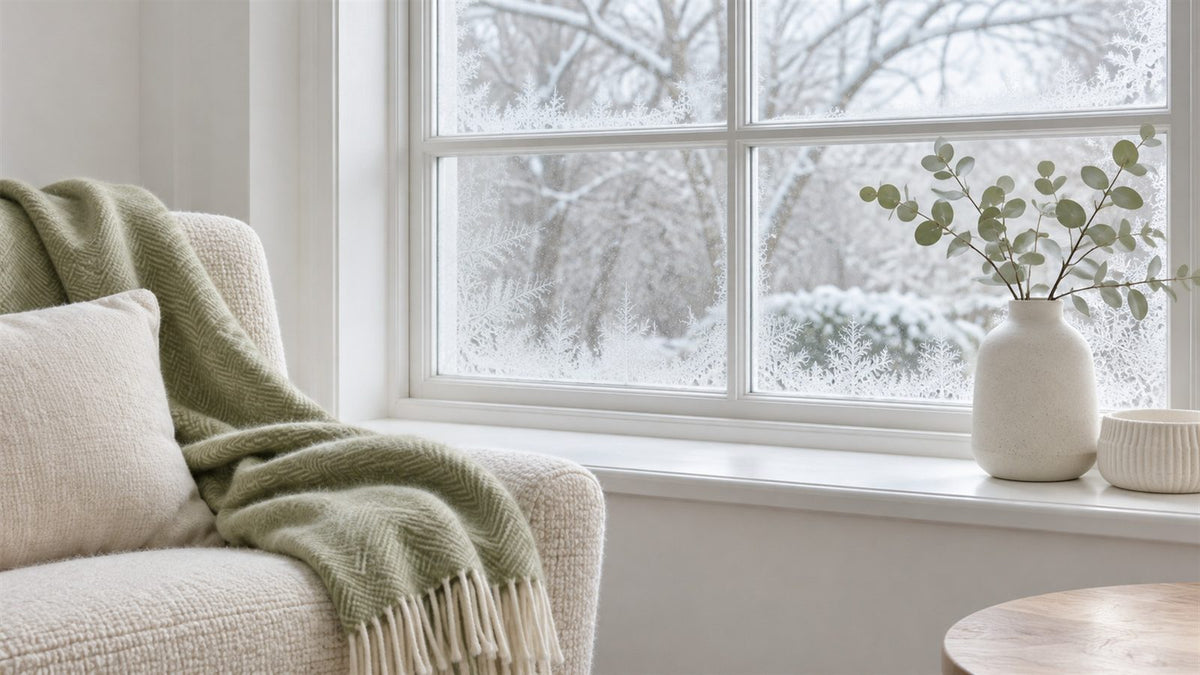
Cold weather changes the target for a physical reason: cold surfaces. When warm indoor air touches a cold window, it cools, and if it holds enough moisture, water condenses on the glass and frame. That water can lead to mold on the sill. So in cold weather you accept drier air as a trade-off to avoid condensation. North Dakota State University Extension considers 30% to 40% optimum during winter, and notes that at 70°F and 35% humidity, single-pane windows start collecting moisture when it is about 30°F outside, while double-pane windows hold out until about 0°F (Iowa State University Extension, citing NDSU).
| Season or situation | Suggested indoor humidity |
|---|---|
| Summer and humid seasons | 40–50%, and always below 60% |
| Mild winter (above freezing) | 35–45% |
| Cold winter (well below freezing) | 30–40%, lower if windows fog |
| Nursery | Same as the rest of the home, about 40–50% |
| Home with a dust mite allergy | Below 50% |
The dust mite figure comes from allergy guidance such as Mayo Clinic's. For a nursery, there is no special number; the same range as the rest of the house works, and if you use a humidifier, clean it often and keep it out of the baby's reach.
A winter rule of thumb: if you see condensation on the inside of your windows, your humidity is too high for the temperature of the glass, whatever the hygrometer says. Lower it until the condensation stops.
How to measure it
Buy a hygrometer. They cost about $10 to $15, and most consumer air quality monitors include one. Guessing by feel is unreliable, because temperature and air movement change how humid a room feels.
Check your hygrometer's accuracy. Inexpensive models can read a few points high or low. To test one, put a capful of table salt in a small dish with a few drops of water (enough to make a damp paste, not a liquid), seal it in a zipper bag with the hygrometer, and wait 8 to 12 hours. The air in the bag settles at about 75%. If your hygrometer reads 70%, add 5 points to its readings.
Then follow three placement rules:
- Measure room by room. Basements, bathrooms, and kitchens tend to run humid. Rooms over a garage or on an outside corner run cold and can collect condensation while the rest of the house is fine.
- Keep it away from things that skew the reading, such as vents, radiators, windows, and the shower.
- Watch the trend. Humidity swings with cooking, showers, and the weather outside. What matters is where each room sits most of the time.
What humidity control doesn't do
Holding the right humidity is the foundation for a healthy home, and for most homes it is the most valuable single change. It has limits.
Humidity control decides whether mold and dust mites can grow. It doesn't remove what has already built up. Dust mite allergen already in a mattress stays there whatever the hygrometer says, and the film of skin flakes, dust, and residue that mold and bacteria feed on stays on surfaces until something removes it. That is why advice on mold, allergens, and odor pairs moisture control with cleaning: hot-washing bedding, vacuuming with a sealed HEPA vacuum, and wiping down damp areas. Our guide to how to get rid of dust mites covers that surface work for the bedroom.
A probiotic surface treatment such as the Biotica 800 can add a maintenance layer for those surfaces, but it does not measure, add, or remove moisture. Get the hygrometer and the dehumidifier or humidifier sorted first.
The bottom line
Keep indoor humidity between 40% and 60%, stay below 60% as the EPA advises, and aim for 45% to 50% if you want one number. In cold winters, run 30% to 40% to keep condensation off your windows. Above 60%, mold and dust mites take off; below 30%, dry air irritates your eyes, nose, and skin. Buy a $10 hygrometer, check it with the salt test, measure room by room, and fix leaks before you buy equipment. Many indoor air problems start with a number nobody checked.
Frequently asked questions
What is the ideal indoor humidity level? Between 40% and 60% relative humidity, with 45% to 50% as a practical target for most homes. The EPA recommends keeping humidity below 60%, ideally between 30% and 50%, mainly to prevent mold. In cold winters, aim for about 30% to 40% to keep condensation off windows and exterior walls.
Is 70% humidity too high in a house? Yes. At 70%, surfaces stay damp enough for mold to grow, dust mites multiply, and condensation forms on cold surfaces. You'll usually notice a musty smell and fabrics that feel damp. Fix any water source first, then run a dehumidifier set to 45% to 50% and use exhaust fans in bathrooms and the kitchen.
What humidity level prevents mold? Keep indoor humidity below 60%, ideally between 30% and 50%, which is the EPA's recommendation. Mold spores are in all indoor air and grow only on surfaces that stay damp, so moisture control is the most important prevention step. Measure room by room, because basements and bathrooms often run much higher than the rest of the house.
What should indoor humidity be in winter? Lower than in summer: about 30% to 40% in cold climates and 35% to 45% in milder winters. The reason is condensation. Warm, moist indoor air condenses on cold glass and window frames, and that water can lead to mold. If you see condensation on your windows in the morning, lower the humidity until it stops.
Does low humidity cause health problems? Very dry air can irritate your body. Below about 30%, the lining of your nose and throat dries out and becomes less effective at trapping particles, and many people notice a dry cough, scratchy throat, nosebleeds, or itchy skin. Because these feel like allergy symptoms, dry winter air is often mistaken for an allergy problem. Talk to a doctor about symptoms that persist.
How do I measure indoor humidity? Use a hygrometer, which costs about $10 to $15 and is built into most consumer air quality monitors. Check its accuracy with a simple salt test, then measure each room separately, since basements, bathrooms, and kitchens usually run more humid. Keep it away from vents, radiators, and windows, and watch the trend across the day.
Do air purifiers control humidity? No. Air purifiers filter particles from the air and don't change moisture levels. To lower humidity, use a dehumidifier, exhaust fans, and air conditioning; to raise it, use a humidifier. Some combination appliances exist, but a standard HEPA purifier won't change the reading on your hygrometer.
Related reading
- How to improve indoor air quality naturally: the complete 2026 guide
- How to prevent mold in your home naturally (without bleach)
- How to get rid of dust mites: the complete bedroom-first guide
- How to get rid of musty smell in your house: the probiotic approach
Holding the range but still fighting mold or dust? Surfaces may be the missing layer



Leave a comment
This site is protected by hCaptcha and the hCaptcha Privacy Policy and Terms of Service apply.