
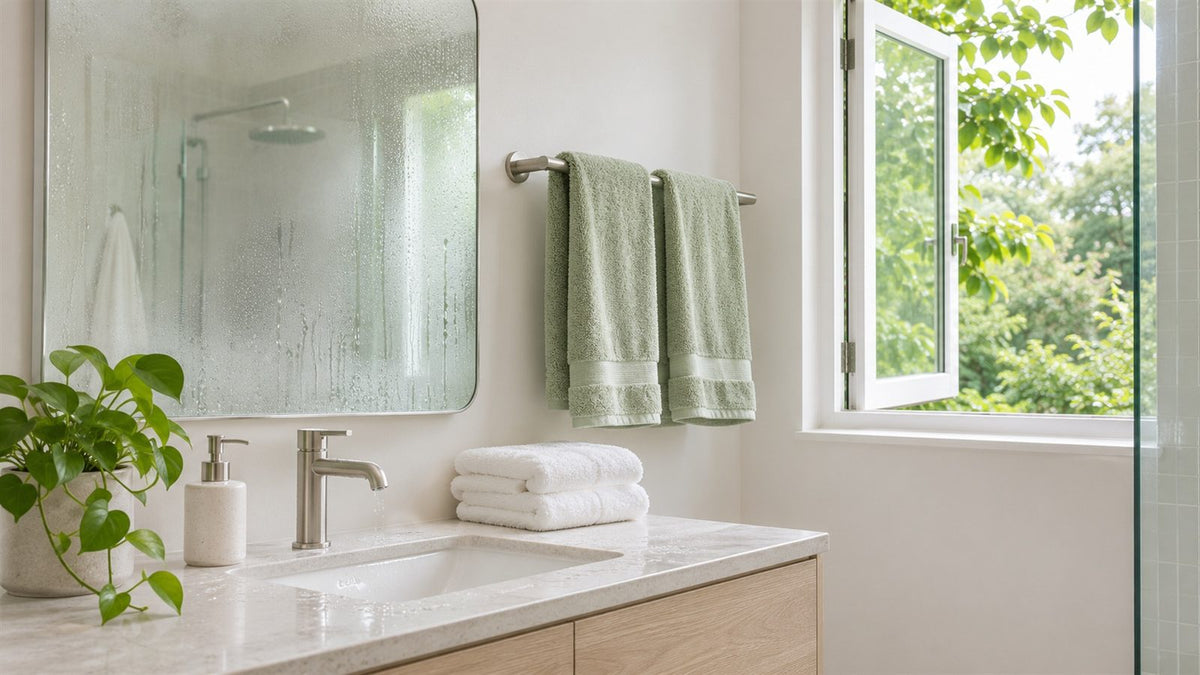
Quick answer: To prevent mold naturally, control moisture first: fix leaks, keep indoor humidity below 60% (the EPA suggests 30–50% as the ideal), and ventilate damp rooms. Clean small spots on hard surfaces with soap and water or white vinegar, then dry them completely. Treating surfaces with an environmental probiotic can make regrowth harder by using up the organic residue mold feeds on. Moisture control does most of the work, and everything else supports it.
Mold needs moisture to grow
Mold spores are always present in indoor and outdoor air. You can't remove them all, and you don't need to. A spore only starts growing when it lands on a damp surface with some organic material to feed on, such as dust, wood, paper, or soap residue. Take away the moisture, and the spores stay dormant.
That means mold prevention is mostly moisture management. Every method below comes back to keeping surfaces dry. If you're also choosing a device, our guide to the best air purifier for mold covers that question. No device replaces fixing a water problem.
The EPA's brief guide to mold, moisture, and your home puts it the same way: control moisture, dry wet materials within 24 to 48 hours, and in most cases mold will not grow.
Step 1: Find and fix the moisture sources
Walk through your home and look for places where water collects or lingers:
- Leaks: under sinks, around toilets and tubs, at roof flashing and window seals, and at washing-machine hoses. A slow drip behind a cabinet can feed mold for months before you see it.
- Condensation: cold windows, exterior walls, and uninsulated cold-water pipes that "sweat" in humid weather.
- Drainage: soil that slopes toward the house, and gutters or downspouts that dump water against the foundation. Downspouts should discharge at least a few feet from the house.
- Basements and crawl spaces: the most common problem areas, because they are cool, close to the ground, and often poorly ventilated.
- Appliances: dishwasher and refrigerator drain lines, AC condensate lines, and dryer vents that exhaust into the house instead of outside.
Fix these first. Cleaning and surface treatment can't keep up with an active water source. If something gets soaked, such as a rug after a spill or drywall after a leak, dry it within 24 to 48 hours with fans and a dehumidifier.
Step 2: Keep humidity in range
Mold risk rises once indoor relative humidity stays above about 60%. The EPA recommends keeping it below 60% and ideally between 30% and 50%. Many homes aim for 40–60% for comfort, so in practice, keep humidity near the lower end of that range in damp seasons and damp rooms.
- Measure it. A digital hygrometer costs about $10 to $15. Check the bathroom, basement, and bedrooms, since readings can differ by room.
- Run a dehumidifier in basements and in any room that reads above 60%. Empty or drain it regularly, and clean the bucket so it doesn't grow mold itself.
- Use exhaust fans in bathrooms and kitchens, and leave them on for 20 to 30 minutes after showering or cooking.
- Dry laundry in a vented dryer rather than on indoor racks.
- Maintain your air conditioner. AC removes moisture in summer, and a clean coil and clear drain line keep it working.
Step 3: Ventilate the damp rooms
Moving air dries surfaces and keeps humid air from settling in corners.
- Open windows when the air outside is drier than the air inside, such as on cool, dry days.
- Keep interior doors open so air reaches closets and corners.
- Pull furniture a few inches away from exterior walls so air can move behind it.
- Leave the shower curtain spread out and the bathroom door open after a shower.
- Don't overpack closets, especially those on exterior walls.
In stuffy homes, better airflow also helps with the musty smell that often shows up before mold is visible.
Already smelling it? See how to get rid of a musty smell for good
Step 4: Clean small spots without bleach
The EPA says homeowners can usually clean up mold themselves when the affected area is less than about 10 square feet. For small spots on hard, non-porous surfaces like tile, glass, sealed countertops, and metal, you don't need bleach.
About bleach: bleach can kill surface mold on hard, non-porous materials. However, the EPA does not recommend biocides such as chlorine bleach as a routine part of mold cleanup. The goal is to remove the mold and fix the moisture, and physical cleaning does that. Bleach also has harsh fumes, and it must never be mixed with ammonia or other cleaners.
Gentler options for hard surfaces:
- Soap or detergent and warm water with a scrub brush. For many small spots this is enough, because scrubbing physically removes the growth.
- Undiluted white vinegar. Spray it on, leave it for about an hour, then scrub and wipe clean.
- Dry the area completely afterward. People skip this step most often, and it decides whether the mold comes back. Use a fan or a dry towel, and keep the area ventilated.
Protect yourself while you clean. The EPA suggests long gloves, goggles without vent holes, and an N95 respirator for small cleanup jobs, so spores and cleaning solution stay out of your eyes and lungs.
Porous materials are different. Mold can grow into drywall, ceiling tiles, carpet, and unsealed wood, and those materials may need to be cut out and thrown away. If a porous material is moldy over more than a small area, call a professional.
Step 5: Treat surfaces to make regrowth harder
Cleaning removes what you can see today. Preventing the next patch means making surfaces less hospitable between cleanings.
Mold needs moisture and a thin film of organic material to feed on, such as skin flakes, dust, grease, and soap residue. Steps 1 through 3 handle moisture. Environmental probiotics work on the organic film. A device releases beneficial Bacillus bacteria that settle on your surfaces and consume the organic residue that odor-causing bacteria and mold feed on. With less of that residue available, surfaces become a harder place for new mold to take hold. The bacteria also compete with odor-causing microbes for space, a process called competitive exclusion.
Two limits to keep in mind:
- This is prevention and maintenance. It does not remove an existing colony. That is the job of Steps 1 through 4 and, when needed, a professional.
- It only works with moisture control. On a surface that stays wet, mold will grow regardless. Dry first, then maintain.
The same thinking applies to everyday cleaning. Disinfecting every surface constantly with harsh chemicals isn't needed for mold prevention, and our article on over-sanitization explains why gentler routines are often a better fit for homes.
Room-by-room prevention
Bathroom. Run the fan during and after every shower. Squeegee the shower walls and glass, and wash the bath mat and shower curtain liner monthly. Re-caulk cracked seams so water can't get behind tile.
Kitchen. Use the range hood when you boil or steam. Check under the sink every month for drips. Empty and dry the dish rack tray, and clean the refrigerator drip pan if you can reach it.
Basement. Keep a dehumidifier running in humid months. Store items in plastic bins rather than cardboard, and keep them off the floor and away from walls. Insulate cold-water pipes to stop condensation.
Bedrooms and closets. Leave a gap between furniture and exterior walls. Don't store damp clothes or shoes in closets. If a closet on an exterior wall smells musty, leave its door open and check the humidity.
Windows. Wipe condensation off glass and sills in the morning during cold weather. Persistent heavy condensation means indoor humidity is too high for the season.
A simple mold-prevention routine
- Weekly: Run bathroom and kitchen fans after use; wipe window condensation; glance under sinks.
- Monthly: Check the hygrometer in problem rooms; empty and clean the dehumidifier; inspect caulk, basement walls, and window seals.
- Seasonally: Clean gutters, check that downspouts drain away from the house, and service the AC or HVAC.
- Ongoing: Keep humidity in range and, if you choose, run probiotic surface treatment to keep organic residue down between cleanings.
For continuous surface treatment, a room unit such as the Biotica 800 ($299, up to 800 sq ft) suits a main living area or finished basement, and the BioLogic Mini Gen 2 ($98, up to 300 sq ft) suits a bedroom or bathroom-adjacent room.
When to call a professional
Don't handle it yourself if:
- The mold covers more than about 10 square feet.
- It's in your HVAC system or ducts, which can spread spores through the house.
- It followed significant water damage, such as a flood or a burst pipe, or materials are soaked or structurally damaged.
- You smell mold or mustiness with no visible source. Hidden mold often grows behind drywall, under carpet, or inside ductwork, and opening walls or peeling wallpaper can release large numbers of spores.
- It keeps coming back after you dry and clean the area.
- Anyone in the home has health concerns that seem linked to the home. Talk with a doctor as well.
In these cases, an experienced mold remediation professional should assess the problem and remove it safely.
The bottom line
Natural mold prevention comes down to moisture. Fix leaks, keep humidity below 60% (ideally 30–50%), and ventilate damp rooms. Clean small spots on hard surfaces with soap and water or vinegar, dry them fully, and protect yourself while you work. Probiotic surface treatment can then help by using up the organic residue mold feeds on between cleanings. For large areas, water damage, or a smell with no visible source, call a professional.
Frequently asked questions
How do I prevent mold in my home naturally? Control moisture first: fix leaks, keep indoor humidity below 60% (ideally 30–50%), and ventilate damp rooms with exhaust fans. Clean small spots on hard surfaces with soap and water or white vinegar and dry them fully. Probiotic surface treatment can then help keep organic residue low between cleanings.
Can I get rid of mold without bleach? Yes, for small areas on hard, non-porous surfaces. Scrub with soap and warm water, or apply undiluted white vinegar for about an hour, then scrub and dry the surface completely. Moldy porous materials such as drywall or carpet may need to be removed, and large areas call for a professional.
Do probiotic products prevent mold? They can make regrowth harder as part of a prevention routine. Beneficial bacteria settle on surfaces and consume the organic residue that odor-causing bacteria and mold feed on. They do not remove existing mold and only help when moisture is under control.
What humidity level prevents mold? The EPA recommends keeping indoor humidity below 60% and ideally between 30% and 50%. Above about 60%, the risk of mold growth rises. Measure each problem room with a hygrometer and use a dehumidifier and exhaust fans to stay in range.
Does bleach kill mold? Bleach can kill surface mold on hard, non-porous materials, but the EPA does not recommend biocides like bleach for routine mold cleanup. Removing the mold by scrubbing and fixing the moisture source matters more than the cleaner you choose. Bleach also gives off harsh fumes and must never be mixed with ammonia.
When should I call a professional for mold? Call an experienced remediation professional if mold covers more than about 10 square feet, is in your HVAC system, follows significant water damage, or keeps returning after cleaning. Also call one if you smell mold but can't find the source, since hidden mold behind walls or under carpet needs careful removal.
Related reading
- Best air purifier for mold: why filters alone aren't enough
- How to get rid of musty smell in your house: the probiotic approach
- Stop over-sanitization: why harsh chemicals hurt your indoor microbiome
- Competitive exclusion explained
Want continuous surface protection between cleanings? See the Biotica 800


Leave a comment
This site is protected by hCaptcha and the hCaptcha Privacy Policy and Terms of Service apply.