Best Air Purifier for Mold: Why Filters Alone Aren't Enough
Looking for the best air purifier for mold? Learn why surface treatment with environmental probiotics outperforms HEPA-only approaches for mold prevention.
Key Takeaways
- Probiotic technology creates a healthier microbial balance
- 24/7 protection on surfaces throughout your space
- Natural and sustainable alternative to chemical cleaners
- Works with nature to create safer indoor environments
Mold is one of the most persistent indoor air quality problems homeowners face. If you've searched for the best air purifier for mold, you've likely found dozens of HEPA-based options. But here's what most manufacturers won't tell you: filtering mold spores from the air addresses only a fraction of the problem.
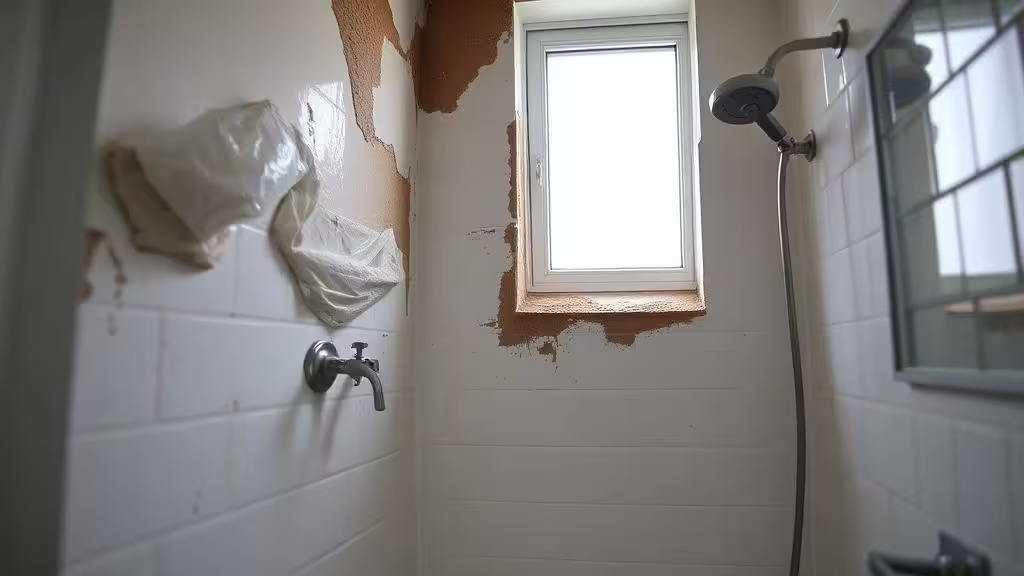
Mold doesn't live in the air. It lives on surfaces. Mold colonies establish themselves on damp drywall, bathroom grout, window sills, carpet backing, and inside HVAC ductwork. These colonies continuously release spores into the air, which is what triggers allergic reactions and respiratory symptoms. An air purifier that only captures airborne spores does nothing to address the colonies producing them.
"Mold is one of the most persistent indoor air quality problems homeowners face
Common indoor mold species include Aspergillus, Cladosporium, Penicillium, and Stachybotrys chartarum (commonly called black mold). These fungi thrive in humidity above 60% and feed on organic materials like cellulose, dust, and skin cells. They produce mycotoxins and volatile organic compounds (MVOCs) that contribute to musty odors and can cause headaches, fatigue, and respiratory irritation.
Environmental probiotics offer a fundamentally different approach to mold management. When beneficial Bacillus bacteria are dispersed into a space, they settle on the same surfaces where mold tries to colonize. Through competitive exclusion, probiotics consume the organic nutrients that mold depends on and compete for surface adhesion sites. This doesn't just remove existing spores from the air: it reduces the conditions that allow mold to grow in the first place.
Independent laboratory testing has demonstrated measurable reductions in surface mold contamination within 30 days of continuous probiotic treatment. Unlike chemical mold killers that evaporate within hours and allow rapid recolonization, environmental probiotics establish a persistent layer of beneficial bacteria that continues working between cleanings.
Why This Matters
Understanding the difference between reactive filtration and proactive microbial balance is key to creating truly healthy indoor environments. This technology represents a fundamental shift in how we approach indoor air quality.
For effective mold management, the best approach combines moisture control (keep humidity below 50%), adequate ventilation, regular cleaning, and continuous environmental probiotic treatment. The [Biotica 800](/product/biotica-800) covers rooms up to 800 sq ft, while the [E-Biotic Pro](/product/ebiotic-pro) integrates with your HVAC system to treat entire buildings, including the ductwork where mold commonly hides.
If you're dealing with visible mold growth larger than 10 square feet, professional remediation is recommended before starting any air purification regimen. For ongoing prevention and management of everyday mold exposure, environmental probiotics provide the most comprehensive, chemical-free approach available.
Ready to improve your indoor environment?
Discover our range of probiotic air purification solutions designed to create healthier spaces for you and your family.
Add EnviroBiotics as a preferred source
Get our latest research, guides, and air-quality insights highlighted in your Google experience.