Menu
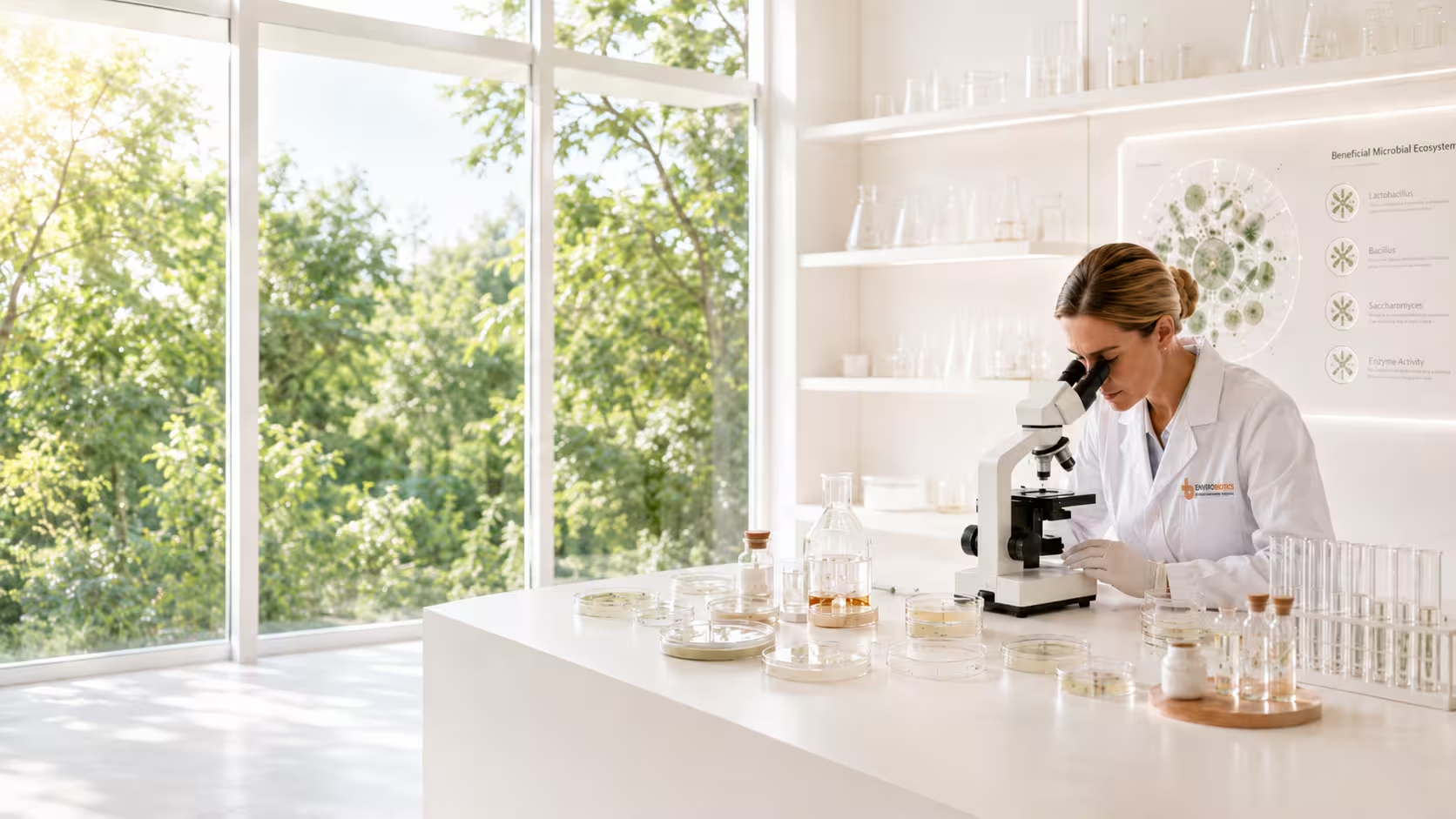
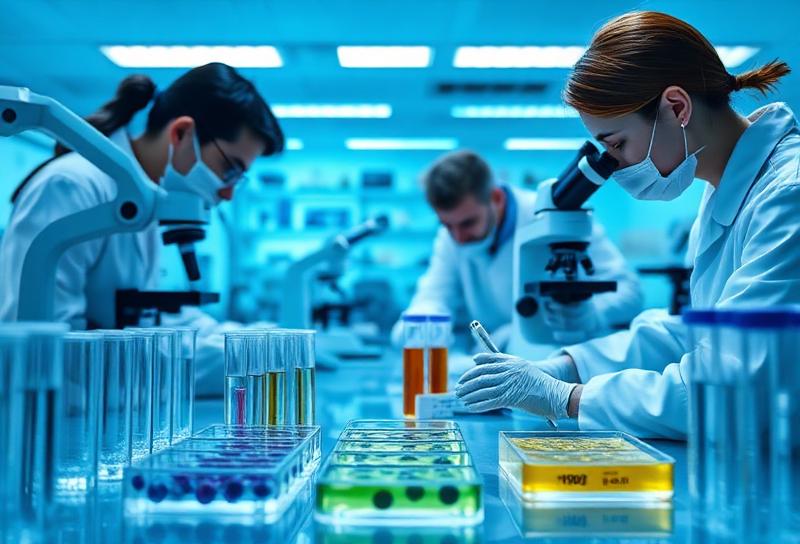
Scientist examining a sample in a calm Scandinavian lab

Research & Science

The science ofcleaner space

Environmental probiotic technology explained.

Explore Research

Key Research Findings

Want to see how these findings translate into a product? The BA-2080 applies the room-level evidence at home, the BioLogic Mini and Biotica 800 apply the surface-activity evidence, and the E-Biotic Pro applies the whole-home / HVAC evidence.

Cited Studies

Full citation blocks for the primary evidence behind EnviroBiotics. Each entry lists institution, year, method, key result, and a link to the source.

University of Genova Department of Experimental Medicine · 2025

Suppressing SARS-CoV-2 on Surfaces with Environmental Probiotics

Method:
EnviroBiotics suspension incubated with SARS-CoV-2 viral particles; measurements at 15 min, 1 h, and 3 h. Spike-protein inactivation confirmed via colony-forming assay against untreated controls.
Key result:
67% viral neutralization within 15 minutes, 97.7% within 3 hours. Control surfaces showed no spontaneous decline.

Direct evidence for room-level surface defense see how the BA-2080 applies this in a home setting.

Read the source

Indoor Biotechnologies (Cardiff, UK; Charlottesville, VA; Bangalore, India) · 2024

Indoor Allergen Elimination by Bacillus-Based Environmental Probiotics

Method:
8-day controlled application supervised by Dr. Sivasankar Baalasubramanian, with a parallel longer-period simulation at EMSL Analytical Laboratories (NJ). Allergen concentrations measured against baseline.
Key result:
Cumulative, statistically meaningful decrease in dust-mite, pet-dander, and mold allergens. Probiotic Bacillus cells secrete proteolytic enzymes that degrade allergenic epitopes.

Direct evidence for surface allergen activity see how the BioLogic Mini and Biotica 800 deliver this in homes and nurseries.

Read the source

Caselli E., Brusaferro S., Coccagna M. et al. · 2018

Reducing healthcare-associated infections incidence by a probiotic-based sanitation system: a multicentre, prospective, intervention study

Method:
Multicentre prospective trial across six Italian hospitals. Conventional chemical disinfection was replaced by a Bacillus-based probiotic cleaning system (PCHS). HAI rates and antimicrobial use tracked over the intervention period.
Key result:
~52% reduction in cumulative HAI incidence and a parallel reduction in antimicrobial drug consumption. Published in PLOS ONE.

Whole-facility, HVAC-level evidence closest in scale to the E-Biotic Pro deployed across whole homes and small commercial spaces.

Read the source

D'Accolti M., Soffritti I., Mazzacane S., Caselli E. · 2021

Pathogen Control in the Built Environment: A Probiotic-Based System as a Remedy for the Spread of Antibiotic Resistance

Method:
Review and field data on the impact of Bacillus-based probiotic sanitation (PCHS) on the resistome of indoor environments, with metagenomic profiling of antimicrobial resistance genes (ARGs).
Key result:
Continuous probiotic cleaning significantly lowered pathogen load and the abundance of ARGs on indoor surfaces vs. chemical disinfection. Published in Microorganisms (MDPI).

Mechanism evidence for competitive exclusion at scale relevant to the E-Biotic Pro for whole-home HVAC integration.

Read the source

Vandini A., Temmerman R., Frabetti A. et al. · 2014

Hard surface biocontrol in hospitals using microbial-based cleaning products

Method:
8-week trial comparing conventional disinfectants vs. a probiotic cleaner containing Bacillus subtilis, B. pumilus, and B. megaterium on hospital hard surfaces. Surface swabs analyzed for S. aureus, E. coli, Candida albicans and other pathogens.
Key result:
Stable, long-term reduction of pathogens on treated surfaces competitive exclusion confirmed across the full trial. Published in PLOS ONE.

Foundational competitive-exclusion evidence applies to every device in the lineup, including the Biotica 800 for medium-sized rooms.

Read the source

Peer-Reviewed Research

Scientific studies and clinical trials

EnviroBiotics environmental probiotics laboratory testing and microbiome research  healthcare-associated infection reduction study by Caselli et al.
Research

Reducing Healthcare-Associated Infections with Bacillus-Based Cleaning (PLOS ONE, 2018)

Caselli E. et al. Multicentre prospective intervention study showing a probiotic-based sanitation system (PCHS) using Bacillus spp. reduced healthcare-associated infections by ~52% versus conventional disinfectants across six hospitals.

EnviroBiotics environmental probiotics laboratory testing and microbiome research  antibiotic resistance control study by D'Accolti et al.
Research

Probiotic-Based Sanitation Controls Antibiotic Resistance in the Built Environment (Microorganisms, 2021)

D'Accolti M. et al. Demonstrates that continuous application of Bacillus-based probiotic cleaning significantly lowers pathogen load and the spread of antimicrobial resistance genes on indoor surfaces.

EnviroBiotics environmental probiotics laboratory testing and microbiome research  hard-surface biocontrol study by Vandini et al.
Research

Hard-Surface Biocontrol in Hospitals Using Bacillus Probiotic Cleaners (PLOS ONE, 2014)

Vandini A. et al. Showed stable, long-term reductions of S. aureus, E. coli, Candida albicans and other pathogens on hospital surfaces treated with a Bacillus subtilis / pumilus / megaterium formulation competitive exclusion confirmed across an 8-week trial.

EnviroBiotics environmental probiotics laboratory testing and microbiome research  long-term safety profile analysis of Bacillus probiotic strains
Research

Long term Safety Profile of Environmental Probiotics

Comprehensive safety analysis of Bacillus based probiotic strains used in indoor environmental applications.

Need More Information?

Our team is available to discuss specific applications, provide additional research, or help you understand how environmental probiotics can work for your space.

Backed by science. Built for your home.

Explore the devices that deliver these research-proven results.