
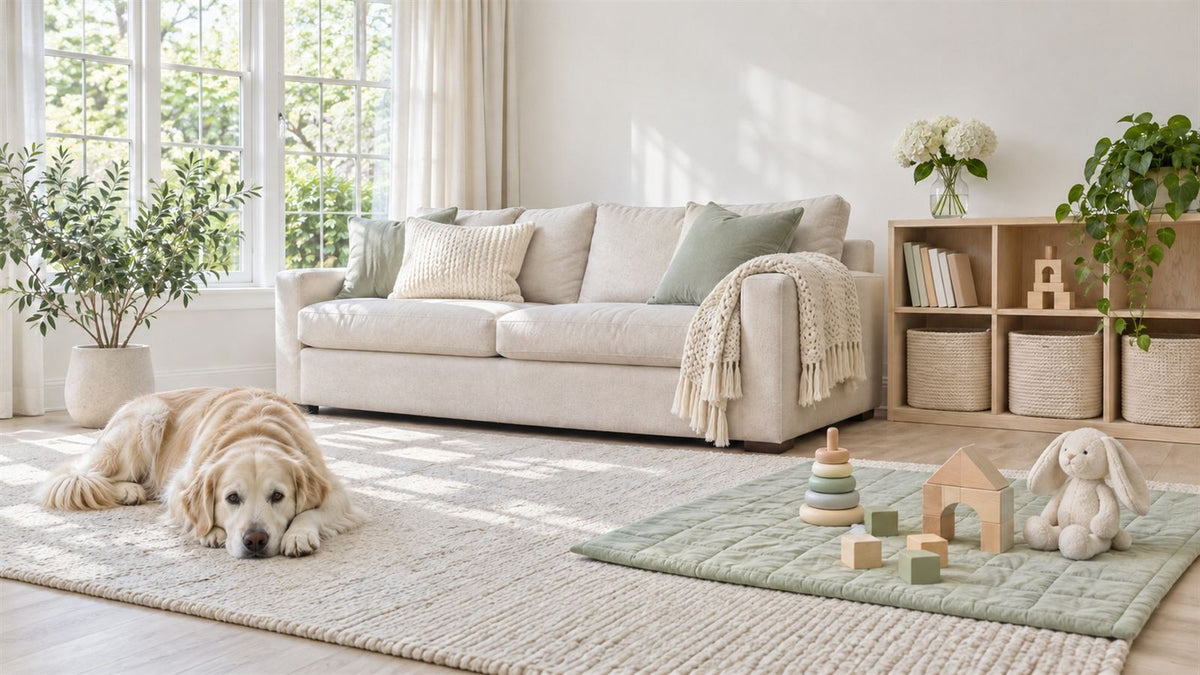
Quick answer: Winix's 5500 series, led by the long-running 5500-2, offers strong value among true HEPA purifiers: Auto mode, a washable carbon filter, and a particle sensor that makes 24/7 use easy. Keep yours. If dust, a musty smell, or pet odor keeps coming back while it runs, the remaining problem is on your surfaces, where a Winix can't reach. A probiotic air purifier treats those surfaces as an add-on; it doesn't replace the Winix. The BioLogic Mini Gen 2 costs $98 for rooms up to 300 sq ft, and the Biotica 800 costs $299 for main living spaces up to 800 sq ft.
Why so many people own a Winix 5500-2
For years, when someone asked for a capable air purifier at a fair price, the Winix 5500-2 was a common answer. Reviewers kept recommending it for practical reasons.
True HEPA plus a carbon filter you can wash. Winix's 5500-2 manual describes the AOC (Advanced Odor Control) carbon filter as washable: you rinse it under room-temperature water about every three months and replace it after about a year. The pre-filter in front catches hair and lint and is cleaned every couple of weeks, so the HEPA filter behind it lasts longer. Owners with dogs tend to appreciate this design most.
An Auto mode worth using. A particle sensor raises the fan speed when the air gets dirtier and lowers it when the room is quiet. That makes running the purifier all day comfortable, which is how a HEPA purifier does its best work.
A verified room size. Winix lists an AHAM-verified room size for its models (360 sq ft for the 5500-2, according to its manual), so you can match the purifier to your room. Check Winix's site for current prices and for newer models in the same series, such as the 5520.
PlasmaWave you can switch off. PlasmaWave is the feature that sets Winix apart from brands like Coway. Winix says PlasmaWave "creates hydroxyls" to help reduce airborne bacteria and viruses. A button on the unit turns it on or off, and Sleep Mode switches it off automatically. Winix also says it sells only CARB-compliant air purifiers, meaning they meet California's limit on ozone emissions from air cleaners. If you prefer HEPA and carbon only, you can leave PlasmaWave off. Our article Air ionizers and ozone: why ionizing isn't the same as purifying covers the wider category, including uncertified ozone generators, which are a different kind of device from a CARB-compliant Winix.
If you own a Winix, you bought a capable air purifier. This comparison is about a second source of dust and odor that air purifiers in general don't reach.
What Winix owners often notice
The Winix has run on Auto for months. Cooking smoke clears faster than it used to, and you rinse the carbon filter on schedule. Yet the sofa still smells like the dog two days after you wash its cover, the bedroom still gets dusty quickly in pollen season, and a musty smell returns to the guest room.
Our article on why air purifiers alone don't stop allergens explains why. A HEPA purifier removes the particles that are floating in the air and pass through it. Dust mite allergen in the mattress, dander in upholstery, and the microbial film behind musty smells stay on surfaces most of the time, so they rarely reach the filter.
The Winix is still doing its job. CADR (clean air delivery rate) measures how much air a purifier cleans; it was never a measure of what happens on a sofa. Owners of other brands notice the same thing, as we describe in the same complement story as Coway and the gap that Levoit owners hit.
How the two devices compare
| Winix 5500 series (5500-2 and similar) | EnviroBiotics probiotic devices | |
|---|---|---|
| What it does | Pulls airborne particles and some odors through HEPA and carbon filters | Releases beneficial Bacillus bacteria that settle on surfaces |
| CADR | Yes; Winix lists AHAM-verified room sizes | None, because it doesn't filter air |
| Surfaces | Not reached | Treated |
| Extra feature | PlasmaWave (optional; can be switched off) | None; not an ionizer |
| Ozone | Winix says its purifiers are CARB-compliant | Produces no ozone |
| How they fit together | You likely already own one | BioLogic Mini Gen 2 beside it in a bedroom, or Biotica 800 in the main living room |
Our comparison of probiotic vs HEPA covers the mechanisms in depth. In short, keep the Winix on Auto, and place the probiotic device several feet from the Winix's intake so the formula settles on your furniture instead of being pulled into the filter.
Is a Winix worth it?
Yes, for the air. If your problem is pollen, airborne dust, wildfire smoke, or a room that needs real filtration at a reasonable price, a Winix 5500-series purifier is still a sound purchase. Size it using the AHAM-verified room size or the CADR, and leave it on Auto.
It isn't enough on its own if the problem is dust and dander settled in fabrics, or odor that returns after cleaning. A second Winix in the same room cleans more air, but it still won't reach the sofa.
It works well alongside a probiotic device. The BioLogic Mini Gen 2 ($98, up to 300 sq ft) is an easy add-on for a bedroom that already has a Winix on the floor. For a large living room where the family and pets spend most of their time, the Biotica 800 ($299, up to 800 sq ft) is sized for the space.
On safety: the probiotic formula is EPA registered as a bacteriostat and fungistat (EPA Reg. No. 94339-1); the device is not EPA registered. The formula is MADE SAFE certified, and the devices produce no ozone.
Winix, Coway, and Levoit compared
- Winix: strong value, a washable carbon filter, and PlasmaWave as an optional extra.
- Coway: popular HEPA purifiers such as the Coway Airmega AP-1512HH, often praised for quiet operation. The same add-on logic applies; see our Coway comparison above.
- Levoit: often lower priced, with app control on many models and a wide range of options. The same surface gap applies.
We aren't asking you to switch HEPA brands. A HEPA purifier is the right tool for airborne particles, and the surface work is a separate job. If you're considering a premium brand such as IQAir, that is a different budget conversation, and the surface gap applies there too.
Which Winix you probably have
5500-2 and similar 5500-series models. The classic: true HEPA, a washable AOC carbon filter, Auto mode, and a PlasmaWave button. Reviewers have recommended this platform for years because of its filtration for the price.
C545 and similar tower models. The same approach in a different shape, with a sensor, Auto mode, and true HEPA.
AM90 and newer smart models. These add an app, air quality readouts, and in some cases a better remote. They're useful if you like checking the data. The readings still describe the air, not your upholstery.
Filter care. Follow the manual. Winix's 5500-2 manual says to clean the pre-filter about every 14 days, rinse the AOC carbon filter about every three months and let it dry completely, and replace the carbon filter after about a year. The HEPA filter can't be washed; replace it when the filter indicator lights. A clogged filter moves less air, and an overdue filter change is a common reason owners decide their purifier has stopped working.
About PlasmaWave
Some readers arrive here after searching "Winix ozone." Ionization is a technology some people prefer to avoid, and there is ongoing discussion about it. For a Winix that the company says is CARB-compliant and that has an off button, the practical choice is simple:
- Leave it on if you like the odor help and are comfortable with the feature.
- Turn it off if anyone in your home would rather use HEPA and carbon only, or if a doctor has advised against ionizers.
- Don't confuse it with an ozone generator. Inexpensive ozone generators sold for mold or odor are a separate category; our article on ionizers and ozone, linked above, explains how to tell them apart.
PlasmaWave works on the air. Whether it is on or off, it doesn't treat the sofa.
What owning a Winix costs after the first year
Filters are the main ongoing cost of a Winix, more than electricity. Budget for a replacement HEPA filter when the indicator lights and a new carbon filter about once a year; check Winix's site for current filter prices. That cost is also why switching the purifier off to save power is a poor trade: you replace filters on a similar schedule while the room fills back up with dust.
A probiotic add-on adds its own refill cost. The BioLogic Mini Gen 2 refill is $19 and lasts up to 90 days (twin pack $38). The Biotica 800 cartridge is $45 and lasts up to 90 days (twin pack $90). You don't need to stop using a working HEPA purifier to afford it; the add-on covers a second job, so you don't need a second Winix for the armchair.
If you can afford only one new device and you don't already own a HEPA purifier, buy the HEPA purifier first when the problem is dust, pollen, or smoke. Add a probiotic device when what's left is odor and buildup in fabrics. That order is the same whatever brand of HEPA purifier you choose.
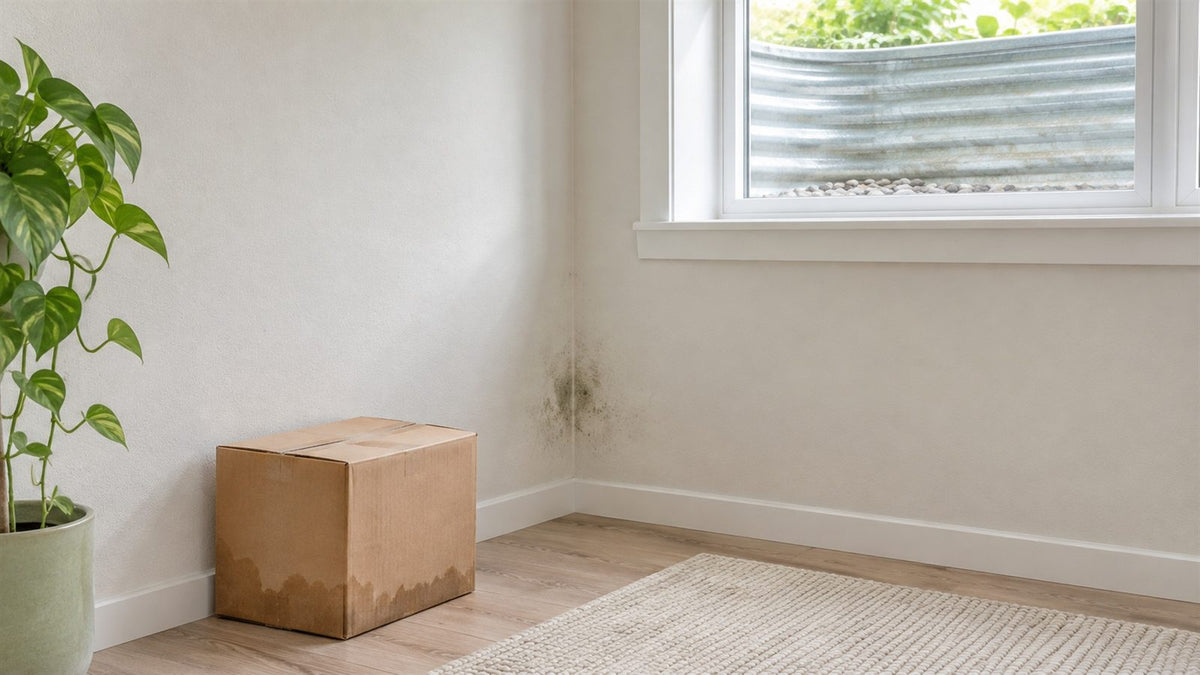
When to wait. If you have visible mold, a leak, or indoor humidity above 60%, fix the moisture first. We recommend 40 to 60% humidity; the EPA recommends 30 to 50%, and below 60%. A Winix and a probiotic device together won't dry out a basement.
Where to place a probiotic device next to a Winix
The Winix 5500 series pulls air in through the front grille, near the floor. A BioLogic Mini Gen 2 sitting on the carpet a few inches from that grille would send much of its formula straight into the filter. Give the Winix clear space, and put the probiotic device across the room at about furniture height.
- In a bedroom: Winix on the floor with its front clear; BioLogic Mini Gen 2 on the opposite nightstand.
- In a living room: Winix along a wall; Biotica 800 near the upholstered seating, not behind it and not on the same side table as the Winix.
Run both continuously. Auto mode on the Winix works well all day. The probiotic device is also designed to run 24/7; switching it on and off like a scent diffuser slows results.
The bottom line
Winix makes HEPA purifiers people can afford to run all day: solid filtration, a washable carbon filter, a useful Auto mode, and PlasmaWave as an option you control. If dust and odor keep returning while your Winix runs, the purifier is still working. The sofa, mattress, and rugs hold material that never passes through the filter. Keep the Winix for the air, and add probiotic surface treatment for the surfaces.
Frequently asked questions
Is the Winix 5500-2 worth it? Yes, as a good-value true HEPA purifier. It combines Auto mode, a washable carbon filter, and an AHAM-verified room size, and Winix says its purifiers are CARB-compliant. It cleans the air but doesn't reach dust and dander settled in bedding and upholstery.
Why do allergens and odors persist with a Winix running? Much of the indoor allergen load sits on surfaces such as mattresses, sofas, and rugs. The Winix removes the airborne portion that reaches its filter, while those surfaces keep releasing more. Treating the surfaces is a separate job from filtering the air.
Can I use EnviroBiotics with a Winix? Yes. Place the probiotic device several feet from the Winix's intake, ideally across the room. Run the Winix on Auto and the probiotic device continuously, since they do different jobs.
Should I replace my Winix with a probiotic system? No. A probiotic device doesn't filter PM2.5, pollen, or smoke, so replacing a working Winix with one would leave the air untreated. Keep the Winix and add the probiotic device for surfaces.
Does Winix PlasmaWave produce ozone? Winix says its purifiers are CARB-compliant, meaning they meet California's ozone emission limit for air cleaners, and PlasmaWave can be switched off with a button. That makes it a different kind of device from an ozone generator. If you prefer no ionization at all, turn PlasmaWave off and keep using the HEPA and carbon filters.
Is Winix better than Coway? It depends on the model, the current price, and whether you want PlasmaWave. Both brands make capable value HEPA purifiers, and neither reaches surfaces. Choose a HEPA purifier on CADR, noise, and filter cost, then add probiotic surface treatment if dust and odor keep returning.

Leave a comment
This site is protected by hCaptcha and the hCaptcha Privacy Policy and Terms of Service apply.