
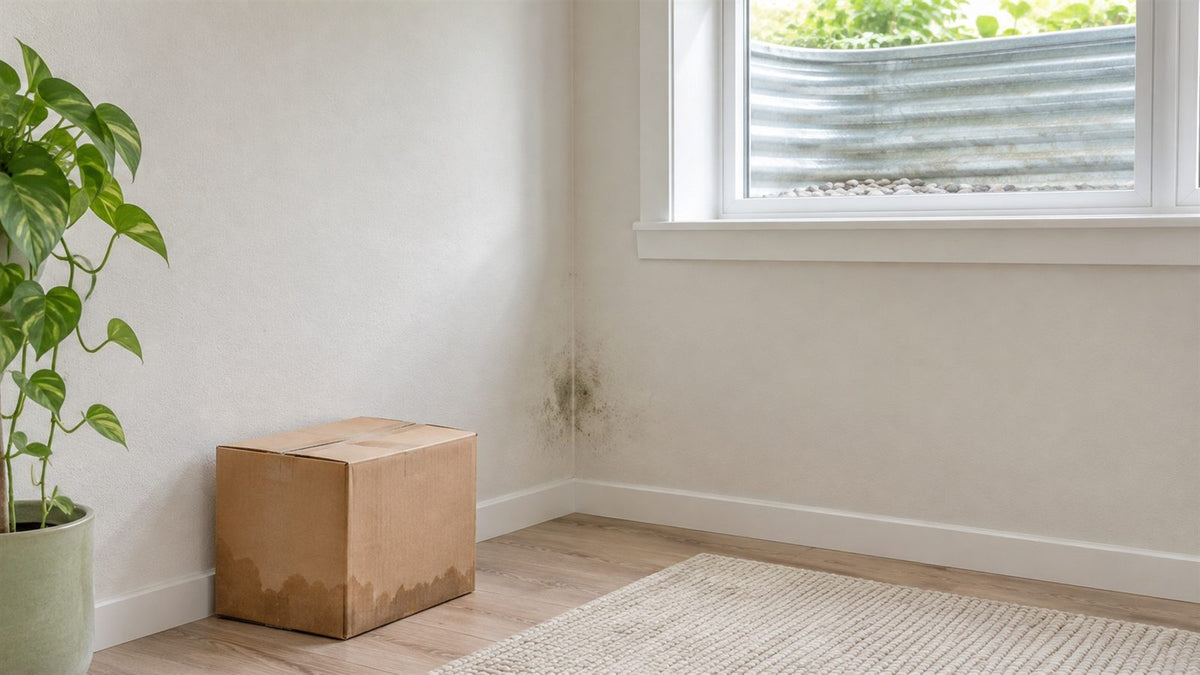
Quick answer: If the space is damp, buy a dehumidifier first. Mold needs moisture to grow, and drier air makes new growth much harder to start. Buy a true HEPA air purifier if you need to reduce mold spores in the air of a room you are using. In a basement that is both damp and dusty, use both. Neither appliance fixes a leak or removes mold growing on a wall. A probiotic air purifier helps maintain surfaces once the moisture is under control; it does not replace a dehumidifier.
Mold starts as a water problem
The EPA's guidance on mold is clear about the order of work: "The key to mold control is moisture control." Fix the water source, dry wet materials within 24 to 48 hours, and clean what can be cleaned. The EPA also notes that it is impossible to remove every mold spore from a home, because some spores are always present in indoor air and dust. Its brief guide to mold, moisture, and your home covers the basics.
So the two appliances do different jobs. A dehumidifier changes the conditions mold needs to grow. An air purifier cleans the air you breathe while those conditions are being fixed.
That difference explains the most common mistakes. If you buy only an air purifier for a wet basement, it will filter some spores while new mold keeps growing on damp surfaces. If you buy only a dehumidifier for a dry house where a musty smell lingers in an old sofa, you will be drying air that was already dry enough, and the odor will stay in the fabric.
Which tool does what
| Tool | What it does for mold | What it doesn't do | Buy it when |
|---|---|---|---|
| Dehumidifier | Lowers relative humidity so new growth is harder to start | Doesn't remove existing mold or filter spores | Humidity stays above 60%, the basement smells damp, windows fog up, or you recently had a leak |
| HEPA air purifier | Captures spores and mold fragments that pass through its filter | Doesn't dry walls or clean furniture | You are using a room during cleanup, dust or pollen is also a problem, or humidity is already under control |
| Ventilation and exhaust fans | Removes moist air at the source, such as a shower or stove | Doesn't filter particles | Bathrooms, kitchens, laundry rooms, and homes that rarely open a window |
| Repairs | Stops the water source: plumbing, gutters, grading, roof, or HVAC condensate lines | Nothing else replaces this step | Any visible leak or area that keeps getting wet |
| Probiotic surface treatment | Beneficial bacteria settle on surfaces and consume the organic residue that odor-causing bacteria and mold feed on | Doesn't dry the air, filter spores, or replace remediation | The room is already dry and the remaining problem is odor or buildup on surfaces; see probiotic vs HEPA |
Public-health guidance puts moisture control first, and so should your first purchase.
When to buy a dehumidifier first
If a humidity meter shows the problem, you don't need to weigh spore counts.
Start with a dehumidifier when:
- A humidity meter (hygrometer) reads above 60% for days at a time. We recommend 40 to 60% for living spaces; the EPA recommends 30 to 50%, and below 60%. The risk of mold rises the longer a room stays above that range, especially near cold surfaces like basement walls and windows. Our guide to ideal indoor humidity explains the numbers.
- The basement or laundry room feels clammy, smells damp, or has water beading on concrete or block walls.
- The only room with mold is a bathroom without a working exhaust fan. In that case, a fan that vents outdoors may solve the problem better than either appliance.
- You recently had a spill or slow leak and materials are still wet. Drying with fans and a dehumidifier comes before anything else.
Choosing and running one:
- Size it to the space. Dehumidifiers are rated in pints of water removed per day. Larger, damper spaces need a higher rating. Check the maker's sizing chart for your square footage and how damp the room feels.
- Set it to drain on its own. A dehumidifier stops when its bucket fills. A hose to a floor drain or a condensate pump keeps it running.
- Keep it clean. Wash or vacuum the filter and keep the coils free of dust, following the manual.
- Set the humidistat. Aim for 50% or a little below in a basement, and check the reading with a separate hygrometer placed away from the dehumidifier's exhaust.
A dehumidifier won't remove the dust that rises when you walk across a rug or the particles from sanding during repairs. What it does is weaken the conditions that let mold grow, which makes it the higher-value first purchase in a damp space.
When to buy an air purifier first
Start with a HEPA air purifier when:
- Humidity is already in range, but you still notice a smell or irritation in the air when the HVAC switches on. A lingering smell can also come from surfaces and fabrics; our guide to the musty smell covers that separately.
- You need to keep using a room during cleanup, such as a bedroom or a space you can't empty this week.
- Pollen season or wildfire smoke overlaps with your mold concern. A HEPA purifier handles those particles too.
A true HEPA filter is the right tool for spores in the air. Purifiers are sized by CADR (clean air delivery rate), which is tested for dust, pollen, and smoke. There is no separate mold rating, and no rating replaces a humidity meter. Our guide to the best air purifier for mold compares specific machines.
Avoid ozone generators, even if a store lists them under "mold." Ozone irritates the lungs and should not be used in occupied rooms.
Don't rely on a probiotic device as your only mold appliance in a damp room. The probiotic formula is EPA registered as a bacteriostat and fungistat (EPA Reg. No. 94339-1); the device itself is not EPA registered. That registration describes what the formula does on surfaces. It doesn't remove water from the air or replace drying and cleanup.
The basement that needs both
Most of the "which one" questions come from basements: concrete walls, humid summers, boxes on the floor, an old sofa, and maybe a bathroom in the corner.
A sequence that works:
- Fix the water path. Check grading, gutters and downspouts, leaking pipes, and the HVAC condensate line. If water keeps getting in, neither appliance can keep up.
- Run a dehumidifier that is the right size and drains on its own, all season long.
- Run a HEPA purifier in the finished area where you sit, on Auto, with filters changed on schedule, so the dust you stir up when you walk across the rug gets filtered.
- Clean what is dirty. The EPA notes that porous materials such as ceiling tiles and carpet may have to be thrown away if they become moldy. Replace them rather than covering the smell.
- Add surface treatment last. Our guide to how to prevent mold naturally covers chemical-free upkeep. Once the space is dry, a Biotica 800 ($299, up to 800 sq ft) can help with lingering odor and surface buildup in a finished basement.
If you start with step 5, you will be judging surface treatment on a problem that steps 1 and 2 were meant to solve.
Five quick checks before you shop
You can usually tell which appliance to buy first without hiring anyone.
Check humidity for a day. Place a hygrometer (about $10 to $50, according to the EPA) in the middle of the room, away from any dehumidifier exhaust, and check it over 24 hours. If it stays above 60% while people are using the room, buy or upsize a dehumidifier or improve ventilation before you shop for a purifier.
Touch the walls after rain or a shower. If a painted wall feels cool and tacky, or a film forms on its surface, there is still moisture in the wall or air. An air purifier won't change that.
Notice when the smell appears. If the smell gets stronger when the HVAC switches on or when you sit on a particular sofa, there is a source in the air or in the fabric, in addition to any moisture problem. That is when a HEPA purifier, and later surface treatment, make sense. Neither should come before fixing a leak.
Look at the bathroom. An exhaust fan that vents outdoors does more in a small bathroom than a $250 purifier. A dehumidifier doesn't replace the fan either. If the only mold in the house is on shower grout, the fix is ventilation and cleaning.
Match the tool to the room. In a finished basement you use every day, run a dehumidifier all season and a HEPA purifier near the seating. In an upstairs bedroom in a dry climate with a musty dresser, wash and air out the furniture and run a HEPA purifier. A dehumidifier there could make the room too dry for comfort and for wood floors.
Portable vs whole-home dehumidifiers
A portable dehumidifier is the right first step for one problem area. Most failures come from a full bucket that nobody empties; a drain hose or condensate pump solves that.
Whole-home dehumidifiers connect to your HVAC system. They make sense in humid climates and larger homes, and an HVAC contractor installs them. They control moisture but don't filter spores. If a contractor says a system also cleans the air, ask whether it includes a filter cabinet and how often the filter needs replacing.
If the house is dry and the mold smell remains, you may not need more dehumidification. The smell may be coming from materials that got wet and have since dried. Our musty smell guide covers how to find and treat it.
What remediation means
Mold remediation means finding the water, stopping it, drying or removing wet porous materials, cleaning what can be cleaned, and keeping the space from getting wet again. The EPA suggests that you can usually handle an area smaller than about 10 sq ft yourself. For larger areas, a lot of water damage, sewage, or mold in the HVAC system, hire a contractor with mold experience. The EPA also advises against running an HVAC system you know or suspect is contaminated with mold.
A dehumidifier helps keep a space dry after cleanup. A HEPA purifier makes a dusty or spore-heavy room more comfortable to use while you live in it. Neither one replaces remediation, and expecting either appliance to fix a several-thousand-dollar remediation job leads to disappointment.
Will an air purifier stop mold?
No. An air purifier removes some of the spores that are already in the air and pass through its filter. Mold growing on a damp windowsill will keep growing. Ionizers and portable UV units have the same limit, because they only treat air that reaches them.
A dehumidifier makes new growth much harder if it brings humidity down and keeps it down. It won't remove mold that is already growing. You still need to clean and repair.
Where probiotic surface treatment fits
Once a room is dry, its surfaces still collect dust, skin flakes, and microbes, which is what gives a house its smell. A HEPA purifier doesn't clean the sofa, and a dehumidifier doesn't treat it. A probiotic device fills that gap, and for mold it comes third, after moisture control and filtration.
To be clear about its limits: a probiotic device doesn't filter spores, doesn't lower humidity, and doesn't replace remediation. Its beneficial bacteria settle on surfaces and consume the organic residue that odor-causing bacteria and mold feed on. The EPA registration applies to the probiotic formula as a bacteriostat and fungistat, not to the device.
If mold is widespread, keeps returning, is in your HVAC system, or anyone in your home has health concerns related to it, contact a qualified mold inspector or remediation contractor, and talk to a doctor about any health questions.
The bottom line
Use a dehumidifier to control moisture, a HEPA purifier to filter spores from the air you breathe, and repairs to stop leaks. Add probiotic surface treatment for upkeep once the space is dry. If you can afford only one appliance this week and the space is damp, buy the dehumidifier.
Frequently asked questions
Is a dehumidifier or an air purifier better for mold? A dehumidifier is better at preventing new growth, because it removes the moisture mold needs. An air purifier is better at capturing spores already in the air. If the space is damp, buy a dehumidifier first; if humidity is already under control, a HEPA purifier handles airborne spores.
Will an air purifier stop mold from growing? No. Mold grows on damp materials, and a purifier only treats the air that passes through its filter. To stop growth, fix leaks, dry the space, and clean or replace damaged materials.
Do I need both a dehumidifier and an air purifier? Often, yes, especially in basements and humid climates. The dehumidifier controls humidity, and the HEPA purifier filters airborne particles in the room you use. They do different jobs, so running both is not redundant.
What humidity should I keep to prevent mold? We recommend keeping living spaces between 40 and 60% relative humidity; the EPA recommends 30 to 50%, and below 60%. Keeping rooms out of the high end matters most, especially in basements. Use a hygrometer to check rather than guessing.
Can a probiotic air purifier replace a dehumidifier? No. A probiotic device doesn't remove water from the air or dry materials. It treats surfaces once moisture is under control, as an upkeep step after a dehumidifier and repairs.
When should I call a professional instead of buying a machine? Call a professional when mold covers more than about 10 sq ft, keeps returning after you dry and clean, is in your HVAC system, or follows a flood or sewage backup. If anyone in your home has health concerns related to mold, talk to a doctor as well. Appliances support remediation but don't replace it.
Related reading
- Best air purifier for mold
- How to prevent mold naturally
- What is the ideal indoor humidity level?
- How to get rid of musty smell
If moisture is already controlled and odor or surface buildup remains

Leave a comment
This site is protected by hCaptcha and the hCaptcha Privacy Policy and Terms of Service apply.