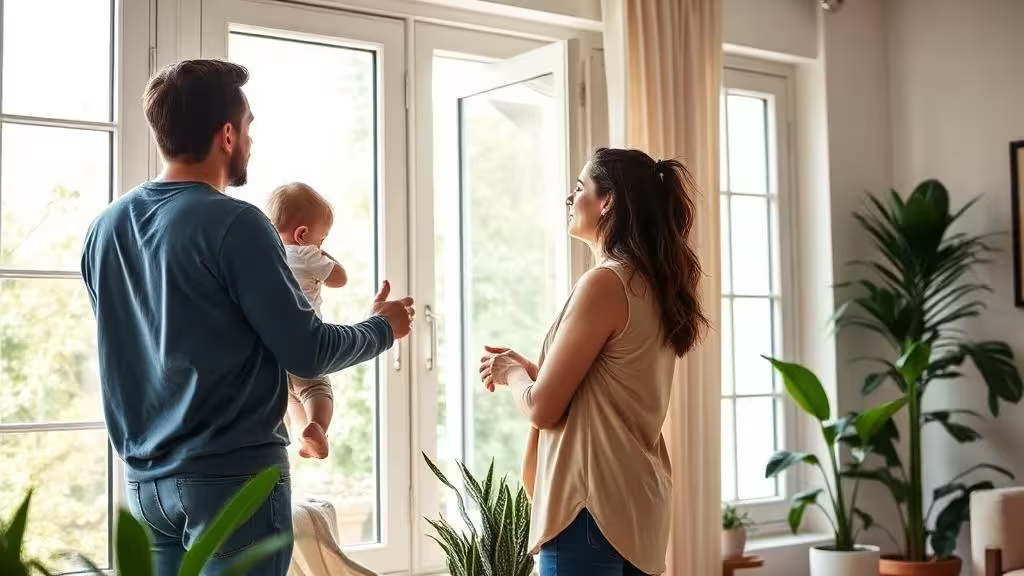
Best Air Purifier for Asthma (2026): A Buyer's Guide
The best air purifier for asthma depends on your trigger. A trigger-by-trigger 2026 guide to HEPA, probiotic surface treatment, and what to avoid (ozone).
Key Takeaways
- Probiotic technology creates a healthier microbial balance
- 24/7 protection on surfaces throughout your space
- Natural and sustainable alternative to chemical cleaners
- Works with nature to create safer indoor environments
Quick answer: The best air purifier for asthma depends on which trigger sets off your symptoms. For airborne triggers, pollen, smoke, and dander that's already aloft, a true HEPA unit sized to the room is the right tool. For settled triggers, dust mite allergen, mold, and the dander reservoir in bedding and carpet, surface treatment matters more than air filtration, and probiotic surface systems address those reservoirs directly. Avoid ozone generators and ionizers entirely: ozone is a respiratory irritant that can make asthma worse. No air purifier treats asthma. It reduces environmental triggers, which is one part of the plan your doctor sets.
A note before anything else: an air purifier is environmental control, not medicine. It supplements, and never replaces, your prescribed medication and your doctor's asthma action plan. Nothing in this guide should be read as a claim that any device treats, prevents, or controls asthma. Talk to your physician before changing anything about how you manage your condition.
Start with your trigger, not with the product
Most asthma purifier guides rank devices. That's the wrong order of operations, because two people with the same diagnosis can have completely different environmental drivers. Someone whose attacks cluster in spring is dealing with an airborne, seasonal load. Someone who wakes up wheezing every night year-round is usually dealing with a settled reservoir in the bedroom, most often dust mite allergen in the mattress and bedding.
The underlying mechanism, how these particles set off an asthmatic airway, is covered in detail in our post on how indoor allergens trigger asthma. This guide picks up where that one leaves off: given your trigger, what should you actually buy?
If your concern is allergic rhinitis rather than asthma, the best air purifier for allergies guide is the better starting point. The technologies overlap; the stakes and the priorities don't.
The three technologies that matter (and the one to avoid)
True HEPA filtration
A true HEPA filter traps 99.97% of particles at 0.3 microns. That covers pollen, smoke particulate, airborne mold spores, and pet dander while it's aloft. For asthma households, HEPA's value is straightforward: it lowers the concentration of airborne irritants in the room you're breathing in.
Its limit is equally straightforward. A filter can only clean the air that passes through it. Anything sitting in a mattress, a rug, or a sofa cushion is invisible to it until something stirs that particle into the air.
Look for: a stated CADR appropriate to your room size, sealed HEPA (not "HEPA-type"), a quiet low setting you can sleep next to, and no ionizer mode.
Probiotic surface treatment
Probiotic systems continuously disperse beneficial Bacillus spores into the room, where they settle onto surfaces and consume the organic debris that allergen-producing organisms depend on. The target is the reservoir: bedding, carpet, upholstery, and damp surfaces where mold establishes.
This is a different job from filtration, not a better version of it. The full comparison is in probiotic vs HEPA. For asthma specifically, the relevant point is that dust mite and dander allergens spend nearly all their time on surfaces, so a device that only filters air never reaches most of the load.
On safety, which is a fair question for anyone with a reactive airway: the strain safety data and third-party certifications are laid out in are environmental probiotics safe. These systems produce no ozone.
Activated carbon
Carbon adsorbs gases and VOCs, cooking odors, smoke, fresh paint, cleaning-product fumes. Irritant gases are a real asthma trigger for many people and particle filters do nothing about them, so a carbon stage is worth having if chemical smells set you off.
Ozone generators and ionizers: skip these
This is the one firm rule in the guide. Ozone is a lung irritant. Health authorities specifically warn people with asthma away from ozone-generating air cleaners, and ionizers can produce ozone as a byproduct even when they aren't marketed as ozone devices. "Activated oxygen," "energized oxygen," and "plasma" are all names worth reading carefully before you buy.
If a device doesn't state plainly that it is no-ozone, treat that as a no for an asthma household.
Recommendations by trigger
Dust mites (year-round, worse at night)
Dust mite allergen is the most common driver of persistent, nocturnal asthma symptoms, and it is almost entirely a surface problem. The allergen lives in mattresses, pillows, bedding, carpet, and upholstery, and only becomes airborne for a few minutes when those things are disturbed.
Primary: surface treatment. Wash bedding weekly in hot water, use allergen-proof encasements on the mattress and pillows, HEPA-vacuum carpet and upholstery, and hold indoor humidity at 40 to 60%. A probiotic system running continuously in the bedroom addresses the reservoir the rest of the time.
Secondary: a HEPA unit for the disturbance windows, changing sheets, vacuuming, kids on the couch.
Pet dander (year-round, if there's an animal in the home)
Dander behaves like dust mite allergen: sticky protein that settles into fabric and re-aerosolizes when disturbed.
Primary: surface treatment across the rooms the animal uses, plus keeping pets out of the bedroom if you can manage it.
Secondary: HEPA in the room with the most airborne exposure.
Mold and damp (year-round, worse above 60% humidity)
Primary: source control. Fix the leak, run a dehumidifier, and have visible growth over roughly ten square feet remediated professionally. No purifier substitutes for this.
Secondary: probiotic surface treatment to occupy the surface niches mold would otherwise colonize, plus HEPA to catch airborne spores.
Pollen and outdoor air (seasonal)
Primary: HEPA, running continuously in the bedroom during your season, with windows shut.
Secondary: surface treatment for the pollen tracked in on clothes, hair, and pets that settles on furniture.
Smoke, VOCs, and irritant gases
Primary: activated carbon plus HEPA. Particle filtration alone will not touch a gas.
Secondary: ventilation and removing the source, which is usually more effective than any device.
Room sizing and placement
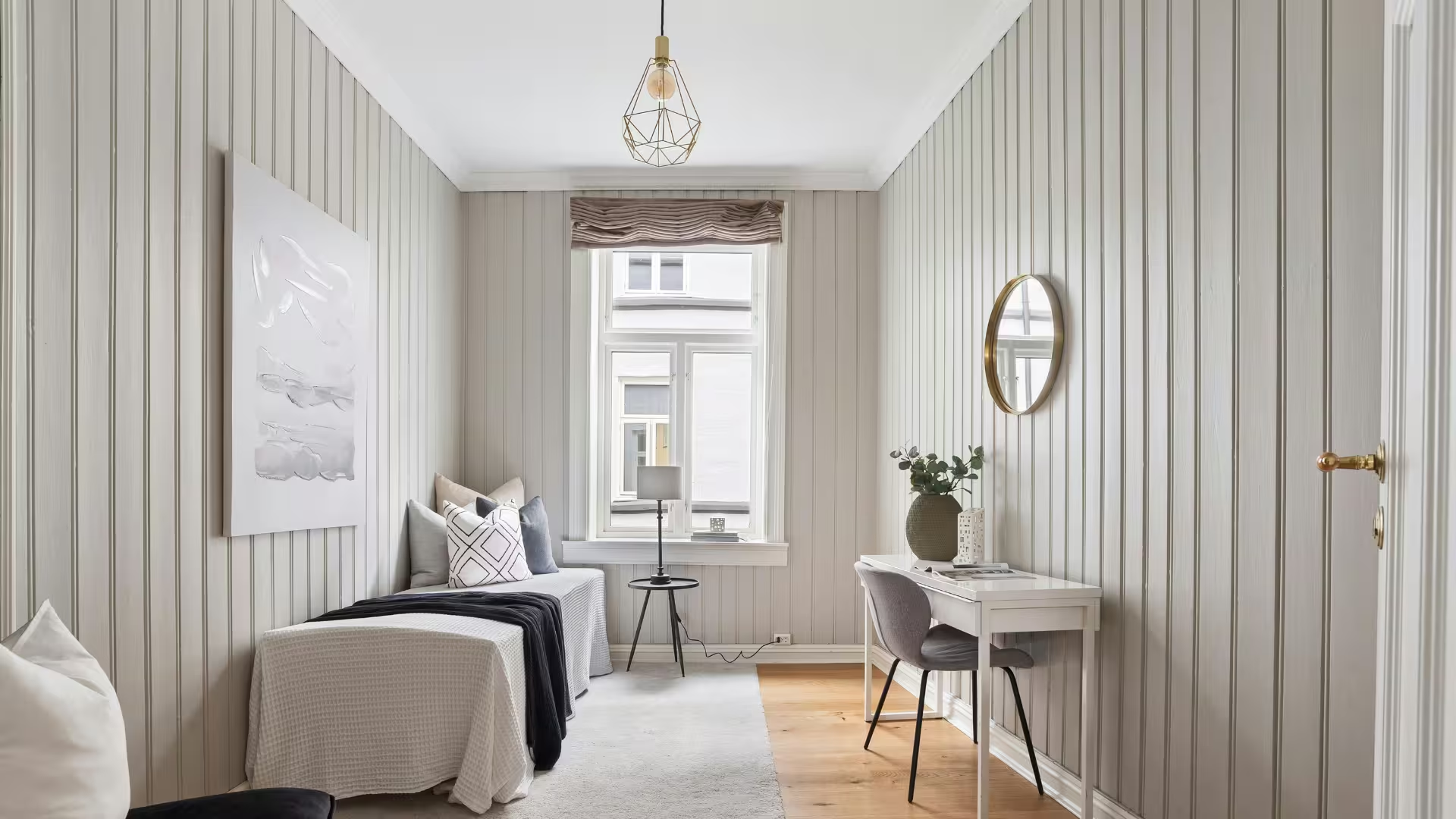
The bedroom is the highest-value placement in almost every asthma household, because it's where you spend six to ten uninterrupted hours breathing the same air. Size the unit generously to the room so it can hold clean-air delivery on a low, quiet setting rather than running loud all night.
For probiotic coverage, the BioLogic Mini Gen 2 covers up to 300 sq ft and is quiet enough for a bedroom or nursery. The Biotica 800 covers up to 800 sq ft for open living areas. For whole-home coverage through existing ductwork, the E-Biotic Pro is HVAC-integrated.
Buying a purifier for a child with asthma
The priorities shift slightly for kids: noise matters more (a device that gets switched off at bedtime does nothing), and the no-ozone rule becomes non-negotiable. Practical checklist for a child's room: no ionizer or ozone mode, quiet on its lowest setting, allergen-proof mattress and pillow encasements, humidity held at 40 to 60%, soft toys washed regularly, and no smoking anywhere in the home. Coordinate any change with your child's pediatrician, and keep their action plan and medication exactly as prescribed.
What to look for on the box
Sealed true HEPA, not "HEPA-like" or "HEPA-type." CADR rated for your room size, ideally AHAM Verified. Explicitly no ozone, stated by the manufacturer. A carbon stage if gases or odors are among your triggers. Quiet operation at the setting you'll actually run. For probiotic systems, look for FDA GRAS strain classification and third-party safety certification such as MADE SAFE.
The bottom line
Match the tool to the trigger. HEPA for what's in the air, surface treatment for what's in the mattress and the carpet, carbon for gases, and nothing that makes ozone. Most asthma households with year-round symptoms are dealing with a settled reservoir, which is precisely the part a filter can't reach, and that's the gap probiotic surface treatment was built for.
And the part worth repeating: this is environmental control. It sits alongside your medication and your doctor's plan, never in place of them.
Frequently asked questions
Do air purifiers help with asthma? They can help by reducing the environmental triggers that set off symptoms, but they don't treat asthma itself. Reducing airborne and surface allergens lowers exposure, which is standard environmental-control advice from allergists. An air purifier supplements, and never replaces, your prescribed medication and your doctor's asthma action plan.
What is the best type of air purifier for asthma? It depends on your main trigger. For airborne triggers (pollen, dander, smoke), a true HEPA purifier is best. For settled triggers (dust mites, mold), surface control matters more than air filtration, and probiotic surface treatment addresses those reservoirs. Many asthma households do best combining HEPA for the air with surface treatment for bedding, carpet, and upholstery.
Are ionizers and ozone air purifiers safe for asthma? No, they are the type to avoid. Ozone is a respiratory irritant that can trigger and worsen asthma, and ionizers can generate ozone as a byproduct. Health authorities specifically warn people with asthma away from ozone-generating air cleaners. Choose devices that are explicitly no-ozone, whether that's a HEPA filter or a biological probiotic system.
Can an air purifier help a child with asthma? It can reduce the triggers in a child's room, which supports their overall management, but it is not a treatment and doesn't replace a pediatrician's plan. For children, prioritize a quiet, no-ozone device for the bedroom, keep humidity at 40 to 60%, use allergen-proof bedding, and avoid any ionizing or ozone-producing product. Always coordinate environmental changes with your child's doctor.
Will a HEPA purifier get rid of dust mites? Not on its own. Dust mites live inside bedding, mattresses, carpet, and upholstery and rarely become airborne, so a HEPA purifier seldom encounters them. Reducing dust-mite triggers means washing bedding hot, using encasements, keeping humidity low, HEPA-vacuuming, and treating surfaces. The air filter only catches allergen during the brief moments it's stirred into the air.
Should I run an air purifier all the time for asthma? Generally yes for HEPA units. Continuous operation keeps airborne triggers from building back up, especially in the bedroom where you spend many hours. Size the unit to the room so it can run on a lower, quieter setting. Surface-focused probiotic systems are also designed for continuous background operation. Neither replaces medication or a medical asthma plan.
Want to cut triggers on surfaces, not just in the air? See the BioLogic Mini Gen 2.
Ready to improve your indoor environment?
Discover our range of probiotic air purification solutions designed to create healthier spaces for you and your family.
Add EnviroBiotics as a preferred source
Get our latest research, guides, and air-quality insights highlighted in your Google experience.