How Indoor Allergens Trigger Asthma (And Why Surface Treatment Matters)
Dust mites, pet dander, and mold spores trigger most indoor asthma flare-ups, and they live on surfaces, not in the air. Here's what actually treats the source.

Key Takeaways
- Probiotic technology creates a healthier microbial balance
- 24/7 protection on surfaces throughout your space
- Natural and sustainable alternative to chemical cleaners
- Works with nature to create safer indoor environments
If you live with asthma, you already know that the air inside your home matters as much as the air outside. What's less obvious is that most of the triggers responsible for indoor flare-ups are not floating around waiting to be inhaled. They are sitting on your mattress, embedded in your sofa, and growing quietly behind your washing machine.
Indoor allergens are the largest single category of asthma triggers, and they behave very differently from the airborne pollutants most people focus on. Understanding where they actually live, and why traditional air purification only addresses a small slice of the problem, is the first step toward meaningful relief.
The Four Indoor Allergens That Drive Most Asthma Flare-Ups
Decades of clinical research point to the same short list of culprits: dust mites, pet dander, indoor mold, and cockroach allergens. Each one shares a common trait. They originate on surfaces and only briefly become airborne when disturbed.
Dust mites. Microscopic arachnids that thrive in mattresses, pillows, carpets, and upholstered furniture. They feed on shed skin cells and produce a protein (Der p 1) that is one of the most potent asthma triggers ever identified. A single used mattress can host hundreds of thousands of them.
Pet dander. Tiny flecks of skin from cats, dogs, and other animals. Dander is sticky, binds to fabric and furniture, and can persist in a home for months after a pet has left. The cat allergen Fel d 1 is so light and persistent that it has been detected in homes that have never housed a cat.
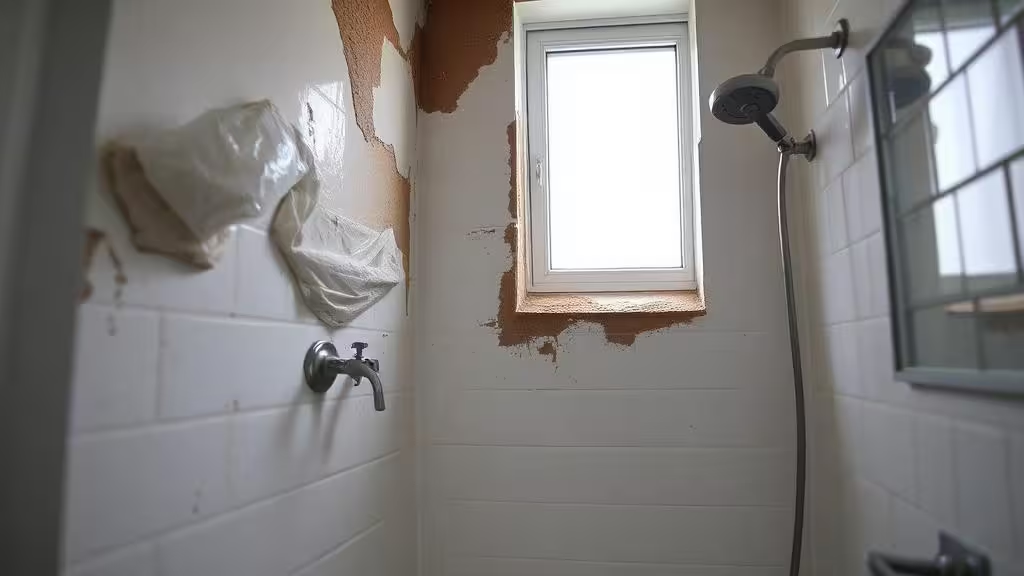
Indoor mold. Mold colonies grow on damp surfaces: bathroom grout, window frames, basement walls, and inside HVAC systems. Spores become airborne in bursts, but the colony itself is anchored to a surface. Removing the spores in the air does nothing about the source still producing them.
Cockroach allergens. Less talked about but heavily implicated in childhood asthma, especially in urban housing. The proteins that trigger reactions are deposited in droppings and shed body parts that settle into floors, baseboards, and cabinetry.
"If you mapped your home's allergen load on a 3D model, almost all of it would sit on or just below the surface. Very little of it would be in the air at any given moment.
Why HEPA Filtration Only Tells Half the Story
HEPA air purifiers are excellent at what they do. A true HEPA filter captures 99.97% of airborne particles 0.3 microns or larger. For wildfire smoke, traffic-related fine particulates, and pollen drifting in through an open window, HEPA is genuinely useful.
The problem is scope. An air purifier can only treat what passes through its filter. It does not touch the mattress your dust mites live in, the carpet that holds your cat's dander, or the bathroom tile where mold is forming. Air purifiers solve about 1% of the indoor allergen problem; the other 99% is on surfaces.
This explains a frustrating pattern that allergists hear constantly: patients buy a high-quality HEPA unit, run it religiously, and still wake up congested. The unit is doing its job. The job is just smaller than they were led to believe.
Treating the Source: Competitive Exclusion on Surfaces
If the allergens live on surfaces, that is where treatment has to happen. The most promising approach to date is something microbiologists call competitive exclusion.
When beneficial Bacillus probiotic strains are continuously dispersed into a room, they settle on every surface, including the cracks, fabric weaves, and porous materials that no spray cleaner can fully reach. They consume the organic matter that mold colonies and dust mite populations depend on. They enzymatically break down allergen proteins, including Der p 1 and Fel d 1, that trigger asthma reactions.
The effect compounds over time. A spray cleaner works for the few minutes it stays wet. A probiotic layer keeps working between cleanings, day and night, on every surface in the treated space. Independent laboratory testing shows measurable reductions in dust mite allergen and cat dander protein within 30 days of continuous use.
What This Looks Like in Practice
For families managing asthma, a more complete indoor strategy looks something like this. Use a HEPA purifier where airborne particulates are a real concern (smoke, pollen, traffic). Treat surfaces continuously with environmental probiotics so the dust mite colonies, mold reservoirs, and dander-laden fabrics that drive most flare-ups are slowly suppressed at the source. Wash bedding weekly in hot water. Vacuum with a sealed HEPA-bag vacuum. Keep indoor humidity between 30% and 50% to discourage mite and mold growth.
The Biotica 800 covers spaces up to 800 square feet and is the most common starting point for households with asthma, while smaller bedrooms and offices are well served by the BioLogic Mini. Both rely on the same FDA GRAS-certified, EPA Registered, MADE SAFE-certified Bacillus strains used in clinical environments.
"Air purification cleans what you breathe in the moment. Surface probiotics suppress the populations producing the next round of triggers. They are not competitors. They are partners.
Frequently Asked Questions
Are environmental probiotics safe for someone with asthma? Yes. The Bacillus strains used by EnviroBiotics are FDA GRAS, EPA Registered, and MADE SAFE certified, with a long safety record in healthcare settings. They produce no ozone, no VOCs, and no chemical residue. Read the full breakdown in Are environmental probiotics safe?.
How long before I notice a difference? Independent lab testing shows measurable reductions in common indoor allergens within 30 days of continuous use. Real-world relief varies, but the protective effect is cumulative rather than reactive.
Do I need to stop using my HEPA purifier? No. The two approaches address different fractions of the problem. Many households use both: HEPA for airborne particulates, probiotics for surface allergen suppression.
What if my asthma is triggered mainly by mold? Surface treatment is especially relevant for mold, since spores are produced by colonies anchored to surfaces. See Best air purifier for mold for a deeper comparison.
Ready to improve your indoor environment?
Discover our range of probiotic air purification solutions designed to create healthier spaces for you and your family.
Add EnviroBiotics as a preferred source
Get our latest research, guides, and air-quality insights highlighted in your Google experience.