What Is Indoor Microbiome Health? The Science That's Changing How We Think About Air Quality
The indoor microbiome is the bacteria, fungi, and microbes living in your home. Why its balance matters, and how to restore it the way you restore your gut.
Key Takeaways
- Probiotic technology creates a healthier microbial balance
- 24/7 protection on surfaces throughout your space
- Natural and sustainable alternative to chemical cleaners
- Works with nature to create safer indoor environments
Quick answer: The indoor microbiome is the community of bacteria, fungi, and other microorganisms that live on the surfaces and in the air of your home. Like the gut microbiome, it's healthiest when it's diverse and balanced, and like the gut microbiome, modern habits have steadily depleted it. Indoor microbiome health is the emerging science of restoring that balance, and it's reshaping how we think about indoor air quality, allergies, and the limits of disinfection.
The microbiome you've never heard of
If you've been paying any attention to health research in the last decade, you know about the gut microbiome, the trillions of bacteria and other microbes living in your digestive tract, doing essential work for immunity, digestion, mood, and disease resistance. The science is enormous. Probiotic supplements are a multi-billion-dollar industry. "Diversity" is the word every gastroenterologist now uses.
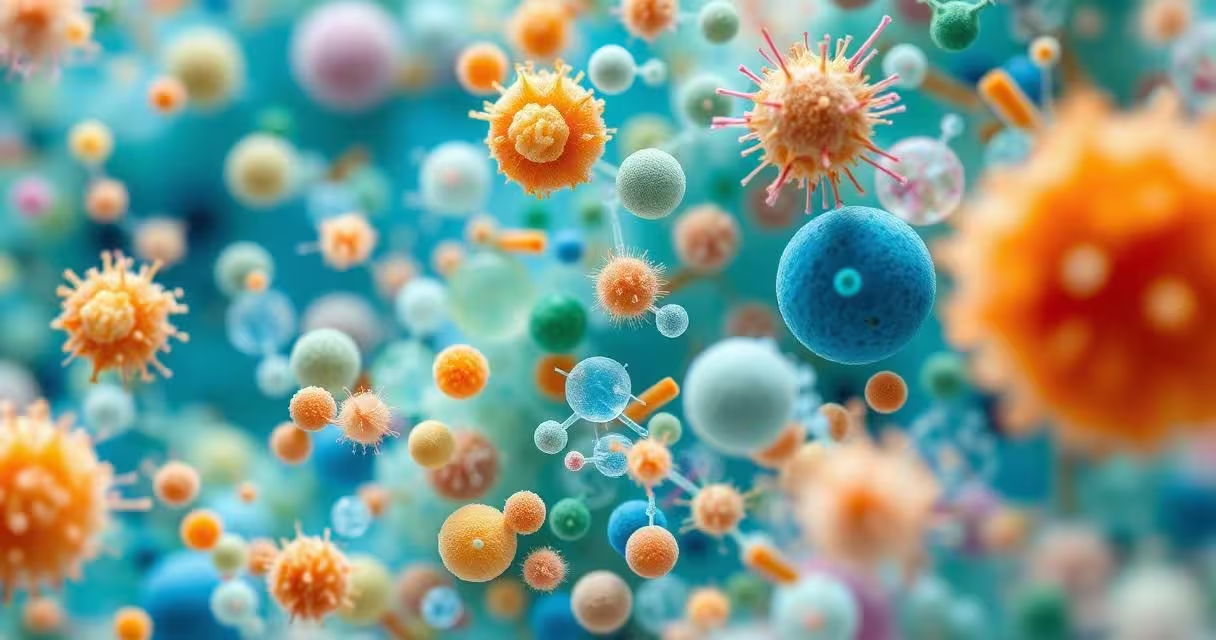
You've heard much less about the microbiome of the space around your gut: the walls, the floor, the bedding, the air, the ductwork. The bacteria, fungi, archaea, viruses, and microbial debris that occupy every surface of every indoor environment humans build and live in.
That's the indoor microbiome, sometimes called the built environment microbiome in academic literature, and it operates by the same rules as the gut microbiome. Diversity is good. Imbalance favors pathogens. Disruption creates lasting problems. And modern lifestyles have been quietly stripping it for about 75 years.
Indoor microbiome health is the field of study that asks what that loss is doing to us, and what restoring it might look like.
How the indoor microbiome parallels the gut microbiome
The analogy is more than rhetorical. Both systems work the same way at a mechanistic level.
In a healthy gut: a diverse community of resident bacteria occupies the available space and consumes the available food; pathogens that arrive find no open ecological niche and fail to establish; the community produces metabolites that further suppress pathogen growth and reinforce gut barrier function; disruptions (broad-spectrum antibiotics, processed-food diets, chronic stress) create open ecological niches that opportunistic pathogens like C. difficile exploit.
In a healthy indoor microbiome: a diverse community of harmless bacteria and fungi occupies the available surface area; pathogens that arrive (on shoes, in the air, from food prep) find no open niche and no exposed organic debris to feed on, and fail to establish; the community continuously consumes the organic debris (shed skin cells, food residue, pet dander) that pathogens would otherwise feed on; disruptions (chemical disinfectants, broad-spectrum cleaning, antimicrobial-coated materials) create open ecological niches that opportunistic pathogens, mold, Staphylococcus, dust mite allergens, odor bacteria, exploit.
Same mechanism. Different surface. The principle that's transformed how doctors think about gut health is the same principle now reframing how microbiologists think about indoor environments.
What's actually in a healthy indoor microbiome
The bacterial and fungal communities of a typical home are surprisingly well-characterized at this point. Large-scale sequencing studies, the Home Microbiome Project, the Hospital Microbiome Project, sampling across thousands of homes in North America and Europe, have built a reasonable map of what a typical residential indoor microbiome contains.
In broad strokes: bacteria from human skin dominate high-touch surfaces (Staphylococcus, Streptococcus, Corynebacterium, most commensal; a few pathogenic in the wrong context); bacteria from soil and the outdoor environment colonize the surfaces nearest entryways and windows (the more "diverse" portion of the microbiome, including the Bacillus genus relevant to indoor microbiome management); fungi from the outdoor environment (yeasts, molds, environmental sporeformers) settle throughout the home, with concentrations driven by humidity and ventilation patterns; bacteria from the gut microbiome show up in bathrooms, around food prep areas, and in close-contact textiles; pet-associated microbes transform the diversity profile of homes with cats or dogs, generally toward higher microbial diversity, associated in epidemiological studies with lower rates of childhood allergy and asthma.
Diversity is the headline finding across this body of work. Homes with more diverse microbial communities (often older homes, homes with pets, homes with regular outdoor airflow) consistently show better health outcomes for occupants than homes with depleted or imbalanced microbiomes.
How modern homes disrupt the indoor microbiome
If diversity is health, the trajectory of indoor environments over the last 75 years is a steady march toward disease.
Sealed envelopes and reduced ventilation
Building codes and energy-efficiency standards since the 1970s have produced increasingly tight building envelopes. Less air infiltration means less energy waste, which is good for the climate. It also means less microbial exchange with the outdoor environment. The diverse soil and plant microbes that historically populated indoor surfaces through normal air exchange now arrive in dramatically smaller quantities. The result: indoor microbiomes have drifted away from the outdoor microbiome and toward narrower, more human-derived (and often more pathogen-friendly) communities.
Air conditioning and humidity control
Mechanical climate control has homogenized indoor environments across seasons and geographies. Constant temperature and constant humidity favor narrower microbial communities. The natural seasonal variation that used to drive indoor microbial diversity is largely gone in climate-controlled homes.
Synthetic and antimicrobial-coated materials
A growing share of modern interior surfaces, countertops, paints, fabrics, plastics, incorporate antimicrobial additives. Silver-ion coatings. Triclosan-treated textiles (mostly banned now but still in legacy products). Antimicrobial-finished wood and laminates. The intent is hygienic. The effect is selective pressure: the antimicrobial layer suppresses sensitive species and leaves the resistant ones to colonize. This is the same dynamic that produces antibiotic-resistant pathogens in clinical settings, just played out across the surfaces of an average kitchen.
Disinfectant culture
The post-pandemic intensification of household disinfection has accelerated what was already a multi-decade trend. Daily bleach sprays. Quaternary ammonium wipes. Alcohol-based surface sanitizers used reflexively rather than purposefully. Each round of chemical disinfection resets the surface microbial community, strips out the diverse commensal organisms along with any pathogens, and leaves the surface open for recolonization by whichever organism reproduces fastest. The same dynamic over-sanitization is its own problem describes at the household level shows up across populations as the broader concern of antimicrobial resistance and the indoor environment.
What gets lost when this happens
The cost of progressive indoor microbiome depletion is increasingly visible in the population-health data: higher rates of allergic disease, especially in children raised in low-microbial-diversity environments; higher rates of asthma, particularly in homes with persistent dust mite, mold, and pet-dander problems on indoor surfaces; higher rates of Clostridioides difficile and other opportunistic infections, especially in hospitals where disinfection-driven microbiome depletion is most extreme; the rise of Candida auris and other emerging fungal pathogens that exploit the open ecological niches of over-sanitized indoor environments.
The "hygiene hypothesis", the idea that early-life microbial exposure protects against allergic disease, has evolved into a much broader observation: the indoor microbiome is doing health work, and depleting it has population-scale consequences.
How to restore microbiome balance at home
If the field is young, the practical implications are nonetheless tractable. Restoring indoor microbiome health doesn't require dismantling modern housing. It requires three interlocking changes.
1. Reintroduce environmental diversity
Open windows more often. Spend more time outdoors. Bring plants and natural materials inside. Don't reflexively close off the outdoor microbial exchange that older homes had by default. Households with pets generally have more diverse indoor microbiomes than households without them, one of the few well-replicated findings in this literature.
2. Stop the disinfectant treadmill
The single highest-leverage household change is to stop reflexive broad-spectrum disinfection. Keep disinfectants for what they're actually for, acute contamination, post-illness, raw food prep, and stop using them as everyday cleaning chemistry. Use plain soap and water for general cleaning. Use vinegar, baking soda, and fragrance-free cleaning products instead of synthetic-fragrance "antibacterial" sprays.
This isn't a hygiene compromise. It's a hygiene refinement. The data on hospital-acquired infection in particular has converged on a clear conclusion: more aggressive disinfection past a certain threshold produces worse, not better, infection outcomes, because the disruption to the protective microbiome outweighs the marginal pathogen suppression.
3. Re-seed the surface microbiome with beneficial organisms
This is the part the field is most actively developing, and where the practical interventions are now coming from.
The gut-microbiome analogue is obvious: probiotics. Live, beneficial organisms reintroduced to a depleted ecosystem to occupy the open niches before opportunistic pathogens do. The same principle applies to indoor surfaces.
Environmental probiotics, typically harmless Bacillus spores, the same organisms used in agriculture and food production for decades, can be dispersed continuously across indoor surfaces. They settle, consume organic debris, and outcompete pathogens for space. Published research has shown them to reduce surface allergens substantially within 8 days, and to reduce surface virus concentrations by 67% within 15 minutes and 97.7% within 3 hours. The environmental probiotic safety profile covers the FDA GRAS, MADE SAFE, and EPA Registered status in detail.
The room-scale implementation looks like a small mist-dispersing device that runs in the background, the BioLogic Mini Gen 2 and similar units in the EnviroBiotics line. The whole-home implementation distributes probiotics through HVAC ducts (the E-Biotic Pro). Both are doing the same biological work: actively reseeding the surface microbiome the same way a gut probiotic reseeds the gut.
This is the closest thing the field currently has to a practical, scalable indoor microbiome intervention. It's also where the brand position around EnviroBiotics is most directly grounded: the company's institutional deployments (hospitals, schools, large facilities) under the prior BetterAir name were among the first sustained real-world tests of environmental probiotic re-seeding, and the published outcomes have been measurable.
The research frontier (what's coming)
The indoor microbiome field is moving fast and is worth watching: microbiome-aware building design, architects and HVAC engineers are beginning to incorporate microbial-diversity targets alongside the traditional thermal-comfort and energy-efficiency targets; personalized indoor microbiome profiling, lower sequencing costs are making it economically feasible to test the microbiome of an individual home; probiotic strain optimization, future generations may use targeted strains optimized for specific outcomes (allergen-specific suppression, odor-specific suppression, mold-specific suppression); population-health studies, large cohort studies tracking indoor microbiome status against health outcomes are now in progress.
The bottom line
The indoor microbiome is the unseen biological layer of every home, school, hospital, and office. It's not optional, it's there whether you think about it or not. The only question is whether it's diverse and protective or depleted and pathogen-friendly.
For most of human history, indoor microbiome health was the default. Open spaces, natural materials, regular outdoor exchange, and minimal chemical interference produced indoor environments where harmless microbes did the protective work in the background.
Modern homes have, almost accidentally, dismantled that. The replacement strategy, disinfect, filter, seal, addresses some problems and creates others. The emerging alternative is to do for the indoor microbiome what we've spent the last two decades learning to do for the gut microbiome: stop depleting it, and where it's already depleted, actively restore it.
The science is still young. The practical interventions are real, and they're starting to scale. And the houses that take this seriously now will be the early evidence base for what indoor microbiome health looks like when it's done well.
Frequently Asked Questions
What is the indoor microbiome? The indoor microbiome is the community of bacteria, fungi, archaea, and other microorganisms living on the surfaces and in the air of an indoor environment, homes, offices, schools, hospitals. Like the gut microbiome, it works best when it's diverse and balanced, and modern indoor environments have steadily depleted it through sealed envelopes, antimicrobial materials, and chemical disinfection.
Is the indoor microbiome real science or marketing? It's real science. Large-scale studies, including the Home Microbiome Project and the Hospital Microbiome Project, have characterized indoor microbial communities across thousands of buildings and linked specific microbiome patterns to health outcomes including allergy, asthma, and hospital-acquired infection rates. The field is young but well-established in peer-reviewed literature.
Can I rebuild a depleted indoor microbiome? Yes, through three interlocking changes: reintroducing environmental diversity (more ventilation, more outdoor exchange), stopping reflexive broad-spectrum disinfection that strips beneficial microbes along with harmful ones, and actively re-seeding surfaces with environmental probiotics, typically Bacillus strains dispersed continuously to occupy ecological niches before pathogens can.
Are indoor microbes dangerous? Most are harmless or beneficial, commensal bacteria from skin, soil, and the outdoor environment that occupy surfaces and prevent pathogens from establishing. The small fraction that are dangerous (certain mold species, hospital-acquired pathogens, Candida auris) typically flourish precisely when the harmless microbiome has been depleted, leaving open ecological niches.
Does cleaning destroy the indoor microbiome? Routine cleaning (vacuuming, dusting, plain soap and water) does not. Aggressive chemical disinfection does, bleach, quats, and broad-spectrum disinfectants strip the surface microbiome and leave open niches for whichever organism recolonizes fastest. This is why over-sanitized environments often end up with persistent pathogen problems rather than fewer ones.
How is the indoor microbiome measured? At the research level, through DNA sequencing of surface and air samples, typically 16S rRNA sequencing for bacteria, ITS sequencing for fungi. Commercial indoor microbiome tests are emerging but remain expensive and not yet clinically actionable. For most households, the practical proxy is symptom-based: persistent musty smells, recurring allergens, and chronic surface mold are all indicators of indoor microbiome imbalance.
If you want a practical starting point, explore our home-scale systems.
Ready to improve your indoor environment?
Discover our range of probiotic air purification solutions designed to create healthier spaces for you and your family.
Add EnviroBiotics as a preferred source
Get our latest research, guides, and air-quality insights highlighted in your Google experience.