Antimicrobial Resistance and the Indoor Environment: A Probiotic Approach
AMR is one of the defining health threats of the next decade, and household disinfectant overuse is part of the story. Here's how a probiotic approach helps without adding to the problem.
Key Takeaways
- Probiotic technology creates a healthier microbial balance
- 24/7 protection on surfaces throughout your space
- Natural and sustainable alternative to chemical cleaners
- Works with nature to create safer indoor environments
Antimicrobial resistance, often shortened to AMR, is the slow-moving public health crisis that researchers have been warning about for two decades. The headline number from the 2022 Lancet global burden study was sobering: AMR was associated with nearly 5 million deaths in a single year, with 1.27 million directly attributable to drug-resistant infections.
Most of the conversation about AMR has rightly focused on antibiotic prescribing in medicine and antibiotic use in agriculture. But there is a third pressure point that gets less attention, and it sits inside the buildings we live and work in: the way we clean our indoor environments.
How Indoor Chemical Use Feeds Resistance
Resistance evolves under selection pressure. Whenever a microbial population is exposed to a sub-lethal dose of an antimicrobial agent (a concentration high enough to stress the population, but not high enough to wipe it out completely) the organisms most able to survive that stress reproduce. Over time, the surviving population is more tolerant than the one you started with.
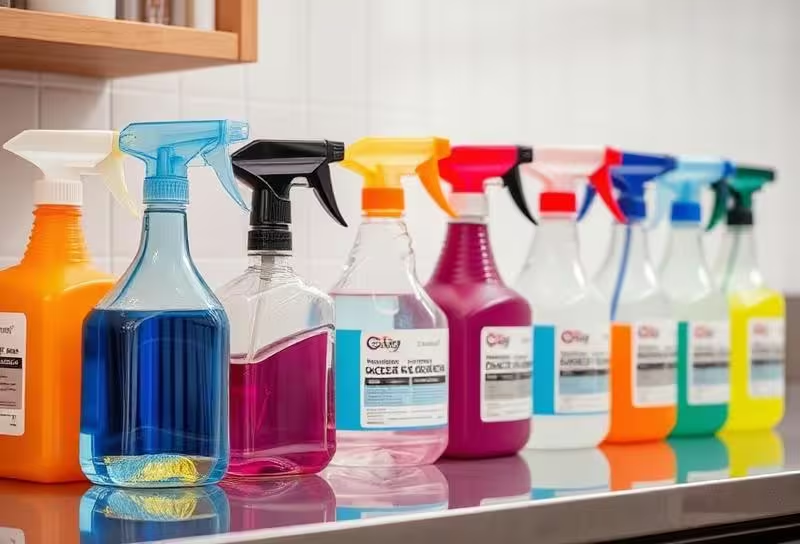
Household and commercial disinfectants are designed to deliver lethal doses on contact. In practice, residues, dilutions, and incomplete coverage create exactly the sub-lethal conditions resistance evolves under. Quaternary ammonium compounds ("quats"), triclosan, and certain biocides have all been documented as drivers of cross-resistance, where exposure to a cleaning chemical selects for organisms that are also less susceptible to clinically important antibiotics.
"The same surface that gets sprayed five times a day is, biologically speaking, a training ground for the toughest organisms in the room.
This isn't an argument that cleaning causes resistance on its own. It is an argument that aggressive, blanket chemical disinfection in low-risk settings adds a meaningful pressure on top of the medical and agricultural drivers.
Why Building Design Makes It Worse
Modern buildings are sealed, energy-efficient, and densely occupied. Shared HVAC systems move microbial communities across rooms and units. Surfaces that used to be exposed to outdoor air, sunlight, and natural microbial diversity are now isolated, climate-controlled, and chemically sterilized on repeat.
The result is an indoor microbial environment that has very little of what microbiologists call community resilience. When the dominant microbes are killed off, what grows back has no competition. The most opportunistic survivors take over fastest. That's the same dynamic, repeated daily, that pushes resistance forward.
For a deeper look at how chemical-heavy cleaning routines disrupt indoor ecosystems, see Stop over-sanitization: why harsh chemicals hurt your indoor microbiome.
A Biological Approach That Doesn't Add Pressure
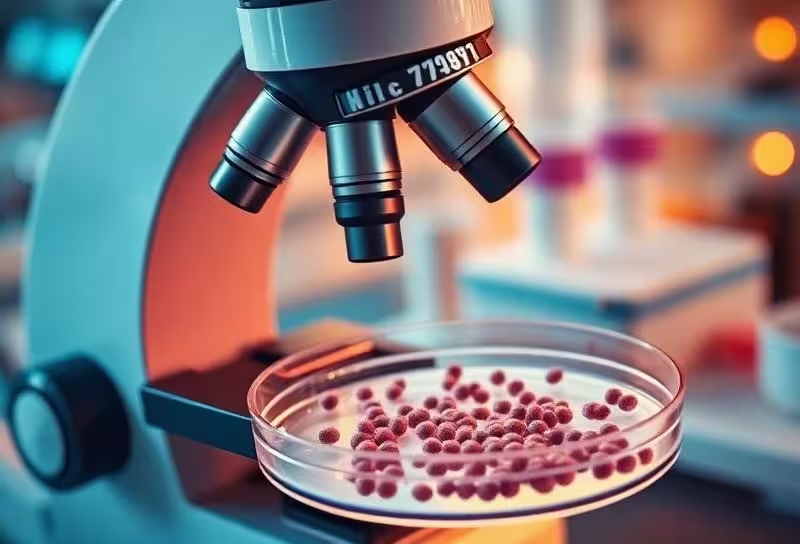
Probiotic surface treatment works through a fundamentally different mechanism. Instead of attacking microbes with chemicals, it floods the environment with beneficial Bacillus strains that compete with harmful organisms for nutrients and surface space.
This matters for AMR for two reasons. First, competitive exclusion does not create the sub-lethal selection pressure that drives resistance. Beneficial organisms are not killing competitors with antimicrobial chemicals; they are simply outcompeting them for resources. There is no chemical for resistance to evolve against.
Second, probiotic treatment rebuilds the kind of microbial diversity and resilience that aggressive disinfection erodes. A surface that is continuously colonized by beneficial Bacillus has structural resistance against being recolonized by opportunistic pathogens, because the niche is already occupied.
The Bacillus strains used by EnviroBiotics are FDA GRAS certified, EPA Registered, and MADE SAFE certified. They are the same class of beneficial organisms used in food production and validated through clinical research in demanding healthcare environments. They produce no ozone, no VOCs, and no chemical residue. The full safety profile is covered in Are environmental probiotics safe?.
What a Sensible Indoor Strategy Looks Like
Nobody is arguing for unhygienic spaces. Hand washing, prompt cleanup of food and visible contamination, and targeted disinfection in genuinely high-risk situations (illness in the household, food preparation, clinical settings) all remain appropriate.
What the AMR data argues against is the reflex to chemically disinfect every surface, every day, in normal home and office environments. A more thoughtful approach pairs targeted, evidence-based cleaning with continuous probiotic treatment that suppresses harmful organism populations through biology rather than chemistry. For the underlying technology, see What is a probiotic air purifier?.
Practically, this means letting a Biotica 800 or BioLogic Mini run continuously in the background while reserving heavy chemical disinfection for situations that actually warrant it. The probiotic layer doesn't replace cleaning, but it changes what is biologically possible on the surfaces between cleanings.
"The future of indoor environmental health is not more chemistry. It is the right biology, working continuously, on every surface.
Frequently Asked Questions
Can probiotic bacteria themselves develop resistance? The Bacillus strains used in environmental probiotics are not pathogens, are not subject to clinical antibiotic pressure, and do not transfer resistance genes in any documented way that affects pathogen populations. They occupy a different ecological role from the organisms AMR is concerned with.
Does this replace antibiotics or medical hygiene? No. AMR is a multifactorial problem, and clinical stewardship remains essential. Probiotic surface treatment addresses one specific contributor: the overuse of chemical disinfectants in everyday indoor environments.
Is this approach validated? Probiotic surface treatment has been studied in healthcare and commercial settings, with results documented in independent laboratory testing and peer-reviewed work referenced on our research page.
How quickly does the probiotic layer establish? Independent testing shows measurable shifts in surface microbial populations within 30 days of continuous use. The protective effect is cumulative and self-renewing with each dispersal cycle.
Ready to improve your indoor environment?
Discover our range of probiotic air purification solutions designed to create healthier spaces for you and your family.
Add EnviroBiotics as a preferred source
Get our latest research, guides, and air-quality insights highlighted in your Google experience.