Quick answer: The probiotics used indoors are hardy, spore-forming bacteria of the kind that occur naturally in soil and on plants. Released into a room, they settle on surfaces, use up the organic film that odor-causing bacteria feed on, and take up the space those bacteria would otherwise occupy. This is called competitive exclusion. They work because they are the same kind of rugged organisms nature already spreads everywhere.
"Wait, you want me to put bacteria in my house?"
It is the first reaction almost everyone has, and it is a fair one. For decades we have been told bacteria are the enemy, the thing antibacterial soap, bleach wipes and hand sanitizer exist for. So deliberately releasing bacteria into your home sounds backwards at first.
Here is the reframe. Most bacteria do not make us sick, and many are useful. You are covered in and full of them right now, on your skin and in your gut, doing essential work. The bacteria that cause illness are a small minority. Environmental probiotics rest on the same idea as yogurt and healthy soil: put the right microbes in place, and they leave less room for the wrong ones.
This piece is a plain-English tour of these bacteria: what they are, where they come from, and how they work on indoor surfaces. No biology degree required.
What these bacteria are
The probiotics used in environmental products come from a well-studied family of spore-forming bacteria. Two features make them useful indoors:
- They are rugged. These rod-shaped bacteria are found in almost every natural environment on Earth: soil, dust, water, plants.
- They form spores. This is the important one. When conditions turn harsh, dry, hot, cold or without food, the cell can turn itself into a spore: a dormant, armored capsule that can sit inactive for a long time and then wake up when conditions improve. That is exactly what you want indoors. Spores can be released as a fine mist, settle on a dry surface, and wait there until there is organic film to feed on. A bacterium that cannot form spores would simply die on a dry countertop. These wait.
Where these bacteria already live
Using them indoors does not bring an exotic organism into your life. You are already surrounded by this kind of bacteria.
- Soil and dust. Spore-forming bacteria are among the most common bacteria in soil. Every time you have gardened, walked a trail or opened a window, you have met them.
- Plants. They live on and around roots and leaves, which is one reason agriculture has used them for a long time.
- Fermented foods. Some traditional fermented foods, such as natto, are made with spore-forming bacteria of this kind.
So the strains in an environmental probiotic are not lab-invented novelties. Using them indoors is less "introducing something new" and more re-seeding what heavily sanitized modern homes have stripped out. That is the indoor microbiome health idea in a nutshell.
What the labels and certifications tell you
When you look at a probiotic product, a few markers help you tell a well-made product from a vague one.
- EPA registered. EnviroBiotics products are EPA registered. Use them as the label directs, including in homes with kids and pets.
- MADE SAFE certified. An independent certification that screens product ingredients.
- ISO 9001 quality system. Production runs under a certified quality management system.
- Named, well-characterized strains. A product that just says "probiotic" with nothing behind it is a red flag. Strain selection matters, because this is a broad family of bacteria and not every member is suited to indoor use.
For the full picture, read our guide to probiotic certifications and testing and our research page.
Want the certifications and testing in one place? → Certifications, testing and what to know
How probiotics work on an indoor surface
Here is the mechanism, step by step, without the jargon.
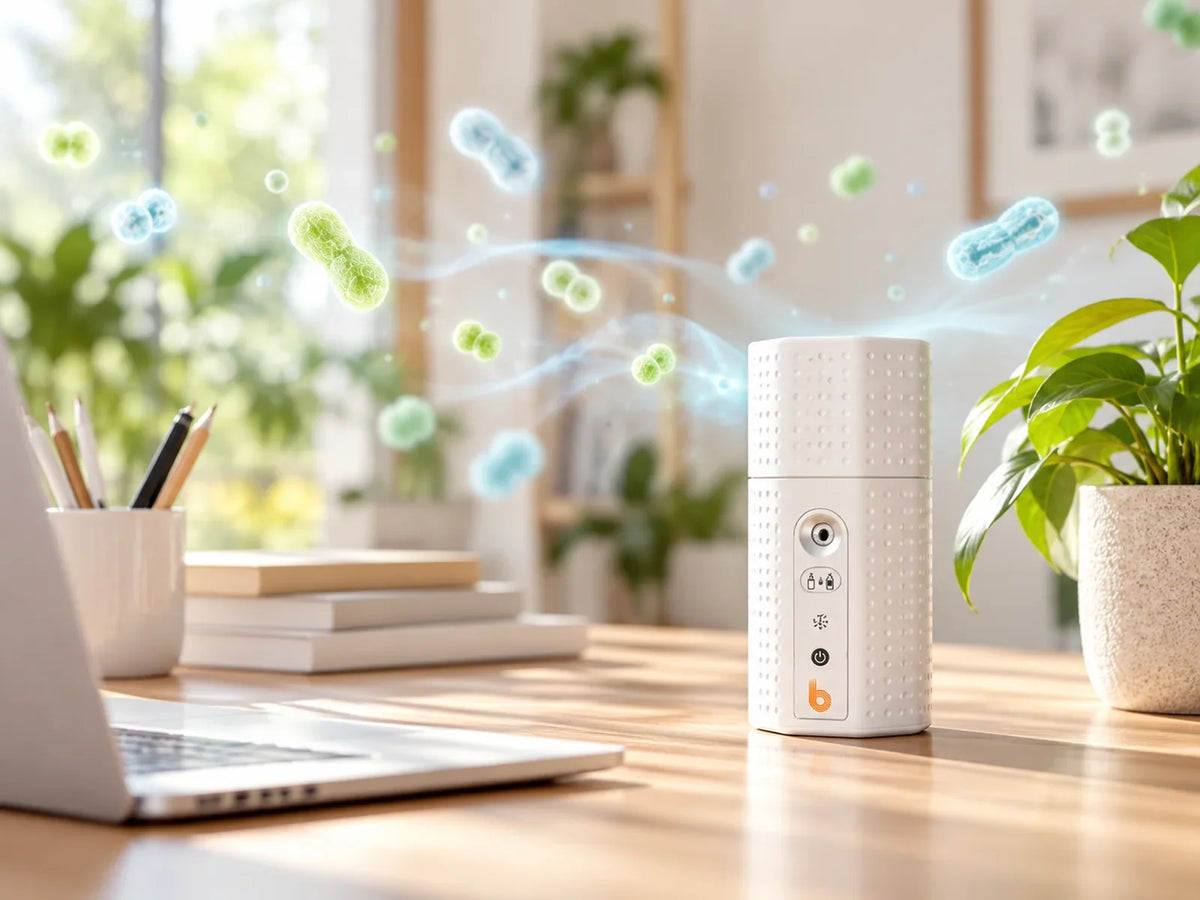
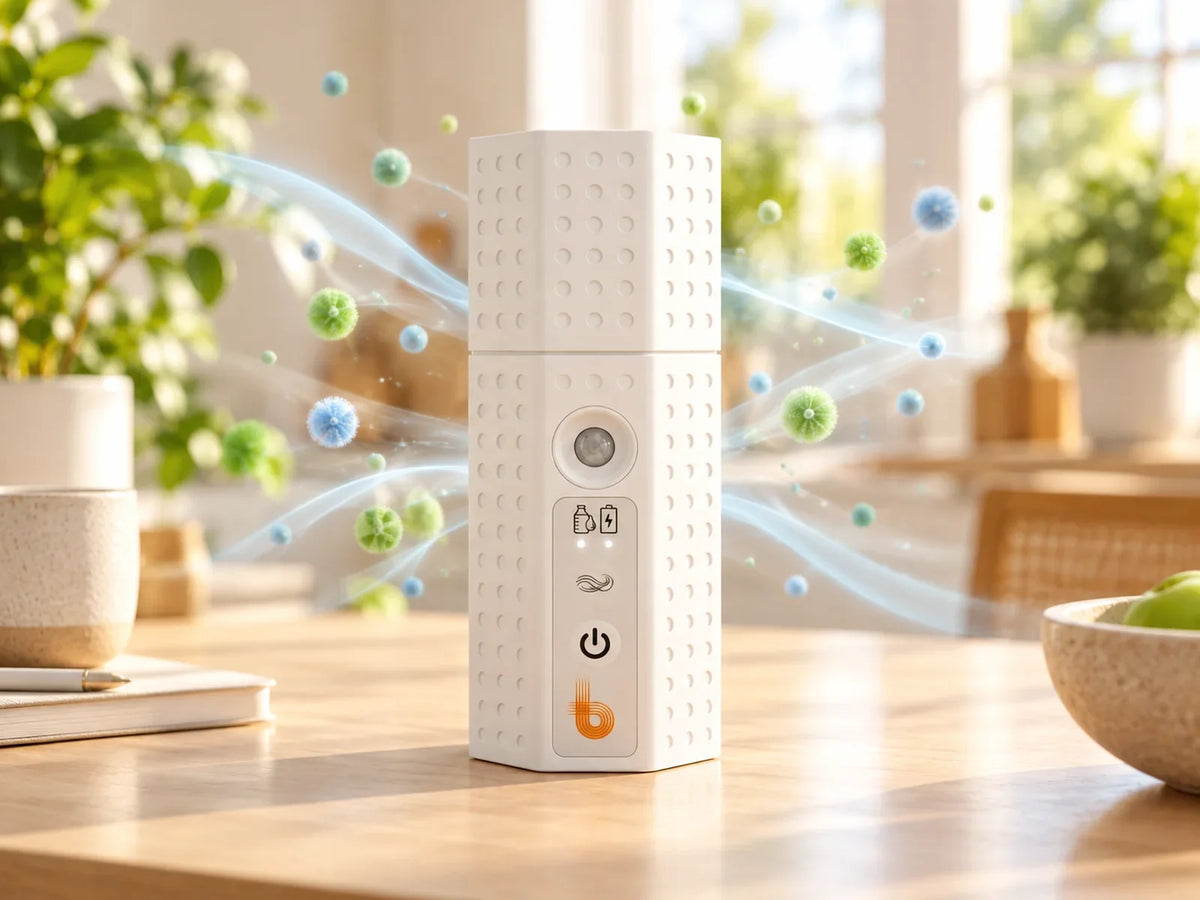
- Dispersal. A device releases a fine mist of probiotic spores into the room. They are light enough to travel through the air and settle across surfaces: floors, counters, bedding, sofas, rugs and curtains.
- Settling in. Where there is organic film to feed on, the spores become active cells and spread across the surface.
- Feeding. The active cells feed on the organic film that coats every indoor surface: shed skin, dust, dander and food residue. That film is also what odor-causing bacteria depend on. As the probiotics use it up, there is less left for them.
- Competitive exclusion. By occupying the surface and using up the food, the probiotics leave odor-causing bacteria with less space and less to eat. They are crowded out rather than attacked with chemicals. This is competitive exclusion, the core mechanism.
- Staying power. When local food runs low, the cells form spores again and wait. A device that keeps releasing probiotics tops up the layer, so it holds between cleanings instead of resetting every time you wipe a surface.
The result is a surface occupied by beneficial bacteria, with less room for odor-causing ones. This is what people mean when they ask do probiotic air purifiers work: the work happens on surfaces, not by filtering particles out of the air.
What the research found
Mechanism is one thing. Measured results are another. Here is what the studies we rely on found:
- Indoor Biotechnologies (Cardiff, UK), 2024: in an 8-day controlled application, testing recorded a cumulative decrease in dust-mite, pet-dander and mold allergens, with a parallel simulation at EMSL Analytical (NJ). Read the summary.
- University of Genova, Department of Experimental Medicine, 2025: the EnviroBiotics probiotic suspension showed 67% SARS-CoV-2 neutralization in 15 minutes and 97.7% in 3 hours, compared with untreated controls. Read the summary.
- D'Accolti M. et al., Microorganisms, 2021: probiotic cleaning lowered pathogen load and resistance genes on indoor surfaces compared with chemical disinfection. Read the study.
- Caselli E. et al., PLOS ONE, 2018: in six Italian hospitals, probiotic-based cleaning was associated with about 52% fewer healthcare-associated infections and a drop in antimicrobial use. Read the study.
The hospital studies tested probiotic cleaning systems, not EnviroBiotics devices. They show the surface approach can be measured. You can dig into the details on our research page.
The honest limits
A useful page owes you the limits too:
- It is not instant, and it is not a disinfectant. Competitive exclusion is a gradual, biological process. Probiotics take 2 to 3 weeks to settle across a room. If you need to disinfect a specific surface right now, such as after raw-meat prep or in a sickroom, a disinfectant is the right tool for that moment. Probiotics are ongoing background work.
- It works on surfaces, not on airborne particles. For airborne pollen or smoke, filtration is the right tool. It complements probiotics rather than competing with them.
- Strain and quality matter. This is a broad family of bacteria. What applies to well-characterized strains in a registered product does not apply to the whole family, which is exactly why strain selection and certification matter.
- It works alongside cleaning. It does not replace it.
The bottom line
The bacteria in environmental probiotics are not an exotic risk. They are rugged, spore-forming organisms of the kind that already live in soil, on plants and in some traditional foods. Indoors, they do what beneficial microbes do everywhere: settle on surfaces, use up the film odor-causing bacteria rely on, and crowd those bacteria out. It is not a chemical attack on germs. It is a way of putting the right microbes back where modern life has stripped them out.
Frequently asked questions
What kind of bacteria are in environmental probiotics?
Hardy, rod-shaped, spore-forming bacteria of the kind found naturally in soil and on plants. Their ability to form spores lets them sit dormant on dry surfaces and become active when there is organic film to feed on.
How do probiotics work on air and surfaces?
They are released as a fine mist of spores that settle on surfaces, become active where there is organic film, and spread. By using up the film odor-causing bacteria feed on, and taking up the space those bacteria need, they crowd them out through competitive exclusion, rather than attacking them with chemicals.
What should I check before using probiotics at home?
Look for an EPA registered product with clear labeling, and use it as the label directs, including around children and pets. EnviroBiotics products are EPA registered, MADE SAFE certified and made under an ISO 9001 quality system. The full details are in our certifications and testing guide.
Are all spore-forming bacteria alike?
No. This is a broad family, and not every member is suited to indoor use. That is why strain selection and certification matter. What applies to a registered product's specific strains does not apply to the family as a whole.
Do probiotics add to antimicrobial resistance?
They work by competing for food and space rather than by chemical killing. A 2021 study (D'Accolti et al., Microorganisms) found that probiotic cleaning lowered resistance genes on indoor surfaces compared with chemical disinfection. Read the study.
Can probiotics replace my air filter?
No, they do a different job. Probiotics work on surfaces, where much indoor buildup settles. A HEPA filter handles airborne particles like pollen and smoke. The two work together: probiotics for surfaces, filtration for the air.
Related reading
- Competitive exclusion explained: how beneficial bacteria crowd out pathogens
- Do probiotic air purifiers work? The science explained
- Environmental probiotics: certifications and what to know
- What is indoor microbiome health?
Where EnviroBiotics fits
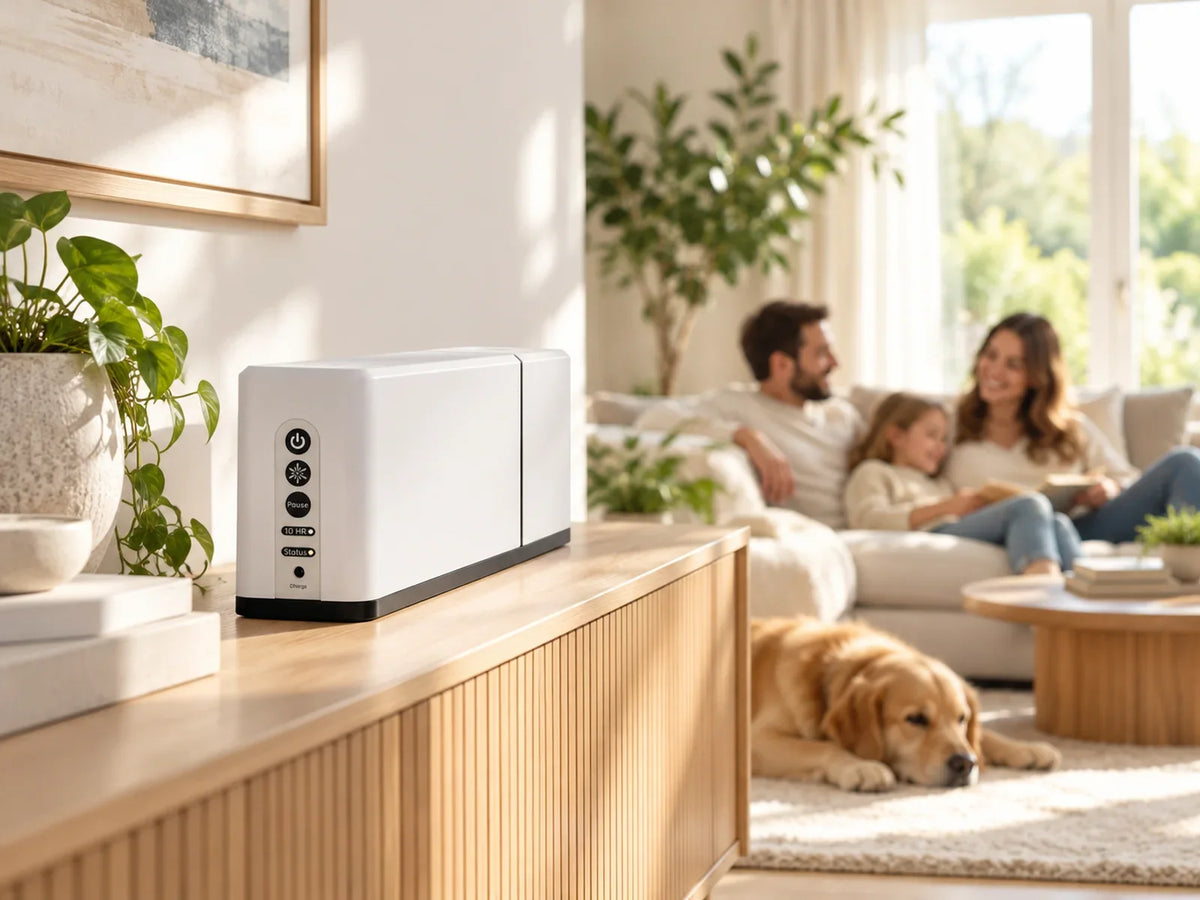
Odor lives on soft surfaces like sofas, rugs and pet beds. Sprays fade and filters only touch the air. EnviroBiotics devices release natural probiotics that settle on those surfaces and keep working every day. The BioLogic Mini is the place to start, and how it works shows the full picture.

Leave a comment
This site is protected by hCaptcha and the hCaptcha Privacy Policy and Terms of Service apply.