
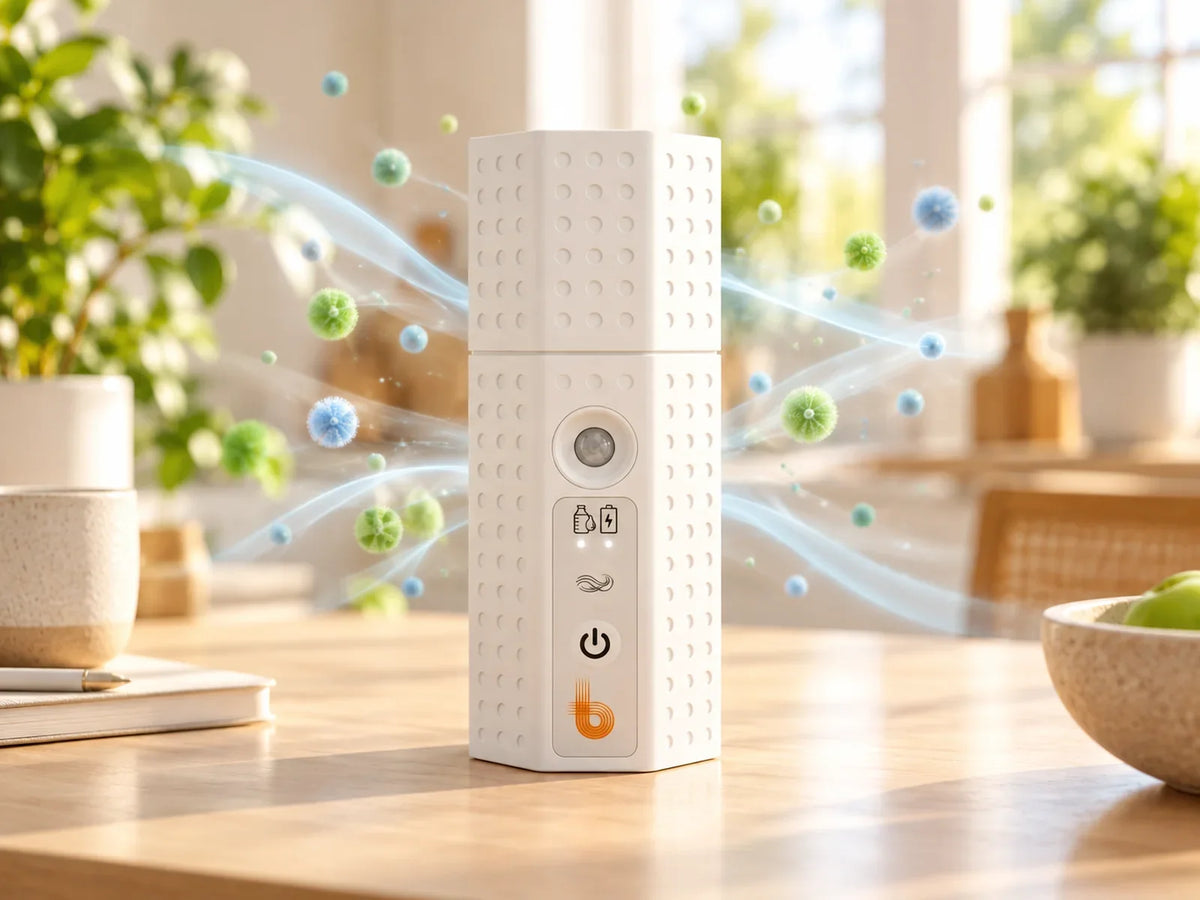
Quick answer: Competitive exclusion is a biological process in which beneficial microbes outcompete harmful ones for the same space and the same food. The harmful microbes are starved and crowded out, not killed. It is how a healthy gut resists infection, how farmers protect crops without heavy pesticide use, and how environmental probiotics work on indoor surfaces.
Because pathogens are outcompeted instead of chemically attacked, competitive exclusion puts no selection pressure on them to become resistant. Antibiotics and disinfectants do.
The idea in one sentence
Imagine two families of microbes that want the same apartment. If the good tenants move in first, fill every room and eat all the food in the fridge, the bad tenants show up, find nowhere to live and nothing to eat, and leave.
That is competitive exclusion. No fighting, no poison, no eviction notice. Just a fully occupied space with nothing left for the newcomer. It is one of the oldest principles in ecology, and one of the most useful ideas in modern microbiology, agriculture and indoor care.
The rest of this page covers how it works, why it is different from killing microbes, and why "starve them out" often beats "kill them".
Where the principle comes from
Competitive exclusion is not a marketing term borrowed for probiotics. It is a foundational idea in ecology, formalized decades ago as the competitive exclusion principle: two species competing for the exact same limited resource cannot coexist forever in the same niche. One will edge out the other. The winner is not always the stronger species. It is the one that uses the shared resource more efficiently.
Ecologists first described this for animals and plants competing for territory and food. Microbes follow the same rule, and at their scale it plays out quickly, because bacteria reproduce in hours and compete over tiny patches of surface. Every surface in your home, your gut and the soil outside is a place where this contest is constantly being decided.
The insight that changed applied microbiology was simple. If competitive exclusion is going to happen anyway, you can steer it. Introduce the microbes you want, let them win the niche, and the ones you don't want lose by default.
The two things microbes compete for
Competitive exclusion runs on two currencies: space and food. Beneficial bacteria win by taking both first.
Space. Microbes live on surfaces, and surface area is finite. A bacterium needs a physical spot to attach, settle and reproduce. When beneficial bacteria colonize a surface densely, they occupy the spots a pathogen would need. A latecomer arrives at a surface that is already full and has nowhere to grip. This is why establishing beneficial microbes early and densely matters.
Food. Microbes eat organic debris: shed skin cells, food residue, dust, dander, the ordinary film that builds up on every indoor surface. That debris feeds every microbe, harmful or helpful. When beneficial bacteria are actively eating it, the shared food supply shrinks. A pathogen that lands there finds the pantry empty. Without food it cannot multiply, and a population that cannot multiply cannot establish.
Put both together, no room and no food, and the harmful microbe fails to gain a foothold. It is not attacked. It is outcompeted.
Three places you have already seen it work
Competitive exclusion is trustworthy not because it is new, but because it is old and everywhere.
Your gut. A healthy gut microbiome is the textbook case. Resident bacteria occupy the gut lining and use up available nutrients so thoroughly that invading pathogens struggle to establish. This is why a course of broad-spectrum antibiotics, which wipes out the resident community, can lead to opportunistic infections like C. difficile: the antibiotics clear the niche and the pathogen moves into the empty space. Restore the beneficial community (through diet, or in severe cases a fecal transplant) and competitive exclusion resumes. The same logic underpins indoor microbiome health.
Agriculture. Farmers have used competitive exclusion for decades. Beneficial soil bacteria and fungi are applied to seeds and crops, where they colonize roots and leaves and outcompete the pathogens that cause plant disease, reducing the need for chemical fungicides. In poultry farming, feeding chicks beneficial gut bacteria builds a protective community that helps exclude Salmonella before it can colonize.
Ecology. In any ecosystem, established native species resist invasion by newcomers competing for the same resources. A dense, diverse ecosystem is hard to invade because every niche is already claimed. Disturb it, clear-cut it, pave it or poison it, and you open niches for fast-growing opportunists to rush in. The parallel to an over-disinfected surface is close.
See the studies behind this in the research library.
How environmental probiotics do this on indoor surfaces
Environmental probiotics apply competitive exclusion to the surfaces of your home. They use hardy, naturally occurring probiotic strains of the kind found in soil and plants. (More in our guide to environmental probiotics: data and certifications.)
Released as a fine mist, the probiotics settle across indoor surfaces, including the soft ones where odor lives: sofas, rugs, bedding, curtains and pet beds. Then they get to work:
- They colonize. They establish on surfaces and occupy attachment sites, leaving little open space.
- They consume the debris. They feed on the organic film (dust, dander, food residue, shed skin) that odor-causing bacteria, mold and allergen-producing organisms would otherwise feed on. As that supply is drawn down, there is less food for harmful microbes.
- They hold the niche. Because a dispenser keeps adding fresh probiotics, they keep their place over time instead of winning once and fading. The layer persists between cleanings instead of resetting every time you wipe a surface.
The microbes behind musty smells, surface allergens and surface pathogens are pressed on both fronts at once: less space, less food. That is why the measured effects show up on surfaces. In a 2024 controlled 8-day application, Indoor Biotechnologies (Cardiff, UK) recorded a cumulative decrease in dust-mite, pet-dander and mold allergens. In a 2025 study at the University of Genova, Department of Experimental Medicine, the EnviroBiotics probiotic suspension neutralized 67% of SARS-CoV-2 within 15 minutes and 97.7% within 3 hours, compared with untreated controls.
The part that matters most: no resistance pressure
Here is the difference that makes competitive exclusion more than "another way to reduce germs". It is what happens over the long run.
When you kill microbes with an antibiotic or a disinfectant, you apply selective pressure. The chemical kills most of the population, but any individual that survives (through a resistance mutation, a protective biofilm, or luck) now has the cleared surface to itself and reproduces freely. Repeat that cycle often enough and you select for a resistant population. This is the engine behind antimicrobial resistance in the indoor environment, and it is why aggressive disinfection can leave tougher microbes behind.
Competitive exclusion applies no such pressure. Nothing is being killed. The pathogen is not surviving an attack; it is failing to find food and space. There is no "survivor" to select for, because survival was never the point of competition. A microbe cannot evolve resistance to having nowhere to live.
That one property is why competitive exclusion is worth building an indoor approach around, rather than looking for a smarter disinfectant.
Competitive exclusion vs killing
The two are not equal tools for the same job.
- Mechanism. Killing destroys microbes chemically or physically. Competitive exclusion starves and crowds them out.
- Selectivity. Killing takes out good and bad microbes alike. Competitive exclusion lets beneficial microbes win the niche while pathogens lose it.
- Duration. Chemical clearing is temporary and surfaces get recolonized. An occupied niche stays occupied.
- After-effect. A cleared niche invites fast recolonizers. An occupied niche stays held by the beneficial community.
- Resistance risk. Killing selects for survivors. Competitive exclusion has nothing to select on.
- Upkeep. Killing needs constant reapplication. Competitive exclusion maintains itself as long as it is replenished.
Killing is reactive and short-lived. Competitive exclusion is proactive and lasting. Disinfection still has its place: acute contamination, medical settings, raw-food prep. But as an everyday way to keep surfaces in good shape, "occupy the niche with beneficial microbes" beats "sterilize and hope nothing worse moves in".
Why this changes the "clean" instinct
Most of us learned to equate clean with sterile: the fewer microbes, the better. Competitive exclusion says something more accurate. A surface is protected not when it is empty, but when it is fully occupied by the right microbes.
An empty surface is not a protected surface. It is an available one. In real life, available space fills fast, usually with whatever reproduces quickest, which is rarely what you would choose. A surface densely colonized by beneficial bacteria is harder for a pathogen to take over than a freshly bleached one, because the bleached surface is a vacancy and the colonized surface is a full house.
That is the shift: stop trying to win by subtraction, and start winning by occupation.
The bottom line
Competitive exclusion is the principle that beneficial microbes protect a space by taking it over, occupying the surface and eating the food before pathogens can. It is how the gut resists infection, how farmers protect crops, and how environmental probiotics work on indoor surfaces. Its main advantage over killing is that it creates no resistance pressure, because nothing is killed and no survivors are selected.
Frequently asked questions
What is competitive exclusion in simple terms?
It is when beneficial microbes outcompete harmful ones for the same space and food. The good microbes occupy the surface and eat the available organic debris first, so arriving pathogens find nowhere to attach and nothing to eat, and fail to establish. They are crowded out and starved rather than killed.
How is competitive exclusion different from using disinfectants?
Disinfectants kill microbes. That effect is temporary and clears the surface for whatever recolonizes fastest, sometimes the very microbe you were trying to remove. Competitive exclusion keeps the surface occupied by beneficial microbes, so pathogens struggle to gain a foothold in the first place. It lasts longer, and it does not strip away the beneficial community along with the harmful one.
Does competitive exclusion cause antibiotic resistance?
No, and this is its key advantage. Antibiotics and disinfectants kill most microbes but leave survivors that can reproduce and spread resistance. Competitive exclusion kills nothing; pathogens simply fail to find food and space. With no survivors of an attack, there is no selection pressure for resistance.
Where is competitive exclusion used besides indoor probiotics?
It is a foundational principle across biology. A healthy gut microbiome uses it to resist infection. Agriculture uses beneficial soil and root bacteria to protect crops, and beneficial gut bacteria to protect poultry from Salmonella. Ecosystems resist invasive species through it. Environmental probiotics apply the same principle to indoor surfaces.
Which bacteria are used for competitive exclusion on indoor surfaces?
Hardy probiotic strains that occur naturally in soil and plants. They settle on surfaces, consume the organic debris that odor-causing bacteria and other microbes rely on, and hold the niche when they are continuously replenished. EnviroBiotics products are EPA registered and MADE SAFE certified; use them as the label directs.
Is a surface covered in beneficial bacteria actually cleaner?
By the measure that matters here, how hard it is for unwanted microbes to take hold, yes. A surface fully occupied by beneficial bacteria is harder for a pathogen to colonize than a sterilized, empty surface, which is simply an open niche waiting to be filled.
Where EnviroBiotics fits
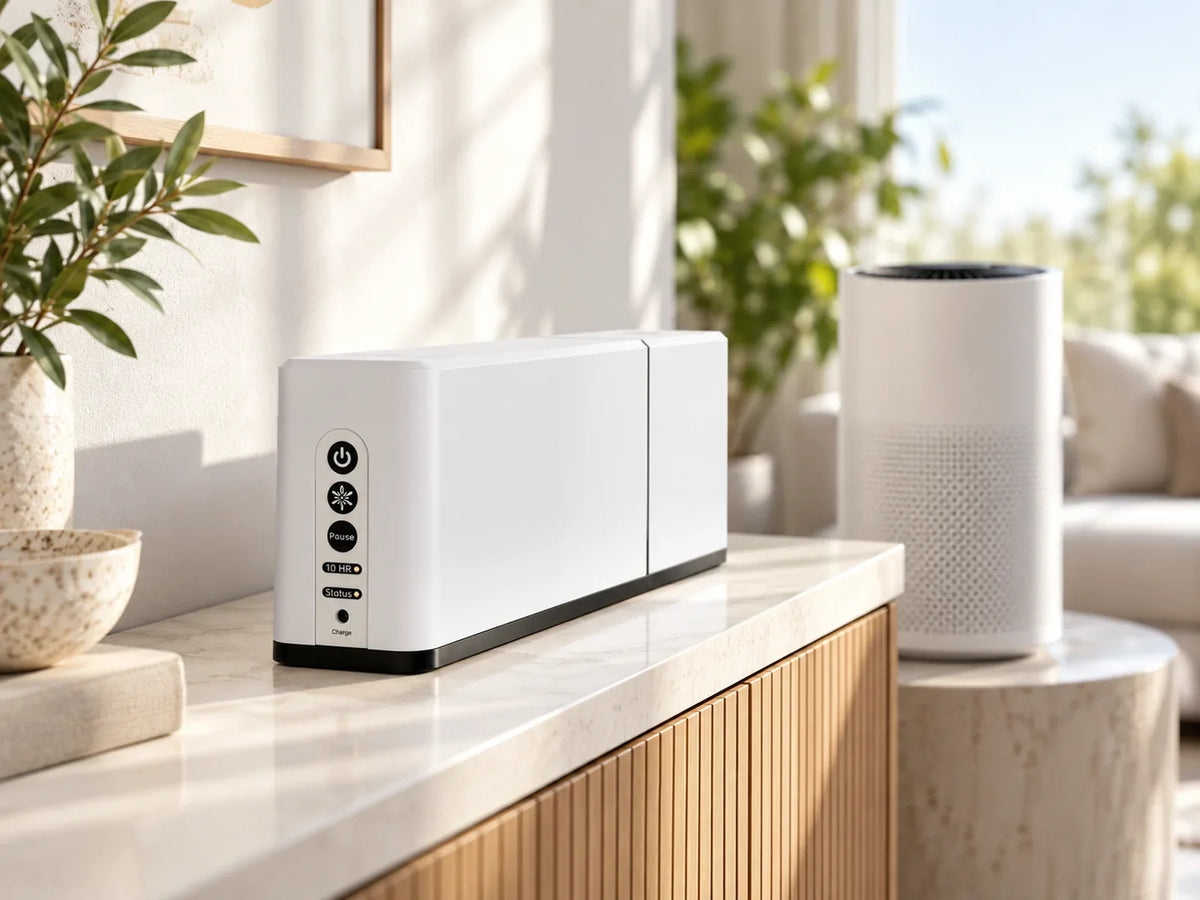
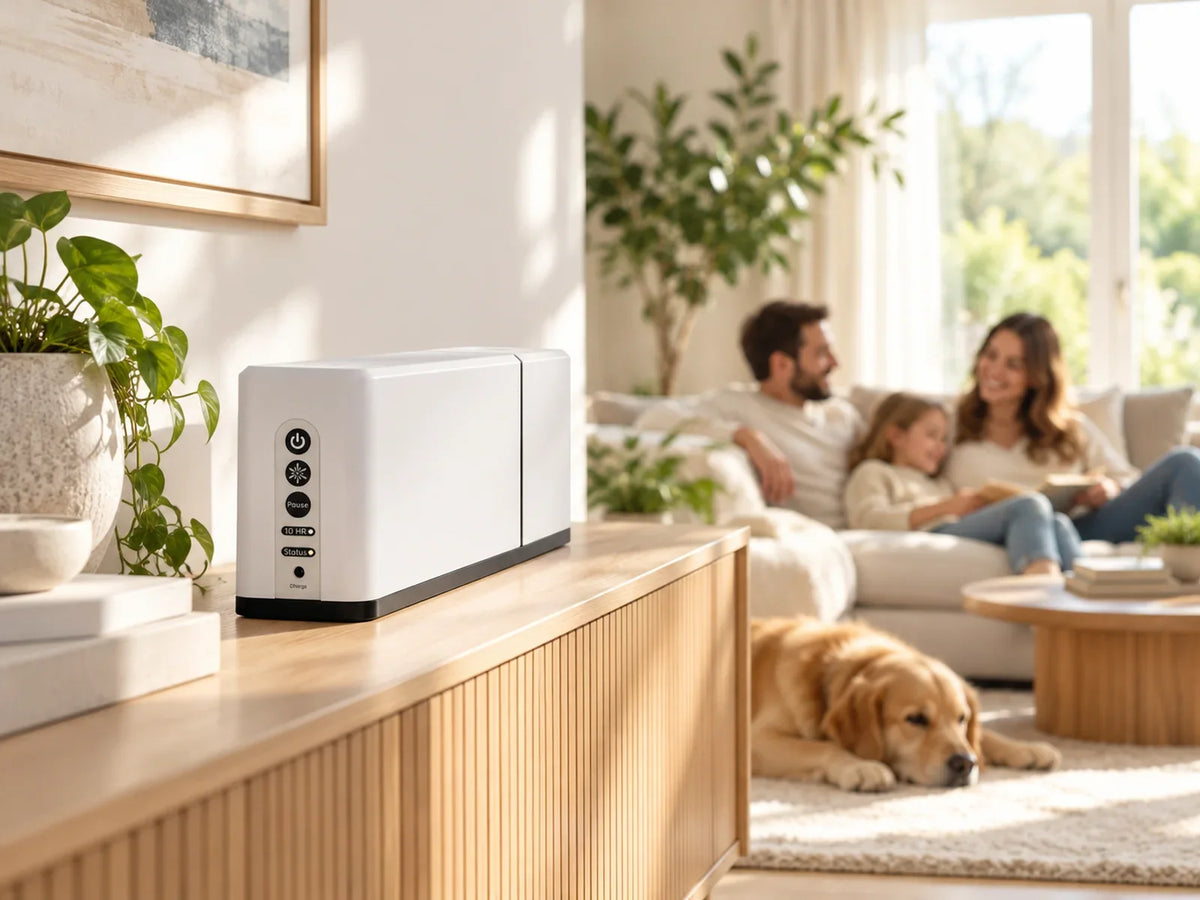
Odor and grime build up on soft surfaces like sofas, rugs and pet beds, where sprays fade and filters never reach. The BioLogic Mini releases natural probiotics that settle on those surfaces and keep reducing odor-causing bacteria every day, with no filters and no fragrance. See how it works.

Leave a comment
This site is protected by hCaptcha and the hCaptcha Privacy Policy and Terms of Service apply.